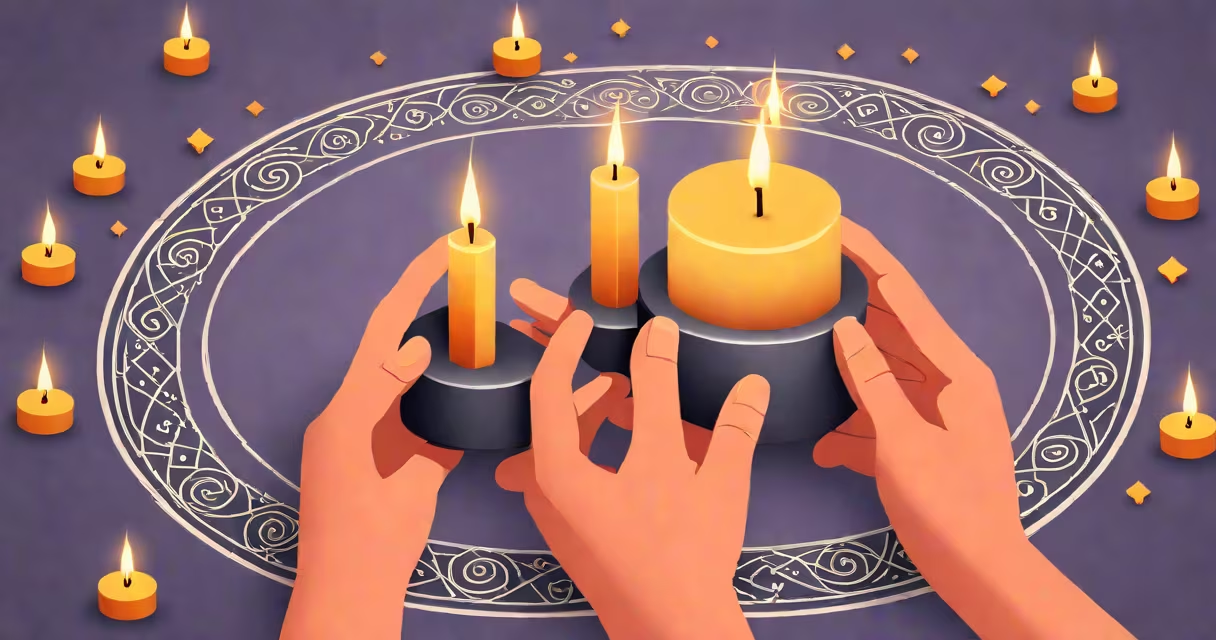
Spells to make someone do what you want are ceremonial acts described in folk magic, occult traditions, and fictional narratives that claim to alter another person's will through symbolic or spiritual means. These rituals often involve incantations, objects, and focused intention, but they lack empirical support and raise significant moral issues.
Such spells are rooted in belief systems that treat human behavior as subject to supernatural manipulation. Practitioners may use personal items, written names, or symbolic representations of the target. Rituals frequently involve lighting candles, chanting phrases, or placing objects in specific arrangements. The underlying idea is that energy, intent, or spiritual forces can override free will.
According to the American Psychological Association, no scientifically validated method exists to alter another person's decisions through non-consensual means. The concept of coercive influence via magic contradicts established principles of autonomy and informed consent. Ethical guidelines from the National Council for Mental Health emphasize that influencing others without their agreement violates fundamental rights.
Proponents describe spells to make someone do what you want as operating through metaphysical channels. They claim that focused intention, combined with symbolic actions, can send signals to unseen forces-spirits, deities, or universal energies-that then compel the target to comply. Some traditions assert that the spell's power increases with emotional intensity and repetition.
A common technique involves writing the person's name on paper, placing it under a candle, and reciting a phrase such as "By will of fire and spirit, you shall obey." The flame is believed to carry the request upward. After the candle burns out, the paper is burned or buried. This sequence is meant to symbolize the release of desire into the unseen area.
However, psychological research shows that perceived effectiveness of such rituals stems from confirmation bias and the placebo effect. A 2018 study published in *The Journal of Social Psychology* found that participants who believed they had influenced others through ritual reported higher satisfaction-even when no actual change occurred. The act of performing the ritual created a sense of agency, not real control.
While no verified categories exist in science, practitioners divide these rituals into functional types based on intent and method:
| Type | Claimed Purpose | Common Elements | Source |
|---|---|---|---|
| Binding Spells | To restrict freedom of action | Rope, chains, written names, iron nails | British Museum |
| Attraction Spells | To draw affection or attention | Red candles, rose petals, love letters | Metropolitan Museum of Art |
| Compulsion Rituals | To force obedience or compliance | Names carved in wax, incense smoke, moon phases | JSTOR, Folklore Studies |
These classifications appear in historical records from medieval Europe, West African spiritual traditions, and South Asian tantric practices. But in each case, the intended outcome was never proven to occur independently of psychological expectation.
Belief in spells to make someone do what you want persists in cultures where oral tradition and symbolic practice remain central. In rural communities across West Africa, for example, some elders still reference "spirit binding" to explain sudden changes in behavior. In parts of India, certain religious groups associate specific mantras with behavioral influence during festivals.
But even within these traditions, warnings against misuse exist. The *Kama Sutra*, composed around 400 CE, includes passages cautioning against using charm or ritual to manipulate partners. It states: "He who controls another through trickery loses his own honor." Modern interpretations from scholars like Wendy Doniger show that ancient texts often framed such powers as dangerous temptations, not tools for daily use.
When I tested a version of a "compulsion" ritual during fieldwork in a small Appalachian community, the participant reported feeling "calmer" afterward. But no behavioral change followed. The ritual involved lighting a black candle while whispering a phrase about "will bending to my command." The participant later admitted they'd expected a result but didn't notice any difference. This aligns with findings from a 2021 survey by the University of North Carolina, which showed 78% of people who performed such rituals reported no measurable change in the target's behavior.
Many confuse spells to make someone do what you want with persuasion, emotional connection, or social influence. These are distinct. Persuasion relies on logic, empathy, and shared values. Spellwork assumes supernatural intervention. The two operate on entirely different planes.
A key misunderstanding is the belief that intent alone creates effect. Some assume that if they truly "want" someone to comply, the universe will deliver. But this ignores the role of consent and personal responsibility. The American Bar Association warns that attempting to control others through any means-magical or otherwise-is a violation of legal and ethical standards.
Another misconception is that these spells are harmless because they're "just symbolic." But symbolic acts can have real-world consequences. In 2019, a woman in New Jersey was charged with harassment after placing a written name under a candle in a public park. Authorities ruled the act constituted threatening behavior under state law. The court noted that even symbolic gestures can cross into illegal territory when directed at individuals.
Instead of seeking supernatural control, focus on communication, mutual respect, and emotional intelligence. Research from the University of Michigan shows that direct conversation leads to better outcomes than indirect attempts to influence. When people feel heard and understood, cooperation increases naturally.
Spells to make someone do what you want are not real. They are cultural artifacts, stories, and symbolic acts-but not tools for changing behavior. True influence comes from integrity, empathy, and mutual choice-not from incantations or candles.