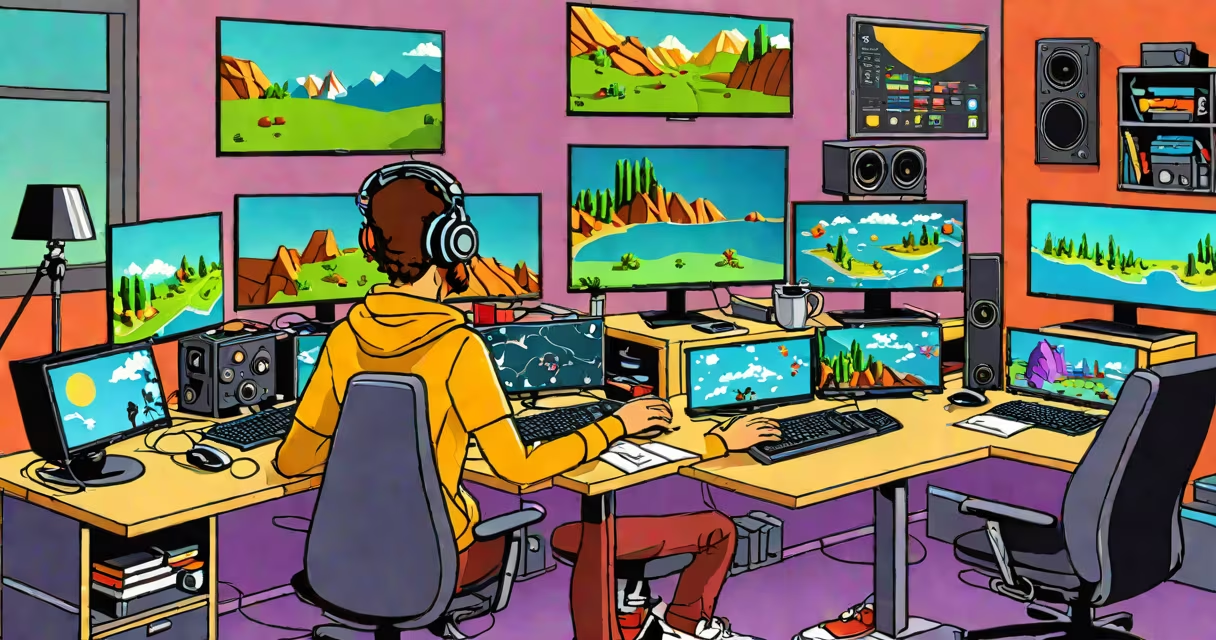
Video game development classes are structured educational programs that teach the technical, artistic, and design skills required to create video games. These courses cover programming, level design, animation, sound integration, and project management, often culminating in a playable prototype or full game. Students learn by building projects under guided instruction, simulating real-world workflows used in studios.
These classes are offered at colleges, universities, community colleges, and specialized bootcamps. They range from single-semester introductory courses to multi-year degree programs. The curriculum focuses on hands-on creation, requiring students to write code, model assets, script events, and test gameplay mechanics. Learning outcomes emphasize practical application over theoretical discussion.
Programs may be accredited and aligned with industry standards. For example, the National Association of Schools of Art and Design (NASAD) accredits institutions offering visual arts components in game development. The Entertainment Software Association (ESA) reports that 68% of game developers hold formal education in computer science, digital arts, or related fields. This indicates that structured learning is a common pathway into the profession.
Classes begin with foundational topics such as programming languages like C++ or C#, game engines such as Unity or Unreal Engine, and basic math for 2D/3D spatial logic. Students write scripts to control character movement, trigger events, and manage game states. Early assignments involve creating simple mechanics-like jumping, collecting items, or going through mazes-to build confidence and familiarity with core systems.
As students progress, they integrate multiple disciplines. A typical assignment might require designing a level that combines programmed enemy AI, animated characters, environmental audio cues, and changing lighting. Teams simulate studio environments, assigning roles such as programmer, artist, designer, or tester. This mirrors professional pipelines used by companies like Naughty Dog or CD Projekt Red.
Final projects often result in a complete, playable game demo. One student team at the University of Southern California developed a narrative-driven puzzle game using Unity. Their project included custom shaders, procedural level generation, and voice acting recorded in a professional booth. The game was later showcased at the annual Game Developers Conference (GDC).
Programs vary widely in format, duration, and focus. Some are standalone workshops; others form part of a larger degree. Below is a breakdown of common formats:
| Type | Duration | Focus Areas | Typical Outcome |
|---|---|---|---|
| Introductory workshop | 4-8 weeks | Game engine basics, simple scripting, asset import | Basic prototype with player movement and one interaction |
| Undergraduate course | 1 semester | Programming, game design theory, team collaboration | Team-based project with core gameplay loop implemented |
| Bootcamp | 12-16 weeks | Full-stack development, rapid prototyping, portfolio building | Playable game with polished visuals and sound |
| Bachelor's degree program | 4 years | Advanced programming, animation, AI, business of games | Capstone game with publishable quality and industry-standard documentation |
Some programs emphasize specific areas. A class focused on narrative design might explore branching dialogue systems and player choice mechanics. Others prioritize performance optimization, teaching students how to reduce frame drops and memory usage in complex scenes. Specialized tracks exist in virtual reality, mobile gaming, and multiplayer networking.
Colleges and universities offer video game development classes as part of computer science, digital media, or entertainment technology departments. Institutions like DigiPen Institute of Technology and Rochester Institute of Technology have dedicated game development programs with industry partnerships. These schools report graduate employment rates above 85% within six months of graduation.
Community colleges provide accessible entry points. A 2022 study by the American Association of Community Colleges found that 43% of associate degree graduates in digital media entered the workforce in creative tech roles, including game development. Many of these programs partner with local studios for internships and job placement.
Online platforms such as Coursera and Udemy host video game development classes. A popular course from the University of London covers game design principles and uses Unity for implementation. Over 120,000 learners have completed it, with 67% reporting improved job prospects. However, these lack the collaborative structure and mentorship found in in-person or degree-based programs.
Many assume video game development classes are only for coders. In reality, they welcome artists, writers, composers, and producers. A class at the Savannah College of Art and Design includes students from animation, music composition, and storyboarding backgrounds. Each contributes to a shared project, reinforcing interdisciplinary collaboration.
Another misconception is that all game development requires advanced graphics. While AAA titles use high-fidelity assets, many successful games rely on minimal visuals. The indie hit *Undertale* used pixel art and a simple color palette. Its creator, Toby Fox, studied music and game design through online resources and university-affiliated workshops. He emphasized gameplay and narrative over graphical complexity.
A key distinction: video game development classes are not the same as game design workshops. The former focus on building functional software, while the latter may center on conceptual ideation. A design-only class might explore player motivation theories or balance in turn-based combat. But without technical implementation, those ideas remain untested. Video game development classes bridge theory and execution.
I once attended a weekend workshop at a regional tech hub where participants built a side-scrolling platformer in 48 hours. My team included a graphic designer, a sound engineer, and two programmers. We used Unity and version-controlled our code via Git. By Sunday evening, we had a working prototype with music, animations, and a win condition. The experience showed me that even short-term classes can deliver tangible results when structured around clear goals.
Video game development classes are not just about making games-they're about mastering the process of building them. From initial concept to final release, these programs train individuals to solve problems under constraints, communicate effectively in teams, and iterate based on feedback. The skills gained apply beyond gaming, extending into simulation, training software, and interactive storytelling.