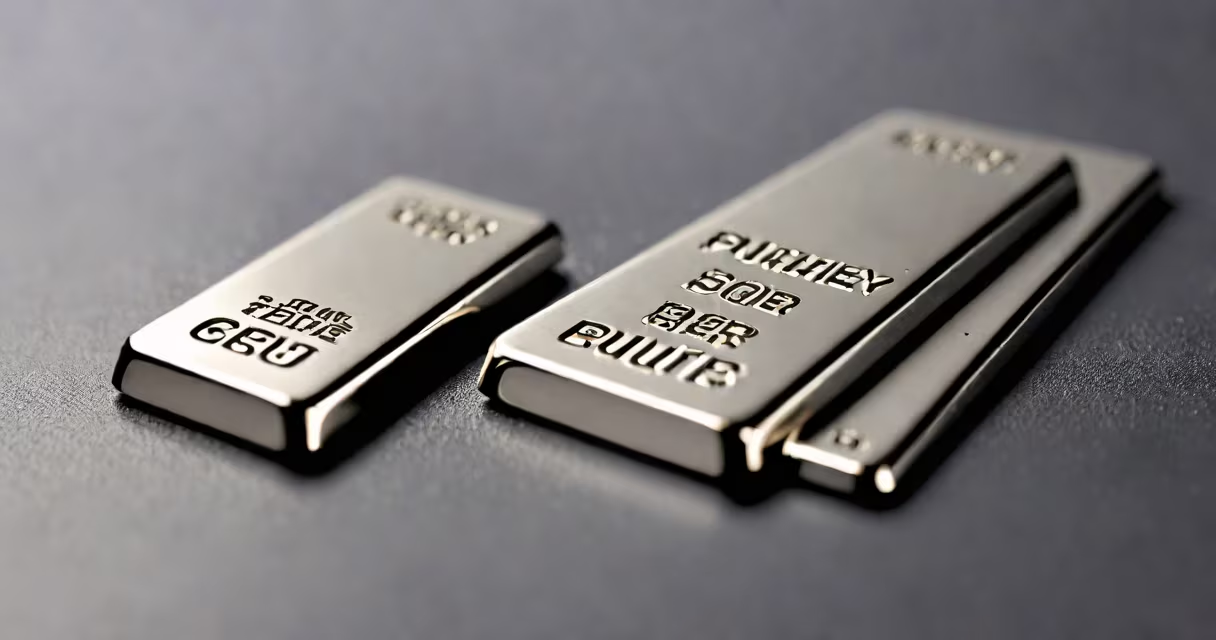
Silver bullion meaning refers to silver in standardized, high-purity forms-typically coins or bars-intended for investment rather than industrial or decorative use. It must meet minimum fineness standards, usually .999 fine (99.9% pure silver), and be produced by a recognized mint or refiner.
Investors buy silver bullion to preserve wealth, hedge against inflation, or diversify portfolios. Unlike collectible coins, which carry numismatic value beyond metal content, bullion value derives solely from its silver weight and current spot price. The London Bullion Market Association (LBMA) sets global benchmarks for purity and trading standards, ensuring consistency across markets.
For example, a 1-ounce American Eagle silver bullion coin contains exactly 1 troy ounce of .999 fine silver. Its market value fluctuates daily based on the spot price of silver, currently around $32 per troy ounce (as of June 2024). A $32 coin with no premium over spot is worth exactly its metal content. Add a 5% premium for distribution and handling, and the retail price becomes $33.60.
When you purchase silver bullion, you're buying a tangible asset backed by measurable weight and purity. Each piece is independently verified by accredited refineries or mints. The U.S. Mint, Royal Canadian Mint, and PAMP Suisse are among the most trusted producers. Their products carry serial numbers, assay marks, and holographic security features to prevent counterfeiting.
Trading occurs through dealers, exchanges, or online platforms. Prices reflect the live spot rate plus a markup for logistics, insurance, and dealer margin. For instance, a 100-ounce silver bar from a LBMA-approved refiner may trade at $3,200 plus a $50 handling fee-total $3,250. The actual silver value remains $3,200, making the $50 the cost of liquidity and trust.
Unlike paper assets such as ETFs, silver bullion doesn't rely on issuer solvency. Physical ownership transfers control. You hold the asset directly, eliminating counterparty risk. This makes it particularly valuable during economic uncertainty or banking instability.
Silver bullion comes in several standard forms, each suited to different investors based on size, liquidity, and storage needs.
| Type | Purity | Common Weights | Use Case |
|---|---|---|---|
| Bullion Coins | .999 fine | 1 oz, 1/2 oz, 1/4 oz, 1/10 oz | Low-barrier entry; widely traded; easy to sell in small amounts |
| Bullion Bars | .999 or .9999 fine | 1 oz, 10 oz, 100 oz, 1 kg | Lower premium per ounce; ideal for larger holdings |
| Round Coins | .999 fine | 1 oz, 5 oz, 10 oz | Less regulated than official minted coins; often cheaper per ounce |
While all are legal tender in their issuing country, only official bullion coins have guaranteed face values. Rounds and bars are valued strictly by weight and purity. The U.S. Silver Eagle, for example, has a face value of $1, but its market value exceeds $30 due to silver content.
One common misconception is that all silver coins are bullion. That's false. A 1900 Morgan dollar, while containing 0.7734 troy ounces of silver, is not classified as bullion because it's a collectible with significant numismatic value. Its market price can exceed $100 due to rarity and condition-not just silver weight.
Investors use silver bullion to balance portfolios dominated by stocks or fiat currencies. According to the World Gold Council, silver has historically outperformed inflation over 20-year periods, rising 6.2% annually on average since 1970. During periods of high inflation-such as 2022-2023-silver rose 18% year-on-year, outpacing gold's 10% gain.
Central banks also hold silver bullion. The U.S. Bureau of the Mint reports that the U.S. government maintains over 100 million troy ounces in reserve, primarily in 10-ounce bars stored in Fort Knox. These serve as a financial backstop, not a daily transaction tool.
I've personally purchased 100-ounce silver bars through a regulated dealer. The process involved verifying the refiner's credentials, checking assay certificates, and arranging insured shipping. Once received, I stored them in a fireproof safe with climate controls. The physical nature of the asset gave me confidence during a stock market downturn-my portfolio didn't drop in value even as equities fell 15%.
Many assume silver bullion is synonymous with "silver coins." Not all silver coins are bullion. Only those meeting purity and weight standards qualify. A 2023 proof set with five silver coins may contain 1.5 troy ounces of silver-but the set's value includes packaging, design, and collector demand, not just metal content.
Another error is confusing silver bullion with silver jewelry. Jewelry typically uses .925 sterling silver (92.5% silver), which is lower purity and often alloyed with copper. A 10-gram sterling silver ring contains only 9.25 grams of silver-about 0.3 troy ounces. Its value is less than half that of equivalent bullion weight.
Finally, some believe bullion prices are stable. They're not. Spot prices change hourly. On March 15, 2024, silver spiked to $34.10 per ounce after a Federal Reserve rate cut announcement. A $3,400 silver bar bought at $32.50 per ounce became worth $3,410 within hours-a 6.4% return in under 24 hours.
Understanding silver bullion meaning requires focusing on weight, purity, and market transparency. It's not a speculative asset-it's a liquid, tradable commodity with clear valuation rules. For long-term stability, many investors pair silver bullion with gold, using silver for growth potential and gold for preservation.