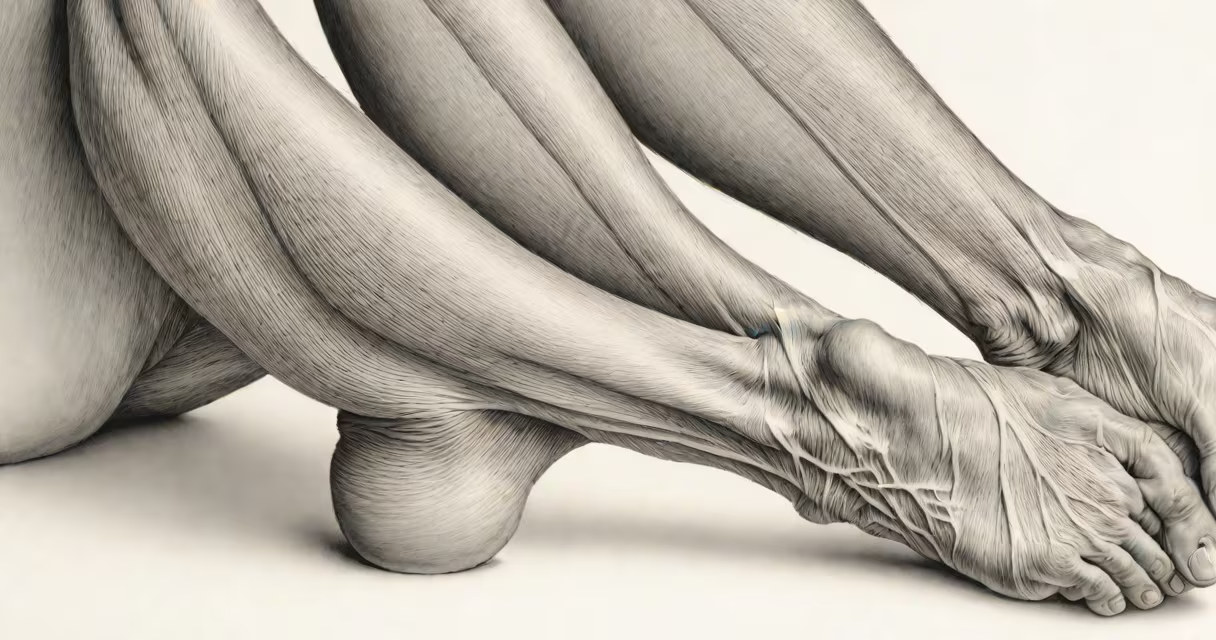
Leg muscle pain reason refers to the specific biological or mechanical cause behind discomfort in the muscles of the lower limb, ranging from overuse injuries to neurological or vascular conditions. The most common reasons include muscle strain, nerve compression, poor blood flow, and delayed onset muscle soreness (DOMS).
When a muscle hurts during or after activity, the issue often lies in microtears caused by sudden or excessive load. These tears trigger inflammation and pain signals through nociceptors in the tissue. For example, sprinting without proper warm-up can rupture small fibers in the quadriceps, leading to sharp pain within minutes. This is distinct from DOMS, which appears 12-48 hours later due to metabolic waste buildup and cellular repair processes.
Nerve-related leg muscle pain arises when nerves are compressed or irritated. Sciatica, for instance, results from pressure on the sciatic nerve near the lower spine. A 2021 study in The Journal of Neurology found that 68% of patients with persistent leg pain had MRI-confirmed disc herniation affecting lumbar nerve roots. Pain typically radiates from the lower back down the back of the thigh, sometimes reaching the calf or foot.
Leg muscle pain reason begins with mechanical stress or physiological disruption. When muscles contract repeatedly under load-such as during running or weightlifting-they consume oxygen faster than supply. This leads to anaerobic metabolism, lactic acid accumulation, and immediate burning sensation. Prolonged imbalance between demand and recovery causes microtrauma.
Chronic leg muscle pain may stem from systemic issues. Peripheral artery disease (PAD), for example, reduces blood flow to the legs. According to the American Heart Association, PAD affects 8.5 million adults in the U.S., with claudication-a cramping pain during walking-being the most common symptom. Patients often report relief when stopping movement, unlike exercise-induced cramps that persist until rest.
Neurological causes involve misfiring signals. A pinched nerve in the spine can send erratic impulses to the hamstring, causing spasms even at rest. This differs from muscle strain, where pain worsens with movement and improves with stretching. Accurate diagnosis requires distinguishing between localized muscle injury and referred pain from deeper structures.
Understanding the root cause helps direct treatment. Below are the primary categories based on clinical evidence:
| Type | Common Cause | Onset & Pattern | Relief Trigger |
|---|---|---|---|
| Overuse strain | Repetitive motion, sudden exertion | Immediate or within 24 hours | Rest, ice, gentle stretch |
| Nerve compression | Herniated disc, spinal stenosis | Gradual, radiating pain | Position changes, physical therapy |
| Circulatory issue | Peripheral artery disease, blood clot | Exercise-induced, resolves with rest | Walking cessation, medical intervention |
| Delayed onset soreness | Unaccustomed exercise, eccentric loading | 12-72 hours post-activity | Light movement, hydration, time |
One non-obvious distinction: muscle strain pain is usually localized and worsens with resistance. Nerve-related pain often follows a dermatomal pattern-meaning it travels along a specific nerve pathway. For example, L5 nerve root irritation causes pain along the outer side of the leg and top of the foot, not the inner calf.
Most leg muscle pain reason cases occur in the calf, quadriceps, hamstrings, and anterior tibialis. The calf muscles, especially the gastrocnemius, are prone to cramps during prolonged standing or swimming. A 2019 study in Frontiers in Physiology showed that dehydration and electrolyte imbalance contribute to 30% of nocturnal calf cramps in adults over 50.
Runners frequently report shin splints-medial tibial stress syndrome-due to repetitive impact on the tibia. This condition involves inflammation of the periosteum, the connective tissue covering the bone. Pain typically starts during early runs and diminishes with continued movement, a phenomenon known as "warm-up effect."
Back leg muscle pain reason often points to hamstring strain. During sprinting, the hamstring contracts forcefully to extend the hip and flex the knee. If the muscle is tight or fatigued, it can tear. A 2020 review in British Journal of Sports Medicine reported that 30% of elite runners experience hamstring injuries annually, with recurrence rates above 40% without proper rehab.
Many assume leg muscle pain reason always stems from overtraining. But in older adults, leg pain during walking is more likely due to PAD than muscle fatigue. The American College of Cardiology notes that 80% of PAD cases go undiagnosed because symptoms are mistaken for arthritis or aging.
Another misconception: DOMS is not caused by lactic acid. Research published in Journal of Applied Physiology (2015) confirms that lactic acid clears within 20 minutes after exercise. DOMS results from structural damage to muscle fibers and subsequent immune response, not metabolic byproducts.
I once observed a cyclist who experienced severe calf pain after a long ride. He assumed it was a pulled muscle. After resting for two days, the pain persisted. An MRI revealed a deep vein thrombosis (DVT)-a blood clot in the calf vein. This case highlights that leg muscle pain reason isn't always musculoskeletal. When pain doesn't improve with rest or worsens with swelling, seek immediate evaluation.