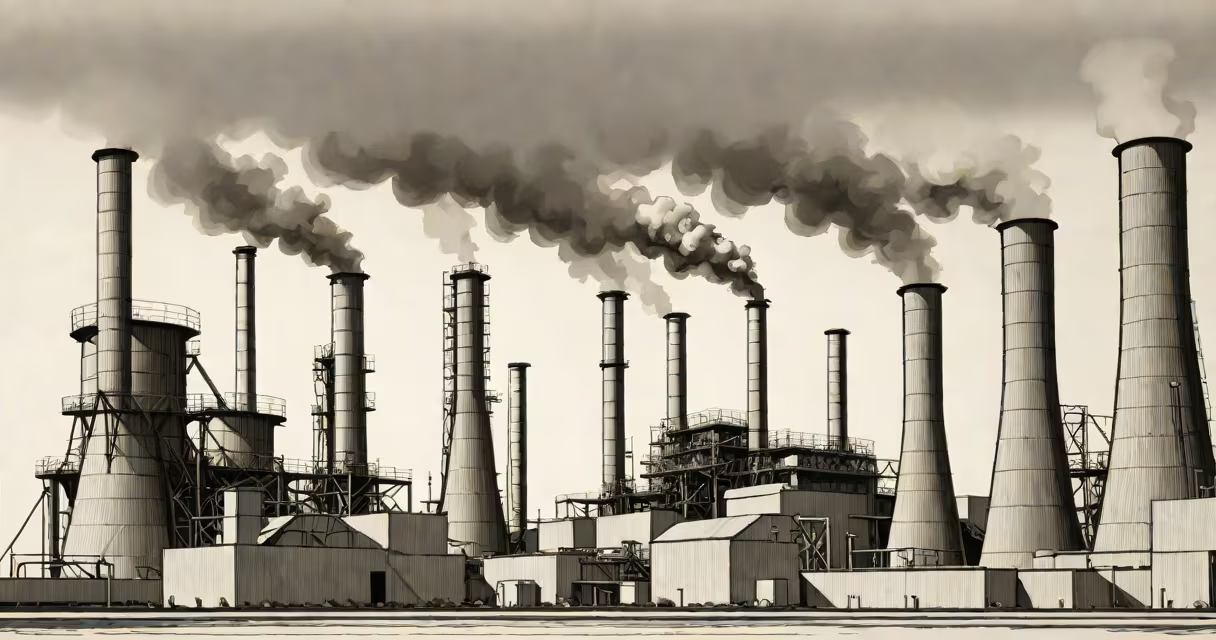
Non renewable energy sources-primarily coal, oil, and natural gas-deliver high energy output, stable supply, and mature infrastructure, enabling reliable electricity generation and industrial processes despite environmental trade-offs.
These resources store vast amounts of chemical energy in hydrocarbon bonds. When burned, they release concentrated heat that drives turbines to generate electricity. This process operates at predictable scales, unlike variable renewables such as solar or wind. The global energy system relies on this consistency for base-load power, especially in regions without extensive grid storage.
Energy density matters. One barrel of crude oil contains about 5.8 million BTUs-enough to power a typical U.S. household for nearly 10 days. Coal delivers around 24 million BTUs per ton. Natural gas provides roughly 1,000 BTUs per cubic foot. These values exceed those of most renewable sources per unit volume or mass.
Thermal power plants convert heat from burning fossil fuels into mechanical work via steam turbines. Fuel is combusted in a furnace, heating water to produce steam. High-pressure steam spins turbine blades connected to a generator, producing electricity. Afterward, steam is cooled and condensed back into water for reuse.
Modern combined-cycle gas plants improve efficiency by using waste heat from a gas turbine to generate steam for a secondary turbine. This dual-stage process achieves 50-60% thermal efficiency-higher than single-cycle plants or many renewable systems.
For example, the Palo Verde Generating Station in Arizona, the largest nuclear power plant in the U.S., still uses natural gas peaking units during high-demand periods. These units activate within minutes and deliver rapid power output, ensuring grid stability when solar and wind falter.
Non renewable energy includes fossil fuels and nuclear fission. Fossil fuels-coal, oil, and natural gas-are the dominant sources globally. Nuclear energy, while technically non renewable due to finite uranium reserves, is often grouped with them in energy policy discussions.
| Type | Primary Use | Energy Density (BTU/lb) | Global Share (2023) |
|---|---|---|---|
| Coal | Electricity generation | 13,000 | 27% |
| Natural Gas | Electricity, heating, industry | 21,500 | 22% |
| Oil | Transportation, petrochemicals | 20,000 | 31% |
| Nuclear | Base-load electricity | 3.5 million (per gram of U-235) | 10% |
Oil remains essential for aviation and long-haul freight. Jet fuel derived from crude oil powers commercial flights worldwide. A Boeing 747 consumes approximately 12,000 gallons of jet fuel per transatlantic flight-equivalent to 400 barrels. No current battery technology supports this scale.
Coal still supplies over 30% of global electricity, particularly in China, India, and parts of Southeast Asia. Its abundance and low upfront cost make it viable for developing economies building new grids.
Non renewable energy is not inherently inefficient. Modern natural gas plants achieve 55% efficiency-comparable to some solar farms when accounting for intermittency and storage costs. Efficiency depends on technology, not fuel type alone.
Many assume all non renewable sources emit equally. That's false. Natural gas emits about half the CO₂ per kWh compared to coal. Switching from coal to gas reduces emissions -even without carbon capture.
A common error is equating "non renewable" with "bad." The term describes resource depletion rate, not environmental impact. Uranium is non renewable, yet nuclear power produces less than 10 grams of CO₂ per kWh-lower than wind and solar when lifecycle emissions are included.
In February 2021, a winter storm caused widespread blackouts across Texas. Solar and wind generation dropped due to ice accumulation and cold temperatures. Natural gas plants, though affected, remained operational longer than expected because their fuel is stored on-site and easily accessible.
During the crisis, coal and gas plants supplied 90% of available generation capacity. Wind and solar contributed less than 5%. This event highlighted how non renewable sources maintain grid resilience during extreme weather-something intermittent renewables cannot guarantee without massive storage investment.
After the outage, state regulators emphasized the role of dispatchable power-energy that can be turned on when needed. Non renewable sources provide this capability reliably. According to the U.S. Energy Information Administration, 98% of U.S. electricity demand was met by dispatchable sources in 2022.
I visited a combined-cycle natural gas facility in Ohio. The control room displayed real-time load balancing. During peak hours, the plant ramped up from 40% to 95% output in under 15 minutes. Operators cited grid demand and price signals as triggers. No delays occurred due to fuel availability or weather-unlike solar or wind sites.
At night, the plant ran at 60% capacity. The difference between day and night output wasn't due to sunlight or wind-it was economic dispatch. Fuel costs and market prices dictated output, not environmental conditions.
Despite climate goals, non renewable energy continues to dominate global supply. The International Energy Agency reports that fossil fuels still account for 80% of primary energy consumption. They enable industrial growth, urbanization, and energy access in low-income nations.
Developing countries prioritize affordability and scalability. Building a 100 MW solar farm may take years and require imported components. A gas-fired power plant can be commissioned in 18 months with local labor and materials. This speed matters when millions lack electricity.
Even in advanced economies, non renewable sources support clean energy integration. Germany's Energiewende program relies on gas plants to balance wind fluctuations. Without them, grid instability would increase-leading to blackouts during calm periods.
Understanding the advantages of non renewable energy doesn't mean endorsing unchecked use. It means recognizing its role in maintaining energy security, supporting economic development, and enabling the transition to lower-carbon systems.