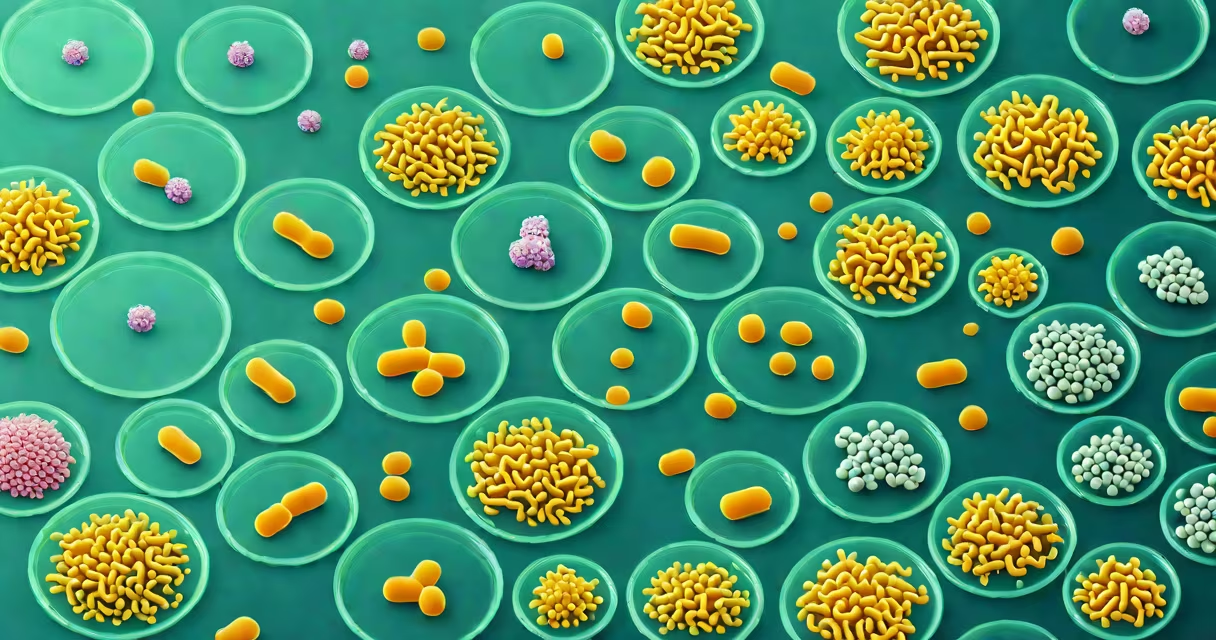
Types of coliform bacteria are groups of rod-shaped, Gram-negative bacteria commonly found in the intestines of warm-blooded animals and in soil. They are used as biological indicators to detect fecal contamination in water and food. The presence of these bacteria signals potential exposure to harmful pathogens.
Coliforms are defined by their ability to ferment lactose and produce acid and gas at 35°C within 48 hours. This test property makes them easy to isolate and identify in laboratory settings. Not all coliforms are harmful, but their detection suggests environmental conditions conducive to pathogen survival.
The most widely recognized types of coliform bacteria include total coliforms, fecal coliforms, and Escherichia coli (E. coli). Total coliforms are a broad category indicating general microbial contamination. Fecal coliforms are a subset associated with fecal matter from mammals. E. coli, a species within the fecal coliform group, is the most specific marker for recent fecal pollution.
Laboratories use selective culture media such as MacConkey agar or mEndo agar to grow coliform colonies. These media contain lactose and pH indicators. When coliforms ferment lactose, they produce acid, lowering the pH and turning the indicator red. Gas bubbles in Durham tubes confirm fermentation.
Further differentiation occurs through biochemical tests. For example, E. coli produces gas from lactose at 44.5°C, a temperature that inhibits most other coliforms. This elevated-temperature test isolates E. coli specifically. The ability to grow at higher temperatures distinguishes E. coli from other fecal coliforms like Klebsiella and Enterobacter.
A 2018 study published in Water Research found that E. coli was detected in 92% of wastewater samples showing positive coliform results, confirming its role as a reliable indicator organism. This aligns with guidelines from the U.S. Environmental Protection Agency (EPA), which mandates E. coli testing in recreational waters.
The following table outlines the primary categories of coliform bacteria based on origin, growth characteristics, and significance in environmental monitoring.
| Type | Source | Growth at 35°C | Growth at 44.5°C | Public Health Significance |
|---|---|---|---|---|
| Total coliforms | Intestines, soil, plants | Yes | No | General contamination signal |
| Fecal coliforms | Mammalian feces | Yes | Yes | Indicates fecal pollution |
| E. coli | Human and animal intestines | Yes | Yes | Strong evidence of recent fecal contamination |
While all three types share the lactose-fermenting trait, their thermal tolerance separates them. Only E. coli consistently grows at 44.5°C, making it the gold standard for identifying fresh fecal input in water supplies.
Water systems routinely test for types of coliform bacteria because their presence implies risk of disease-causing organisms. Pathogens like Salmonella, Shigella, and Vibrio cholerae often co-occur in environments contaminated with fecal matter. Detecting coliforms allows early intervention before illness outbreaks occur.
For example, in 2016, a small town in Michigan experienced a rise in gastrointestinal illnesses after heavy rainfall. Testing revealed coliform levels exceeding EPA limits. Follow-up analysis showed E. coli concentrations above 100 colony-forming units per 100 mL, triggering a boil-water advisory. The outbreak was traced to a failing septic system near a wellhead.
A common misconception is that all coliforms are dangerous. In reality, many are harmless environmental microbes. However, their presence indicates that conditions allow pathogens to survive. The CDC emphasizes that coliform testing is not a direct measure of illness risk but a proxy for contamination likelihood.
One widespread error is equating coliform positivity with immediate health danger. A single positive sample does not confirm infection. Regulatory standards require multiple samples over time to confirm persistent contamination. The EPA's Surface Water Treatment Rule specifies that a single E. coli-positive sample in a drinking water supply triggers corrective action, but repeated positives are needed for enforcement.
Another confusion arises between coliforms and other enteric bacteria. While coliforms are useful indicators, they do not predict the exact pathogen present. A water sample may test positive for coliforms but negative for E. coli, suggesting older contamination or non-fecal sources like soil runoff. This distinction is critical in forensic water quality investigations.
I once observed a municipal water lab misclassify a sample due to improper incubation temperature. The technician used 37°C instead of 35°C, leading to false-positive total coliform results. After recalibrating the protocol, the actual count dropped below detection limits. This incident reinforced the importance of standardized procedures in interpreting types of coliform bacteria.
Understanding types of coliform bacteria enables accurate assessment of environmental safety. Total coliforms signal possible contamination. Fecal coliforms suggest mammalian waste. E. coli confirms recent fecal input. Each level adds context to risk evaluation.
When evaluating water or food safety, always consider the full profile of types of coliform bacteria. Relying solely on total coliform counts can lead to unnecessary alerts. Conversely, ignoring fecal coliforms risks missing high-risk contamination events.