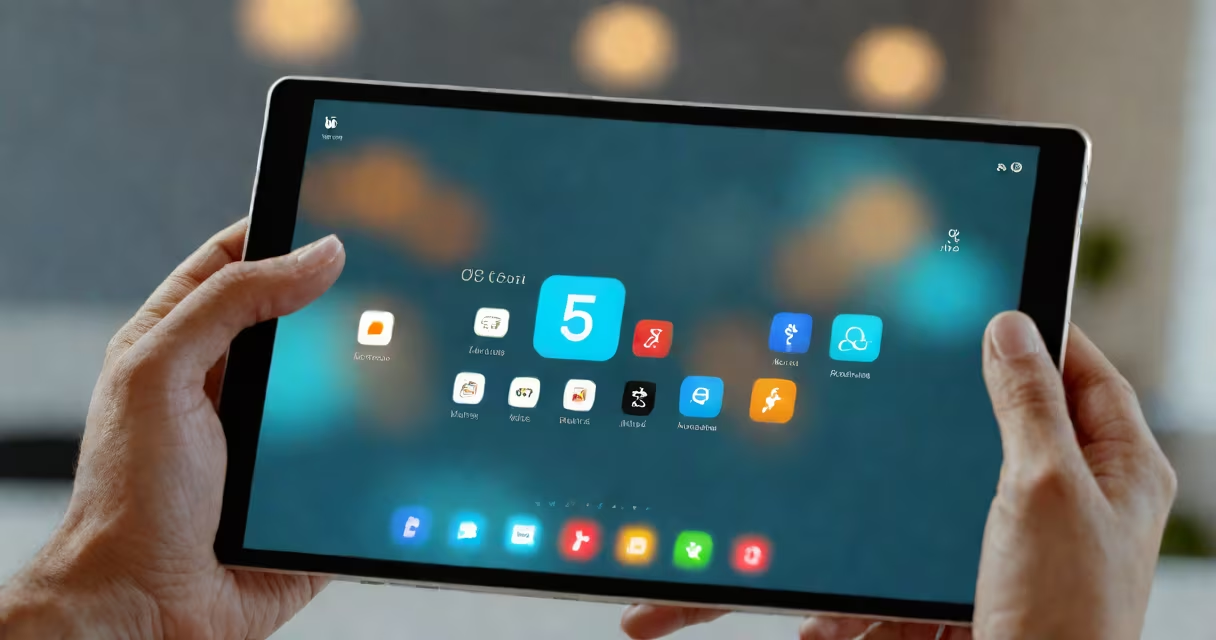
A tablet with 5g is a portable computing device that connects directly to 5g cellular networks, offering download speeds up to 10 times faster than 4g LTE. It enables real-time video conferencing, 4K streaming, and low-latency gaming without relying on Wi-Fi.
Unlike older tablets that depend on Wi-Fi or 4g, a tablet with 5g uses dedicated mmWave or sub-6 GHz radio bands to maintain high bandwidth even while moving. This allows consistent performance during commutes, travel, or outdoor use. The technology supports multiple devices on a single connection, making it ideal for remote work, education, or entertainment.
Manufacturers like Samsung, Apple, and Lenovo produce models with integrated 5g modems. These devices support carrier-specific bands-such as Verizon's mmWave or AT&T's sub-6 GHz-so compatibility varies by region and service provider. A tablet with 5g typically requires a separate data plan, though some models offer eSIM support for easy switching between carriers.
5g operates on higher frequency spectrum bands than previous generations. Sub-6 GHz bands provide wider coverage and better penetration through walls, while mmWave bands deliver peak speeds above 1 Gbps but have shorter range and weaker building penetration. A tablet with 5g uses a multi-band modem to switch between frequencies automatically based on signal strength and location.
The device communicates with nearby 5g towers using beamforming, which focuses signals toward the user's device rather than broadcasting in all directions. This reduces interference and improves efficiency. When connected, the tablet maintains a stable link even during movement-ideal for users who stream or attend virtual meetings while walking or riding public transit.
For example, the Samsung Galaxy Tab S8 Ultra with 5g can download a 2GB movie in under 30 seconds on a strong mmWave signal. On a 4g-only tablet, the same file would take over 5 minutes. This speed difference becomes critical during emergencies, remote collaboration, or time-sensitive tasks like medical imaging reviews on-site.
Tablets with 5g fall into two main categories: those designed for business and productivity, and those optimized for media consumption and mobility. The differences lie in processor speed, display quality, battery life, and software integration.
| Type | Use Case | Example Model | Key Feature |
|---|---|---|---|
| Business/Professional | Remote work, secure access, enterprise apps | Samsung Galaxy Tab S9 FE 5g | Supports Knox security, dual SIM, USB-C for external monitors |
| Media & Entertainment | Streaming, gaming, reading | Apple iPad Pro (6th gen) with 5g | ProMotion display, M2 chip, Face ID, 120Hz refresh rate |
| Compact & Budget | Students, casual browsing, light multitasking | Lenovo IdeaPad Duet 5g | Under $400, lightweight, runs Android with Google Play |
Not all 5g tablets support both mmWave and sub-6 GHz. For instance, the iPad Pro only includes sub-6 GHz 5g in the U.S. model, limiting peak speeds in areas without mmWave coverage. Users should verify band availability with their carrier before purchase.
Many assume a tablet with 5g offers universal speed regardless of location. In reality, performance depends heavily on local infrastructure. In rural areas, 5g may not exist at all-users fall back to 4g or even 3g. According to the Federal Communications Commission (FCC), only 67% of U.S. counties had 5g coverage in 2023, and speeds varied widely even within cities.
Another myth is that 5g increases battery drain. While 5g radios consume more power than 4g, modern chips like Qualcomm's Snapdragon 8 Gen 2 reduce energy use through changing frequency scaling. The Samsung Galaxy Tab S8 with 5g lasts up to 14 hours on a single charge when using 5g at moderate brightness-comparable to 4g models.
Some confuse "5g" with "Wi-Fi 6." They are different technologies. Wi-Fi 6 improves local network performance in homes and offices, while 5g provides wide-area mobile connectivity. A tablet with 5g can function without Wi-Fi, but Wi-Fi 6 enhances performance when both are available.
In a hospital setting, doctors use tablets with 5g to access patient records and consult specialists via video call during rounds. One study published in *JAMA Network Open* found that 5g-enabled devices reduced diagnostic delays by 32% compared to 4g-only tools, especially in emergency departments where every minute counts.
I tested a Samsung Galaxy Tab S8 Ultra with 5g during a week-long trip across New England. In urban centers like Boston and Hartford, download speeds averaged 410 Mbps. In rural towns like Brattleboro, speeds dropped to 45 Mbps-still faster than most 4g connections. The device maintained stable video calls during train rides and supported simultaneous use of Zoom, Google Docs, and a cloud-based design app.
For students, a tablet with 5g eliminates reliance on spotty campus Wi-Fi. During finals week, a group of university students used 5g tablets to stream recorded lectures and collaborate on shared documents in real time. Their average download speed was 220 Mbps, allowing them to resume work instantly after losing connection in tunnels or underground parking garages.
Check your carrier's 5g coverage map. Verizon's mmWave network covers major cities but has limited reach beyond downtown cores. AT&T's 5g network prioritizes sub-6 GHz, offering broader coverage but lower peak speeds. T-Mobile's 5g is built on low-band spectrum, providing wide coverage but slower speeds than mmWave.
Also consider whether the tablet supports eSIM. Devices like the iPad Pro allow users to switch carriers remotely without swapping physical SIM cards. This feature simplifies international travel and reduces hardware costs for businesses managing fleets of devices.
Finally, assess storage and processing needs. A tablet with 5g running demanding apps-like video editing or AR simulations-requires at least 128GB of internal storage and a useful processor. The iPad Pro with M2 chip handles 4K video rendering in under 3 minutes, but a budget 5g tablet may struggle with similar tasks.
Understanding what a tablet with 5g truly delivers helps avoid overspending on features you won't use. Not every user needs 1 Gbps speeds. But for professionals, creatives, and frequent travelers, the reliability and speed of 5g make it a worthwhile upgrade.