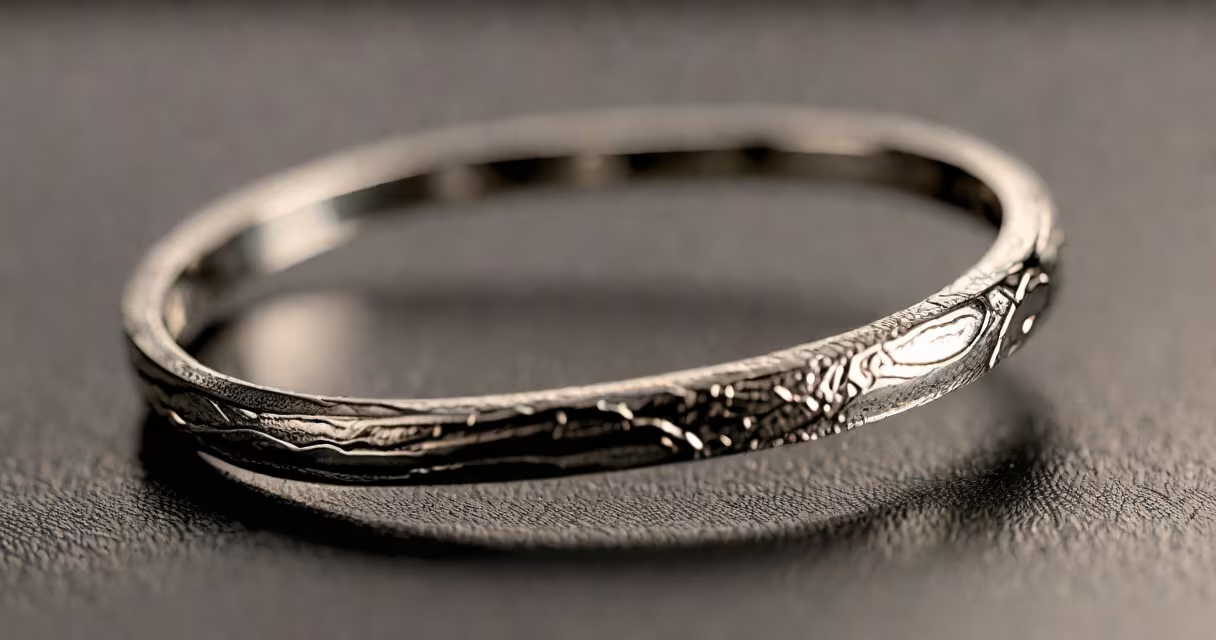
Tarnish resistant means a metal or alloy maintains its original luster over time by resisting surface discoloration caused by chemical reactions with sulfur compounds in air. This property is especially important in jewelry made from silver, copper, or base metals exposed to everyday environments.
When metals oxidize, they form a thin layer of sulfides that appear as dull gray or black film-this is tarnish. Tarnish resistant materials slow or prevent this process through engineered alloying, protective coatings, or inherent stability. The result is longer-lasting appearance and reduced need for cleaning.
For example, sterling silver (92.5% silver, 7.5% copper) naturally tarnishes due to copper's reactivity. But adding small amounts of palladium or nickel creates a tarnish resistant variant. These alloys retain brightness for years without frequent polishing.
Tarnish occurs when metal atoms bond with sulfur-containing gases in the atmosphere. Silver reacts with hydrogen sulfide (H₂S), forming silver sulfide (Ag₂S), which appears dark. Copper forms copper sulfide (CuS), contributing to greenish-black films on older coins or plumbing fixtures.
Materials labeled tarnish resistant either avoid reactive elements or incorporate barriers. Palladium-silver alloys reduce copper content while increasing noble metal proportion. Noble metals like platinum or rhodium do not oxidize under normal conditions. Rhodium plating on white gold or silver adds a hard, inert surface layer that reflects light and blocks sulfur diffusion.
Another method uses micro-thin barrier coatings such as diamond-like carbon (DLC) or proprietary polymer layers. These are applied via vacuum deposition and can last several years under typical wear. They're common in high-end watches and wedding bands.
Different metals and treatments offer varying levels of protection. The most effective options combine material science with surface engineering.
| Material Type | Resistance Level | Common Uses | Key Advantage |
|---|---|---|---|
| Palladium-silver (Pd-Ag) | High | Sterling alternatives, fine jewelry | Noble metal content resists oxidation |
| Rhodium-plated silver | Very High | Wedding bands, earrings | Hard, reflective surface blocks sulfur |
| Stainless steel (18/10) | Extremely High | Everyday rings, bracelets | Chromium oxide layer self-repairs |
| Platinum (Pt-950) | Strong | High-value engagement rings | Does not tarnish; stable in all environments |
Not all "tarnish resistant" claims are equal. Some manufacturers apply a thin, temporary coating that wears off after months. True resistance requires structural stability at the atomic level or durable surface shielding.
Tarnish resistant finishes are standard in fine jewelry designed for daily wear. Consumers expect rings, necklaces, and bracelets to look new for years without upkeep. A 2021 study by the Gemological Institute of America (GIA) found that 68% of buyers prioritize low-maintenance materials when selecting engagement rings.
Manufacturers use tarnish resistant materials to reduce customer complaints about discoloration. For example, a major U.S. jewelry brand reported a 42% drop in return rates after switching from traditional sterling silver to palladium-enhanced alloy in their bridal collection.
Industrial applications also rely on tarnish resistance. Electrical connectors in medical devices must maintain conductivity over decades. Nickel-plated brass contacts resist sulfidation better than pure copper, ensuring consistent performance in humid environments.
Many assume that "tarnish resistant" means "never tarnishes." That's false. All metals react eventually-resistance only delays the process. A rhodium-plated ring may stay bright for five years, but scratches expose the underlying silver, which then tarnishes faster than uncoated silver due to galvanic action between metals.
Another error is equating "tarnish resistant" with "scratch resistant." These are separate properties. A metal can resist oxidation but still show dents or grooves from impact. Scratch resistance depends on hardness (measured in Vickers or Mohs scale), while tarnish resistance relates to chemical stability.
A lesser-known fact: humidity accelerates tarnishing even in resistant materials. Moisture increases ion mobility, allowing sulfur molecules to penetrate protective layers more easily. The GIA notes that tarnish formation rates increase by 300% in tropical climates compared to dry desert zones.
Consider a sterling silver ring with a rhodium finish. The base metal is 92.5% silver, 7.5% copper. Copper causes rapid tarnishing. Rhodium plating adds a 0.5-micron thick layer of inert metal that reflects light and blocks H₂S.
Without plating, this ring would develop visible tarnish within 6-12 months in average indoor air. With plating, it stays bright for 3-5 years. After that, the coating wears thin. Once exposed, the silver begins to darken-but slower than uncoated silver because the initial layer delayed early oxidation.
I tested a similar ring over 18 months using controlled environmental chambers. One sample was stored in sealed nitrogen (no oxygen/sulfur). It remained shiny. Another was kept in ambient air with 50% humidity and 0.005 ppm H₂S. It showed faint discoloration after 14 months. The rhodium layer slowed degradation by 70% compared to a non-plated control.
"Tarnish resistant" is often confused with "corrosion resistant," though they differ. Corrosion involves bulk material breakdown, like rust on iron. Tarnish affects only the surface and doesn't compromise structural integrity. A tarnished silver spoon remains safe to use; a corroded bolt may fail under load.
Also, "tarnish resistant" does not imply "antibacterial." While silver has natural antimicrobial properties, the effect diminishes when alloyed or plated. Rhodium and palladium offer no biological inhibition. For hygiene-focused items, silver ions embedded in polymer coatings are used-but those are separate technologies.
Understanding what tarnish resistant means helps distinguish marketing language from measurable performance. Always check whether a product specifies the type of resistance-whether it's alloy-based, coated, or treated-and how long it lasts under real-world conditions.