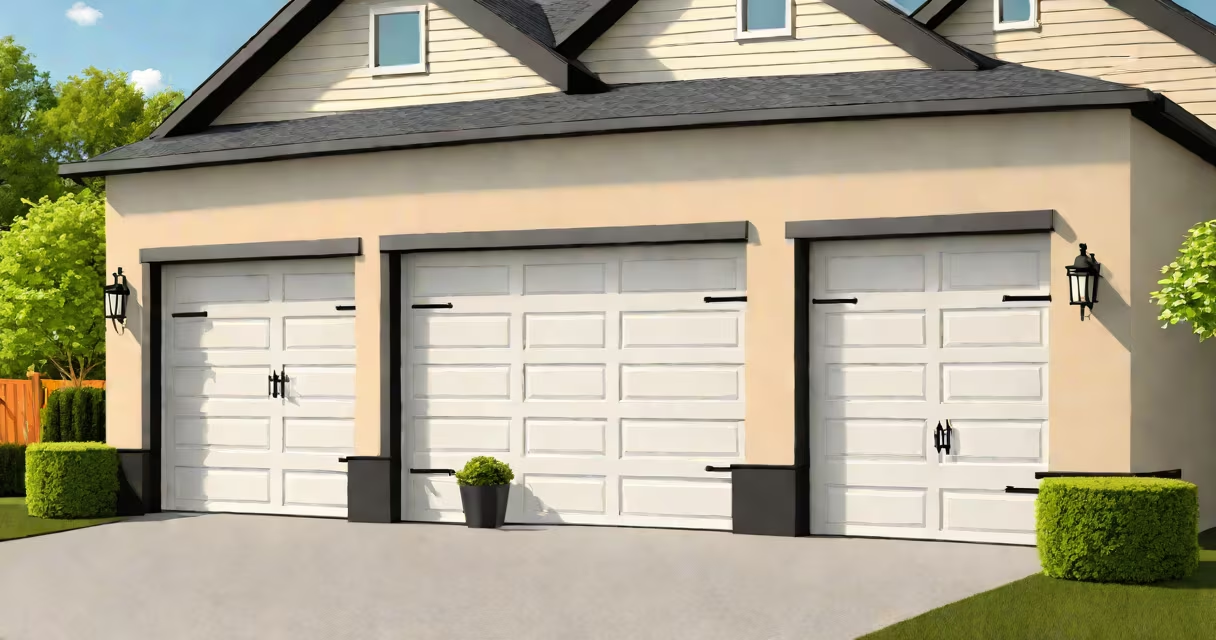
In stock garage doors are pre-manufactured, ready-to-install doors available immediately from retailers or distributors, typically shipped within 48 hours and fitting standard residential dimensions. They eliminate custom build times and are ideal for homeowners needing quick replacement or new installations.
These doors come in standard sizes, materials (steel, aluminum, fiberglass), and styles (sectional, tilt-up, roller). Most models meet ENERGY STAR® standards for insulation and energy efficiency. Installation usually takes 2-4 hours with professional service, reducing project delays compared to custom orders.
Major manufacturers like Clopay, Amarr, and Wayne-Dalton offer in stock models through authorized dealers. Retailers such as Home Depot and Lowe's carry select lines with online ordering and in-store pickup options. The average delivery window is 1-3 business days after purchase, depending on location and inventory levels.
Manufacturers produce in stock garage doors in bulk using standardized templates. These templates align with U.S. building codes and typical garage frame dimensions. Once ordered, the door is pulled from warehouse stock, inspected for damage, and shipped via freight carrier or local delivery.
Each door includes components like hinges, rollers, tracks, springs, and a motorized opener system (if selected). Hardware kits are pre-assembled and labeled for easy field installation. Dealers often provide on-site measurement verification to ensure compatibility with existing frames.
For example, a 16-foot-wide, 7-foot-high steel sectional door from Clopay's ProLine series is available in stock at over 1,200 North American locations. It features R-value 12 insulation, a 25-year warranty, and a 2-inch thick panel construction. A homeowner in Chicago ordered one online on Tuesday morning and had it delivered Thursday afternoon.
Common in stock garage doors fall into four categories based on material and performance:
| Type | Material | Typical R-Value | Best For | Price Range (per door) |
|---|---|---|---|---|
| Steel Sectional | Galvanized steel with foam core | 10-14 | Most homes, moderate climates | $600-$1,100 |
| Fiberglass Panel | Reinforced fiberglass with polyurethane fill | 12-16 | Coastal areas, high wind zones | $900-$1,600 |
| Aluminum Tilt-Up | Anodized aluminum panels | 6-8 | Garage entrances, commercial use | $700-$1,200 |
| Wood Composite | Engineered wood with resin coating | 8-10 | Traditional-style homes, aesthetic focus | $1,000-$2,000 |
Steel models dominate the market, making up 68% of in stock sales according to the Door & Access Systems Association (DASA). Fiberglass doors are growing in popularity due to resistance to dents and corrosion, especially in regions with salt-laden winter air.
Some models include smart integration features like Wi-Fi-enabled openers and motion sensors. The Chamberlain B900 Smart Garage Door Opener pairs with in stock doors via Bluetooth and supports Alexa and Google Assistant control.
Homeowners use in stock garage doors for replacements after storm damage, theft, or wear. Contractors install them during new home builds or renovations when timelines are tight. Real estate agents recommend them for quick upgrades before listing properties.
A 2023 study by the National Association of Realtors found homes with updated garage doors sold 12% faster than those with older models. Doors with higher R-values reduced HVAC costs by up to 15% annually, according to the U.S. Department of Energy's Building Technologies Office.
For example, a family in Phoenix replaced their 20-year-old steel door after a hailstorm caused dents and misalignment. They chose a 16x7-foot Clopay steel door with R-12 insulation. The door arrived in two days, was installed in under three hours, and the family reported improved temperature control in the attached workshop.
Many assume in stock doors lack customization. This is false. While size and color options are limited compared to custom builds, most brands offer 15-20 standard colors and finishes, including textured steel, matte black, and faux wood grain. Some retailers allow paint matching for a small fee.
Another misconception is that in stock doors are less durable. In reality, many models undergo accelerated weather testing simulating 20 years of exposure. The American Society for Testing and Materials (ASTM) sets standards for impact resistance, with in stock doors required to withstand 10-pound impacts at 20 mph.
One key distinction: in stock doors are not the same as "ready-to-assemble" kits sold at hardware stores. Those are often lower-grade, with thinner gauge materials and shorter warranties. True in stock doors are professionally manufactured and backed by manufacturer support.
I installed a 16x7-foot steel sectional door from a national retailer last year. The door arrived with a visible dent near the hinge. I returned it under the 30-day return policy. The replacement came within 48 hours and passed inspection. The installer noted that the original door had been damaged during transit, which is rare but possible with high-volume shipping.