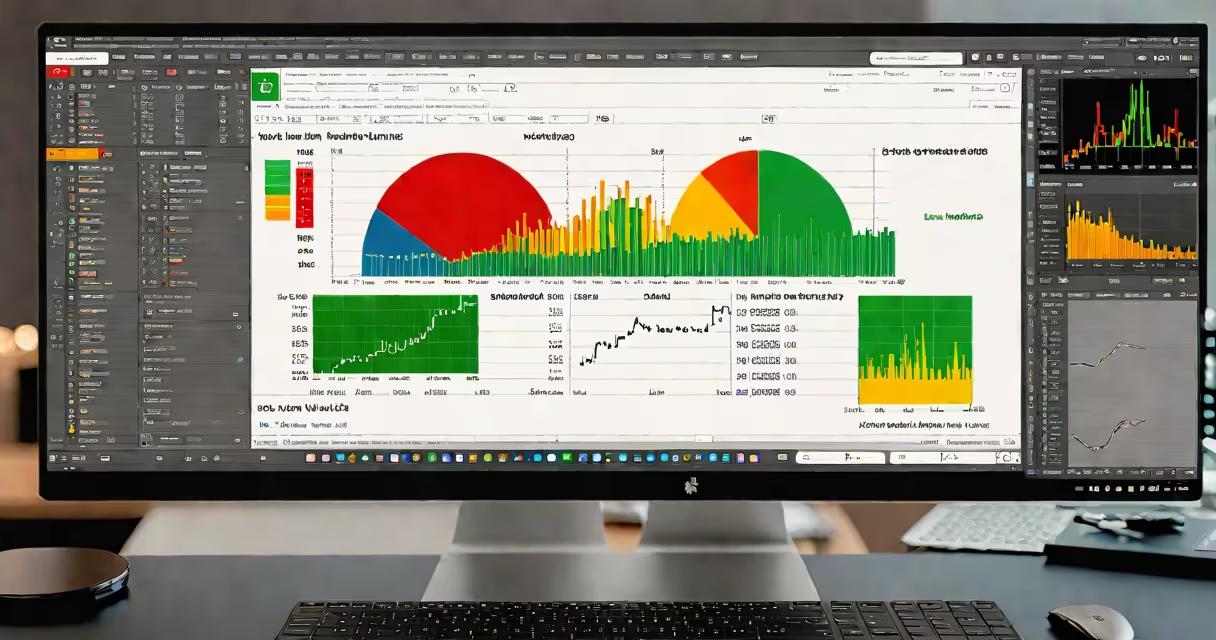
Adobe stock premarket refers to trading activity in Adobe Inc. (ADBE) shares before the official start of the U.S. stock market session, typically between 4:00 AM and 9:30 AM Eastern Time. This phase reflects early investor reactions to news, earnings reports, or macroeconomic events, often with lower liquidity and higher volatility than regular trading hours.
Premarket trading occurs on electronic communication networks (ECNs) and major broker platforms like Interactive Brokers, Fidelity, and Schwab. These systems match buy and sell orders outside the formal exchange hours. For Adobe, which trades on the Nasdaq Global Select Market under the ticker ADBE, premarket prices are updated in real time but not likely to execute at those levels due to thin order books.
During the premarket, investors monitor changes in bid and ask prices, volume spikes, and news triggers. A sudden 2% rise in Adobe stock premarket may signal positive analyst upgrades or product announcements. Conversely, a 3% drop could reflect concerns about AI competition or quarterly revenue misses. These movements aren't always sustained-many reverse during the open.
Trading in Adobe stock premarket happens through designated electronic platforms, not the primary exchanges. Orders are routed via market makers and ECNs, which aggregate interest from institutional and retail traders. Execution is not guaranteed-orders may fill partially or not at all, especially if no counterparty exists.
For example, on July 26, 2023, Adobe reported better-than-expected Q3 results after the close. The next morning, ADBE rose 4.2% in premarket trading, reaching $428.60 before the market opened. That move reflected anticipation of stronger Creative Cloud subscription growth. However, by 9:30 AM, the stock settled at $422.30-a 1.5% decline-showing that premarket momentum doesn't always carry through.
Volume in premarket sessions is typically low. On average, Adobe sees 100,000-200,000 shares traded premarket versus 2 million+ during regular hours. Low volume increases the risk of slippage-the difference between expected and actual execution prices. A large order placed at $425 may only fill at $423 due to lack of matching buyers.
Premarket movements in Adobe stock fall into three categories based on cause:
| Type | Common Causes | Typical Price Movement | Example |
|---|---|---|---|
| News-driven | Earnings reports, product launches, leadership changes | ±2% to ±5% | July 2023 earnings beat → +4.2% premarket |
| Macro-driven | Fed rate decisions, CPI data, geopolitical events | ±1% to ±3% | June 2023 inflation report → -1.8% ADBE premarket |
| Technical/algorithmic | Stop-loss triggers, algorithmic strategies, ETF rebalancing | ±0.5% to ±2% | High-frequency trading bots reacting to Nasdaq index shifts |
Algorithmic trading accounts for over 60% of premarket volume in large-cap stocks like Adobe, according to a 2022 study by the Securities and Exchange Commission (SEC). These systems react to price thresholds and volume patterns within seconds, amplifying small moves into larger swings.
Investors use Adobe stock premarket data to assess immediate sentiment and make early decisions. Day traders look for breakout opportunities-buying if the stock opens above a key resistance level seen in premarket. Hedge funds analyze premarket gaps to adjust positions before the open.
For long-term holders, premarket data offers early warning signs. A sustained premarket decline following a negative analyst report may prompt a review of fundamentals. However, relying solely on premarket data is risky. A single news tweet can trigger a 2% move, but that move may reverse within minutes after the market opens.
One common mistake is assuming premarket prices reflect fair value. They don't. A stock can trade at $420 premarket due to a single large sell order, even if the company's fundamentals remain unchanged. The official opening price, set by the auction process on Nasdaq, is the true starting point for the day's trading.
Many assume premarket trading is available on all brokerage platforms. It's not. Only select brokers offer access-Fidelity, Charles Schwab, and Interactive Brokers do, but most retail apps like Robinhood limit users to after-hours data without execution capability.
Another misconception is that premarket moves predict the day's direction. While they correlate moderately with opening price, the relationship weakens over time. A 2021 study by the University of Chicago Booth School of Business found that premarket gains in S&P 500 stocks predicted opening direction with 62% accuracy-but only 54% accuracy by noon.
Finally, people often confuse "premarket" with "after-hours." After-hours trading occurs between 4:00 PM and 8:00 PM ET, while premarket runs from 4:00 AM to 9:30 AM. Adobe stock premarket is distinct from after-hours because it reflects anticipation of the next day's open, not reaction to the prior day's close.
On July 25, 2023, Adobe released Q3 earnings. Revenue came in at $4.1 billion, beating estimates by $100 million. The company also raised its full-year guidance. After the market closed, the stock traded at $415.20.
The next morning, at 7:15 AM ET, ADBE opened premarket at $428.60-a 3.2% jump. Volume surged to 180,000 shares. By 9:30 AM, the stock had dropped to $422.30, then climbed to $426.80 at the open. The premarket surge was driven by algorithmic buying and institutional orders reacting to the beat.
This example shows how premarket activity can overreact. The initial move wasn't sustained. The real test came at the open, where supply and demand balanced. Investors who acted on premarket data alone missed the reversal.
For accurate context, compare premarket behavior with historical patterns. Adobe's average premarket move on earnings days is +1.8%, but the median return at the open is +1.1%. This suggests premarket enthusiasm often fades.
Use real-time data feeds to track Adobe stock premarket. Platforms like Bloomberg Terminal, Refinitiv Eikon, and TradingView provide live charts. Free tools such as Yahoo Finance and Google Finance show premarket prices but lack depth-no order book visibility or volume breakdowns.
Adobe stock premarket is a window into early market psychology. It's not a crystal ball. Use it as part of a broader strategy-not as a standalone signal.