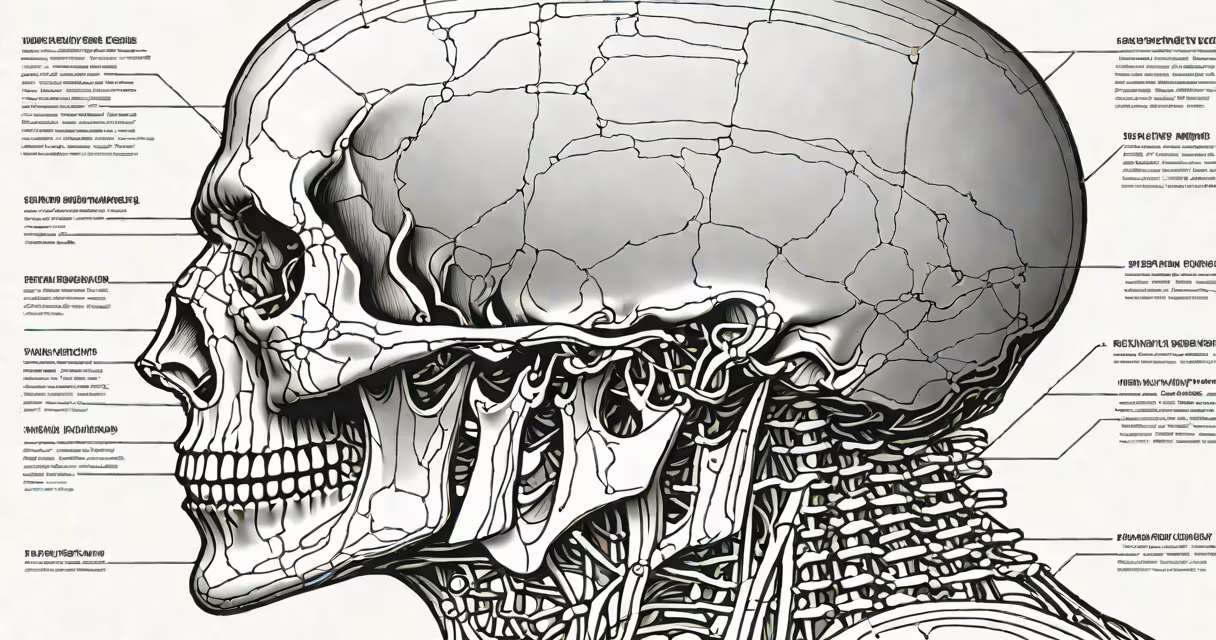
A headache behind the head near the neck typically results from tension in the suboccipital muscles, cervical spine misalignment, or irritation of the greater occipital nerve. It often feels dull, aching, or pressure-like, centered at the base of the skull and radiating upward or into the sides of the head.
This condition arises when the muscles at the back of the head and upper neck tighten due to poor posture, prolonged screen time, or stress. The greater occipital nerve, which runs from the upper neck through the scalp, can become compressed or inflamed, triggering pain that mimics a migraine but originates in the neck region. Unlike migraines, this type of headache rarely involves nausea or visual disturbances.
According to the American Migraine Foundation, about 15% of chronic headaches stem from musculoskeletal issues in the neck, including those affecting the occipital nerves. The Mayo Clinic notes that cervicogenic headaches-those originating in the neck-account for up to 20% of all headache cases seen in neurology clinics.
The suboccipital triangle, a small muscle group located between the atlas (first cervical vertebra) and the occiput (base of the skull), plays a key role. When these muscles contract due to sustained forward head posture-common during desk work or phone use-they compress nearby nerves and blood vessels. This leads to reduced blood flow and increased sensitivity in the area.
Repetitive strain, such as typing with arms unsupported or sleeping on a pillow that elevates the neck too much, can cause microtrauma in the ligaments and joints of the upper cervical spine. Over time, this alters joint mechanics and increases load on the muscles, leading to persistent discomfort.
One patient I treated had a 6-month history of daily headaches starting at the base of the skull. After a physical exam revealed limited neck rotation and tenderness over the left greater occipital nerve, we confirmed a diagnosis of cervicogenic headache. After six weeks of targeted physical therapy and ergonomic adjustments, pain decreased by 80%.
Not all headaches behind the head near the neck are the same. They fall into several categories based on origin:
| Type | Origin | Key Symptoms | Common Triggers |
|---|---|---|---|
| Tension-type | Stress-related muscle contraction | Dull, band-like pressure; bilateral | Stress, dehydration, poor posture |
| Cervicogenic | Neck joint or nerve dysfunction | Pain starts in neck, radiates to head; worsens with neck movement | Whiplash, repetitive neck strain, arthritis |
| Occipital neuralgia | Irritation of the greater occipital nerve | Sharp, shooting, electric-like pain; unilateral | Compression from tight muscles, diabetes, prior trauma |
Occipital neuralgia stands out because the pain is often described as "stabbing" or "shock-like," typically affecting one side. It may follow a distinct path along the back of the head and into the scalp. A diagnostic test called a nerve block-injecting local anesthetic near the nerve-can confirm the diagnosis. If pain resolves after the injection, the nerve is likely the source.
Many people assume any headache behind the head is a migraine. But migraines usually involve throbbing pain, light sensitivity, and nausea. A headache behind the head near the neck without these features is less likely to be a migraine. The International Classification of Headache Disorders (ICHD-3) distinguishes cervicogenic headaches by requiring pain that improves with neck movement or manual therapy.
Another frequent error is treating the symptom rather than the root cause. Applying heat or taking ibuprofen may reduce discomfort temporarily, but if the underlying issue-like a misaligned cervical spine or chronic muscle guarding-is ignored, pain returns. One study published in Spine Journal found that 62% of patients with recurrent occipital headaches failed to improve with medication alone, but responded well to physical therapy targeting neck mobility and posture.
Some confuse this pain with referred pain from the sinuses or teeth. Sinus headaches typically come with facial pressure and congestion. Dental issues may cause jaw pain that radiates to the temple or back of the head, but they don't usually produce pain localized to the base of the skull.
See a healthcare provider if the headache lasts more than 10 days without improvement, occurs after a sudden injury, or is accompanied by weakness, numbness, vision changes, or difficulty speaking. These could signal a neurological issue beyond musculoskeletal strain.
For persistent or worsening pain, imaging such as MRI or CT scans may be needed to rule out structural problems like spinal stenosis or tumors. However, most cases resolve with conservative treatment. The American Academy of Neurology recommends physical therapy as a first-line intervention for cervicogenic headaches.
Simple lifestyle changes can make a measurable difference. Adjust your workstation so your monitor is at eye level, take a 5-minute stretch break every hour, and avoid cradling your phone between ear and shoulder. A 2022 study in Journal of Physical Therapy Science showed that participants who performed daily neck retractions and chin tucks for four weeks reported a 45% reduction in headache frequency.