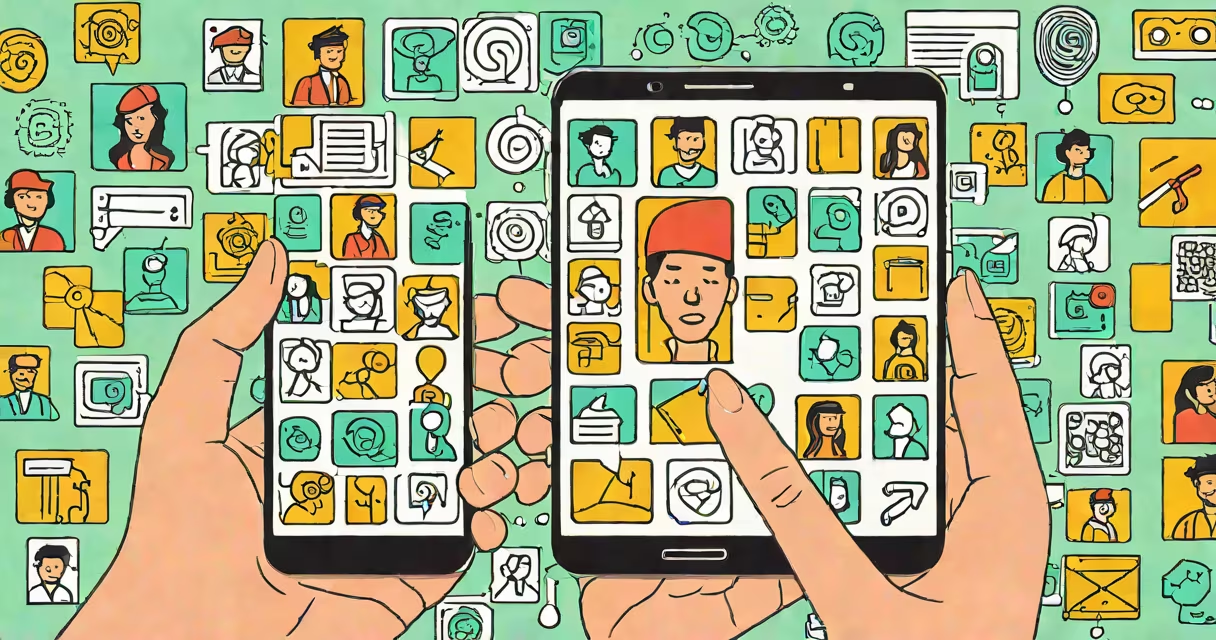
Image recognition is a form of artificial intelligence that enables machines to identify and classify objects, people, scenes, and actions within digital images. It uses trained models to analyze visual data and assign labels based on learned patterns. This capability underpins features like facial enable, automated photo sorting, and safety systems in self-driving cars.
At its core, image recognition relies on deep learning algorithms-specifically convolutional neural networks (CNNs)-trained on millions of labeled images. These models detect edges, textures, shapes, and spatial relationships to build a hierarchical understanding of visual content. When shown a new image, the system compares it against known patterns and returns a probability score for each possible label.
For example, when you take a photo of a dog, the algorithm processes pixel data through multiple layers. Early layers detect lines and curves; middle layers recognize fur texture and ear shape; later layers match the structure to a "dog" category with high confidence. The process happens in milliseconds on modern devices.
The workflow begins with image preprocessing-resizing, normalization, and noise reduction-to ensure consistent input. Then, a CNN applies filters across the image to extract features at different scales. Each filter responds to specific patterns, such as vertical edges or circular blobs.
After feature extraction, the network passes data through fully connected layers that combine low-level details into higher-level concepts. A softmax function outputs probabilities across a predefined set of categories. For instance, a model trained on ImageNet-a dataset of 14 million labeled images-can distinguish between 1,000 object classes, including "sandal," "penguin," and "traffic light."
Training requires vast annotated datasets. According to research from Stanford's Vision Lab, models achieve over 90% accuracy on benchmark tests when trained on more than 1 million images. Without sufficient training data, even advanced models fail to generalize beyond their training set.
Image recognition encompasses several distinct tasks, each serving different applications:
| Task | Description | Common Use Cases |
|---|---|---|
| Classification | Assigning a single label to an entire image. | Labeling photos as "beach," "city," or "forest." |
| Object Detection | Locating and identifying multiple objects within an image. | Autonomous vehicles detecting pedestrians and traffic signs. |
| Semantic Segmentation | Labeling every pixel in an image with its corresponding class. | Medical imaging to outline tumors in MRI scans. |
| Facial Recognition | Identifying individuals based on facial features. | Phone unlocking, law enforcement surveillance. |
While classification is simpler, object detection adds spatial awareness. Semantic segmentation offers precision down to individual pixels-critical in fields like radiology, where mislabeling a tumor boundary can affect treatment decisions.
Image recognition powers everyday tools. Social media platforms use it to auto-tag friends in photos. Retailers deploy it for inventory tracking via shelf-scanning cameras. Healthcare providers apply it to analyze X-rays and detect early signs of disease.
One notable application is in agriculture. Researchers at the University of California, Davis, developed a model that analyzes drone-captured images of crops to detect nutrient deficiencies. The system identifies yellowing leaves with 87% accuracy, enabling farmers to apply fertilizer only where needed-reducing waste and environmental impact.
Another example: Google Lens uses image recognition to translate text in real time. Point your phone at a sign in Japan, and the app overlays English translations directly onto the image. This functionality combines object detection, optical character recognition (OCR), and language processing.
Many assume image recognition is synonymous with facial recognition-but they're not the same. Facial recognition focuses exclusively on human faces and often involves biometric identification. Image recognition covers all visual content, including animals, buildings, and abstract art.
A frequent error is assuming that high accuracy means perfect performance. A model may report 99% confidence in identifying a cat, but if the training data lacked rare breeds, it might misclassify a Savannah cat as a domestic shorthair. Accuracy drops sharply on edge cases-images outside typical conditions like poor lighting or unusual angles.
Another misconception: image recognition doesn't "understand" images like humans do. It correlates pixel patterns with labels. A model may correctly label a photo of a giraffe but fail to explain why it chose that label. There's no internal reasoning-it's pattern matching, not comprehension.
I once tested a free online tool that claimed to recognize "any animal." I uploaded a photo of a dromedary camel standing in a desert. The tool returned "lion" with 68% confidence. It had never seen a camel before-only lions in African savannas. The model matched the shape of the head and mane-like hump to a familiar pattern, proving that context matters.
This service uses Microsoft's Azure Cognitive Services, which includes pre-trained models for object detection, scene labeling, and celebrity recognition. It supports over 1,000 categories and integrates with web search engines to deliver contextual results.
Compare this to searching with text. Typing "boy playing soccer" brings up pages describing the event. Uploading a photo of a boy kicking a ball yields immediate visual matches-like other kids in similar poses, or news stories featuring the same game. The difference lies in input mode: visual vs. textual.
Image recognition differs from related fields in scope and purpose:
These technologies often work together. For instance, an app that describes a scene for visually impaired users combines image recognition (to find objects), OCR (to read signs), and captioning (to generate a spoken narrative).
Image recognition is not magic-it's math, data, and engineering. It enables machines to interpret visual information much like humans do, though without consciousness or intent. Its power grows with better training data, faster hardware, and improved algorithms.
As AI advances, image recognition will continue shaping how we interact with digital environments-from smart homes to medical diagnostics. Understanding its limits prevents overreliance. Knowing its capabilities helps us use it responsibly.
Image recognition is transforming how computers see the world-and it's only beginning.