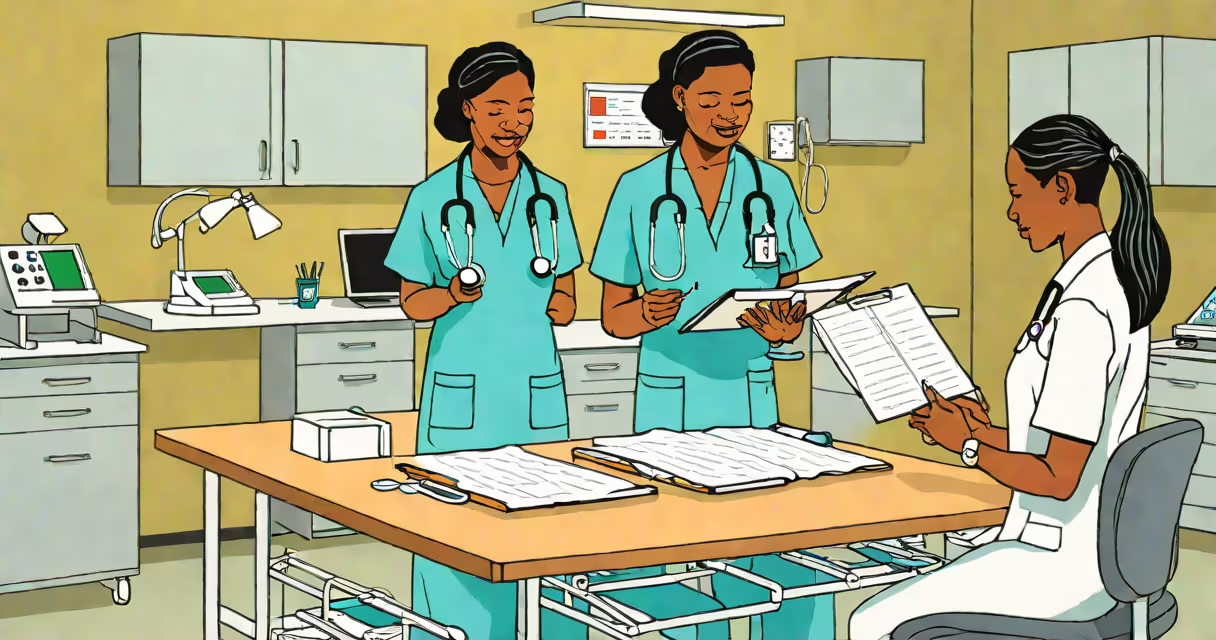
To become a nurse practitioner, you must earn a Doctor of Nursing Practice (DNP) or a Master of Science in Nursing (MSN), complete 500-1,000 supervised clinical hours, and pass a national certification exam. This path follows a bachelor's degree in nursing and licensure as a registered nurse.
Nurse practitioners (NPs) are licensed clinicians who diagnose and treat patients across the lifespan. They work in primary care, specialty fields like pediatrics or mental health, and hospital settings. The educational structure is standardized but varies slightly by state and specialty. All NPs must hold a graduate degree, clinical training, and board certification.
The process begins with a Bachelor of Science in Nursing (BSN), which takes four years. After graduation, candidates must pass the NCLEX-RN exam to become a licensed registered nurse (RN). Most NP programs require at least one year of RN experience before admission. This ensures foundational clinical judgment and patient management skills.
There are two primary graduate pathways: the MSN and the DNP. The MSN has been the traditional route since the 1960s. The DNP, introduced in 2004 by the National Organization of Nurse Practitioner Faculties (NONPF), is now the preferred entry-level degree for new NPs.
Programs differ in length and focus:
| Program Type | Duration | Credit Hours | Entry Requirement |
|---|---|---|---|
| MSN (Traditional) | 2-3 years | 45-60 | BSN + RN license |
| DNP (Entry-Level) | 3-4 years | 80-100+ | BSN + RN license |
| Post-Master's DNP | 1-2 years | 30-45 | MSN + RN license |
Most accredited NP programs now offer the DNP. The NONPF reports that 94% of accredited NP programs in the U.S. have transitioned to the DNP as the standard entry-level degree. This shift reflects growing expectations for advanced clinical reasoning, research literacy, and leadership competencies.
Specialty tracks include family nurse practitioner (FNP), psychiatric-mental health NP (PMHNP), and acute care NP (ACNP). Each requires focused coursework and clinical rotations. For example, FNP programs include 600+ hours in primary care settings, such as rural clinics or urban health centers.
Every NP candidate must complete between 500 and 1,000 supervised clinical hours. These are not part of classroom instruction-they occur in real healthcare environments under the guidance of a preceptor. The exact number depends on the program and specialty.
A common misconception is that clinical hours are optional or minimal. In reality, the American Association of Colleges of Nursing (AACN) mandates that all NP programs meet minimum standards. Programs that fall short risk losing accreditation. For example, a 2022 audit by the Commission on Collegiate Nursing Education (CCNE) found that 12% of surveyed NP programs failed to meet clinical hour benchmarks.
After completing the degree and clinical hours, graduates must pass a national certification exam administered by either the American Nurses Credentialing Center (ANCC) or the Pediatric Nursing Certification Board (PNCB). These exams test diagnostic accuracy, treatment planning, and ethical decision-making. The FNP exam, for instance, includes 175 multiple-choice questions covering pharmacology, physical assessment, and chronic disease management.
I completed my FNP program at a public university in Texas. Over 18 months, I rotated through three primary care clinics-two in underserved urban areas and one in a rural county. My final rotation included managing diabetes cases with patients who had limited access to specialists. That experience shaped my understanding of health disparities and informed my clinical approach.
After passing the certification exam, NPs apply for state licensure. Each state sets its own scope of practice rules. Some states allow full practice authority, meaning NPs can assess, diagnose, treat, and prescribe independently. Others require collaboration with a physician.
As of 2023, 24 states and Washington, D.C., grant full practice authority to NPs. In states like California and Florida, NPs must have a formal agreement with a physician to prescribe controlled substances. These differences affect where NPs can work and how quickly they can start treating patients.
For example, a PMHNP in New York can prescribe medication without oversight. In contrast, a PMHNP in Georgia must sign a collaborative agreement with a psychiatrist. This impacts workforce distribution-states with restrictive laws often face provider shortages in mental health services.
Many people assume that "nurse practitioner" and "registered nurse" are interchangeable. They are not. An RN typically manages care under supervision. An NP diagnoses conditions, prescribes medications, and provides long-term treatment plans. The difference is not just title-it's legal authority and clinical responsibility.
Another misunderstanding is that a DNP is purely academic. While it includes research components, the DNP emphasizes clinical expertise. According to the AACN, 70% of DNP curricula focus on direct patient care, not scholarly writing. Graduates are prepared to lead care teams, implement evidence-based protocols, and improve outcomes in complex settings.
Some believe that online NP programs are less rigorous. Accredited online programs follow the same standards as on-campus ones. The CCNE requires that all clinical placements be verified and monitored. A 2021 study in the Journal of Professional Nursing found no significant difference in certification pass rates between online and in-person NP students.
Start by earning a BSN and becoming an RN. Gain at least one year of clinical experience in your desired specialty area. Then apply to an accredited NP program. Look for schools with high NCLEX-RN pass rates and strong clinical placement networks.
Once admitted, focus on building relationships with preceptors and mastering documentation standards. After graduation, prepare for certification with practice exams and study groups. The ANCC offers free sample questions and timed testing environments.
Finally, maintain your license through continuing education. Most states require 30 hours of CE every two years. Topics include updates in pharmacology, ethics, and emerging treatments. Staying current ensures safe, effective care and compliance with state regulations.
What schooling is required for a nurse practitioner? A BSN, RN license, graduate degree (MSN or DNP), 500-1,000 clinical hours, national certification, and state licensure. This structured path enables NPs to deliver high-quality, independent care across diverse populations and settings.