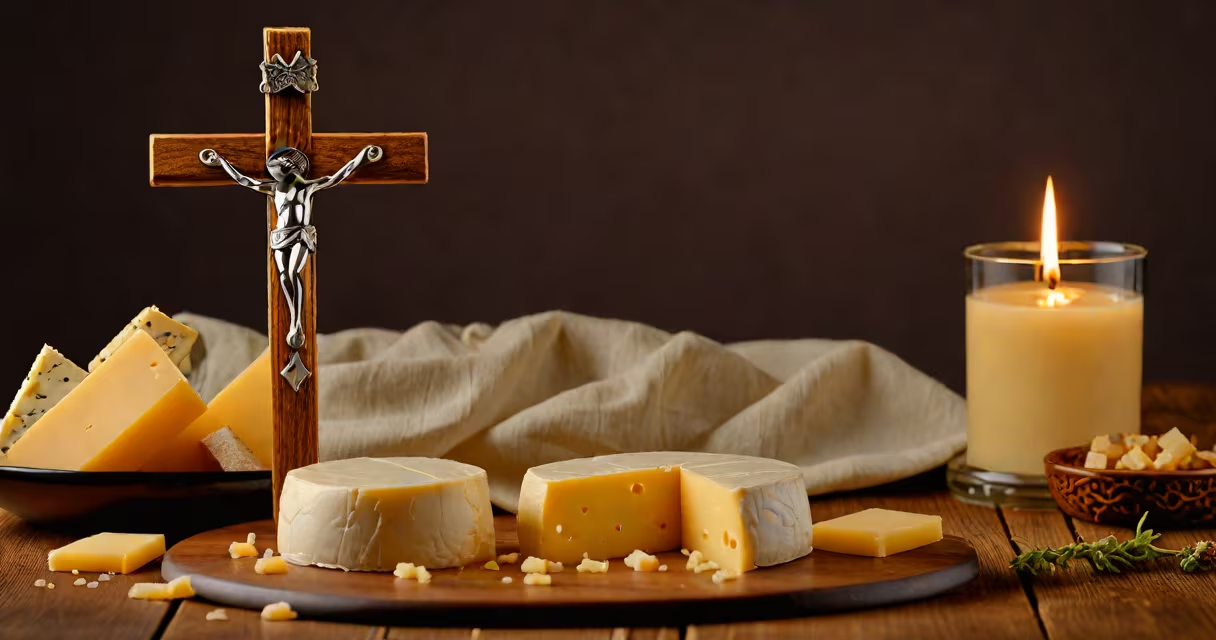
Yes, you can eat cheese during Lent. The Catholic Church allows consumption of dairy products, including cheese, during the penitential season, even on days when meat is prohibited.
Lent spans 40 days leading up to Easter, observed by many Christians, especially Catholics, through fasting, prayer, and abstinence. Abstinence means refraining from eating meat-defined as the flesh of warm-blooded animals such as beef, pork, chicken, and lamb-but does not extend to dairy.
The Church's official document, *The Code of Canon Law*, states that abstinence from meat applies only to "meat" as defined by tradition, not to fish, eggs, or dairy. This distinction has been consistent since the early centuries of Christianity, when monastic communities began avoiding meat on Fridays and during Lent, reserving fish and milk-based foods as acceptable substitutes.
Catholic practice requires abstinence from meat on Ash Wednesday, Good Friday, and all Fridays during Lent. On these days, individuals aged 14 and older must avoid eating meat. However, fish, shellfish, eggs, and dairy-including cheese-are permitted.
Abstinence is not the same as fasting. Fasting limits food intake to one full meal and two smaller meals, but most Catholics observe only abstinence during Lent unless they are under specific pastoral guidance. The focus remains on spiritual discipline rather than strict calorie counting.
For example, a typical Friday dinner during Lent might include grilled salmon, a side of steamed broccoli, and a slice of cheddar cheese on a roll. This meal complies with Church law because it avoids meat but includes dairy.
Dairy products such as cheese, milk, yogurt, and butter are explicitly allowed during Lent. These foods are not classified as meat under canon law, even though they come from animals.
Some people confuse dairy with meat due to shared animal origins. But the Church draws a clear line: meat refers to muscle tissue from land animals. Fish and seafood are treated separately and are permitted. Eggs are also allowed.
| Foods | Allowed During Lent? | Reason |
|---|---|---|
| Beef, pork, chicken | No | Classified as meat; subject to abstinence |
| Salmon, cod, shrimp | Yes | Considered fish; not meat |
| Cheddar, mozzarella, cottage cheese | Yes | Dairy; not meat |
| Eggs | Yes | Permitted under Church guidelines |
| Butter, cream, sour cream | Yes | Animal-derived but not meat |
A common misconception is that all animal products are banned. This is incorrect. The restriction targets only warm-blooded mammals and birds. Cold-blooded animals like fish and amphibians are exempt.
Church teaching distinguishes between meat and other animal-derived foods based on historical and theological reasoning. Early Christian communities in Rome and Jerusalem adopted fish and dairy as staples during periods of fasting, especially on Fridays.
St. Augustine, writing in the 4th century, noted that fish was seen as a symbol of Christ's humility and sacrifice. Dairy, being less rich and more accessible, became part of the diet during penitential times. These traditions were codified in the 12th-century *Decretum Gratiani*, which defined meat as "flesh of animals that walk on land."
Modern canon law reaffirms this in *Canon 1252*: "On Fridays throughout the year and on Ash Wednesday, abstinence from meat is required." There is no mention of dairy.
Even the Vatican's Congregation for Divine Worship and the Discipline of the Sacraments clarified in 2016 that "dairy products do not fall under the category of meat" and remain permissible during Lenten abstinence.
Many assume that cheese counts as meat because it comes from cows. This confusion arises from modern language blurring distinctions that the Church has maintained for centuries. A cow is a mammal, but its milk and cheese are not meat.
Another myth is that all animal products are off-limits. Some Catholics mistakenly avoid cheese on Good Friday, believing it violates the spirit of fasting. But the Church never intended this. The purpose of abstinence is not to deny all animal products, but to practice self-denial through deliberate choice.
There is also a cultural belief that Lent means eating only "simple" or "plain" food. While simplicity is encouraged, it doesn't require eliminating all dairy. A dish like lasagna made with ricotta and mozzarella is still acceptable on a Friday during Lent, as long as no ground beef or chicken is used.
I once attended a Lenten dinner at a parish in Chicago where the menu included baked cod with garlic butter sauce, roasted potatoes, and a side of goat cheese salad. The host, a lifelong Catholic, confirmed that none of the dishes violated Lenten rules. The cheese was served cold, not cooked with meat, and labeled as a permitted item.
Another example: in 2022, the Archdiocese of Los Angeles released a Lenten meal planner that included recipes like grilled salmon with herb-crusted feta and roasted carrots. The guide emphasized that "dairy is allowed," and even suggested using cheese in place of meat in casseroles and pastas.
Meat is permitted on all days except Ash Wednesday, Good Friday, and the Fridays of Lent. This means you can eat meat on Sundays, Holy Thursday, and the days between Palm Sunday and Easter Sunday.
For those observing the full 40 days, the Church encourages reflection and self-discipline. Some choose to abstain from meat on additional days beyond the required ones, but this is voluntary. The Church does not mandate stricter rules than those outlined in canon law.
If you're unsure about your personal observance, consult your local parish priest. They can clarify whether a particular food or recipe aligns with your community's expectations.
Understanding the rules around cheese during Lent removes unnecessary anxiety. The Church allows dairy, including cheese, as part of a balanced, spiritually reflective diet. This clarity preserves tradition while allowing practical living.