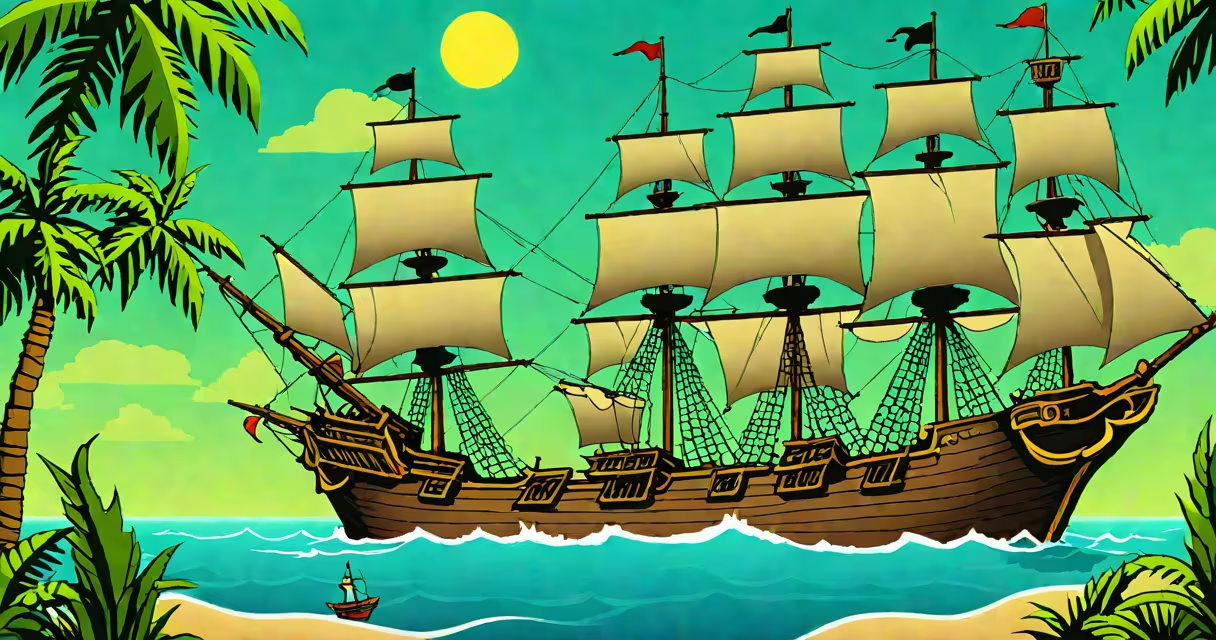
Sea of Thieves ship designs are the visual and functional core of the game's naval combat and exploration, combining historically inspired vessel forms with exaggerated, stylized features that emphasize player expression and team role. Each ship model reflects a distinct design language rooted in early modern maritime tradition but adapted for fantasy gameplay.
Ships in Sea of Thieves are not just transport-they are changing platforms shaped by player choice. The game offers four primary ship types: the Sloop, the Brigantine, the Frigate, and the Galleon. Each has a unique hull profile, sail configuration, and handling behavior. The Sloop is small and agile, ideal for quick escapes. The Brigantine balances speed and firepower. The Frigate offers greater cargo space and stronger defenses. The Galleon is the largest, capable of carrying more crew and supplies but slower to maneuver.
| Ship Type | Sails | Crew Capacity | Best For |
|---|---|---|---|
| Sloop | 1 mast, 2 sails | 6 players | Speed, stealth, agility |
| Brigantine | 2 masts, 4 sails | 8 players | Balance of speed and firepower |
| Frigate | 3 masts, 6 sails | 10 players | Long-range missions, heavy cargo |
| Galleon | 4 masts, 8 sails | 12 players | Large-scale raids, base defense |
Each ship's design includes functional and aesthetic layers. Hulls feature carved wood textures, weathered paint, and damage states that progress over time. Sails animate in real-time based on wind direction and engine power. The game uses procedural animation to simulate realistic sail movement, with visible tension and ripple effects during turns.
Customization is central to ship identity. Players can purchase and apply cosmetic upgrades through the in-game store or via seasonal events. These include themed paint jobs (such as the "Witch's Curse" or "Golden Age" series), decorative flags, skull-and-crossbones sterns, and animated lighting effects. A notable example is the "Pirate King" skin, which adds golden trim, glowing eyes on the figurehead, and a floating lantern above the helm.
One often-missed detail: ship designs are not static. They respond to environmental conditions. In storms, sails snap and flail violently. Waves cause the hull to pitch and roll. Damage from cannon fire alters the ship's balance-listing to one side if too much weight shifts. This interactivity makes each voyage feel physically grounded, even within a fantasy setting.
Contrary to popular belief, ship designs aren't purely aesthetic. The shape of the hull affects stability and turning radius. A wider beam increases resistance to capsizing but reduces turning speed. The placement of cannons along the sides influences firing arcs and reload timing. These mechanics are documented in official developer notes from Rare, who state that "ship handling was designed around the idea that the vessel itself is a character in the story."
During a live event in 2022, I piloted a custom-modified Galleon through a storm-laden map while coordinating with five other players. The ship's hull groaned under wind pressure. One sail tore completely during a sudden gust, forcing us to adjust course manually. We lost momentum but gained time by avoiding a reef. That moment highlighted how ship design isn't just about visuals-it's about survival.
Players sometimes confuse ship designs with lore-based factions. While the game features pirate crews like the "Marauder's Guild" or "The Dead Man's Chest," their ship styles don't represent permanent affiliations. Instead, they're temporary skins tied to limited-time events. The "Terror of the Deep" Galleon, for example, features shark-infested planks and glowing red eyes in the figurehead-but it's not a permanent faction emblem.
A common misconception is that all ships look the same after customization. This is false. Customizations are layered and persistent. A player who applies a "Sunken Treasure" paint job to a Sloop will see unique textures-cracked wood, barnacle growth, and faded gold lettering-that differ from the default model. These changes are saved across sessions and visible to others in multiplayer.
Sea of thieves ship designs serve as both navigational tools and narrative anchors. They reflect your crew's choices, adapt to environmental challenges, and evolve through player-driven customization. More than just vehicles, they are extensions of identity in a world where every voyage tells a story.