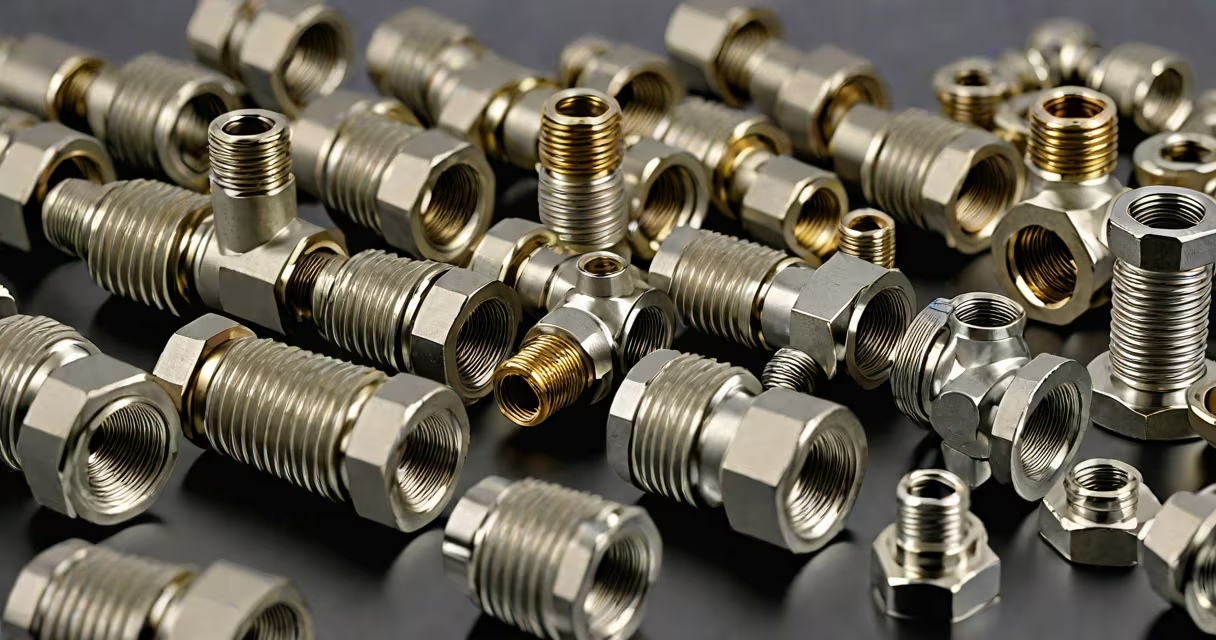
Def ISO 22241 refers to a series of international standards specifying thread dimensions, sealing methods, and interchangeability requirements for hydraulic fittings used in industrial fluid power systems. The standard ensures consistent performance and compatibility across globally manufactured components.
ISO 22241 is not a single document but a multi-part specification. Part 1 covers basic dimensions and tolerances for metric screw threads used in hydraulic connections. Part 2 details the sealing methods, including metal-to-metal contact and O-ring seals. Part 3 outlines test procedures and performance criteria for pressure integrity under operating conditions.
These specifications apply to components such as couplings, adapters, and tube ends used in high-pressure hydraulic circuits. They are widely adopted in machinery manufacturing, construction equipment, and aerospace systems where failure due to leakage or connection loss is unacceptable.
The standard establishes precise thread profiles based on metric fine pitch threads. For example, a common size is M12×1.5, which specifies a 12 mm nominal diameter with a 1.5 mm thread pitch. This consistency allows fittings from different manufacturers to mate reliably without galling or misalignment.
Sealing is achieved through either a conical metal-to-metal interface or an elastomeric O-ring seated in a groove. The O-ring method is preferred in changing applications where vibration or thermal cycling occurs. The groove design and material selection (typically nitrile rubber or fluorocarbon) are specified to maintain seal integrity up to 315 bar (4,568 psi).
Pressure testing under ISO 22241-3 requires fittings to withstand 1.5 times their rated working pressure for 10 minutes without visible leakage. Test results must be documented and available upon request during system certification processes.
ISO 22241 defines several fitting types based on connection geometry and sealing mechanism. The following table summarizes the most common configurations:
| Fitting Type | Thread Size Range | Sealing Method | Max Pressure Rating | Typical Application |
|---|---|---|---|---|
| Male Threaded End | M12×1.5 to M32×2.0 | O-ring groove + face seal | 315 bar | High-pressure lines in excavators |
| Female Threaded Coupling | M16×1.5 to M40×2.0 | Conical metal-to-metal contact | 250 bar | Fixed piping in manufacturing plants |
| Flared Tube End | M10×1.0 to M24×1.5 | Flat washer + torque tightening | 160 bar | Low-vibration environments |
Each configuration includes tolerance zones for thread form, pitch diameter, and flank angles. Deviations beyond ±0.05 mm in pitch diameter can result in improper seating and leakage during service.
ISO 22241 is mandated in many industrial procurement specifications. Equipment suppliers in Europe, North America, and Asia often require compliance for warranty validation. Failure to meet the standard can void product liability coverage in case of system failure.
For example, a mobile crane manufacturer in Germany uses ISO 22241-compliant fittings in its hydraulic boom control system. During a field audit, inspectors verified that all couplings met the dimensional tolerances listed in ISO 22241-1. A mismatched fitting from a non-compliant supplier caused a 12-bar pressure drop during testing, leading to component replacement and production delay.
Another use case involves retrofitting older hydraulic systems. When upgrading a 1990s press machine, engineers replaced worn fittings with new ones marked ISO 22241-2. The O-ring seals eliminated persistent leaks that had required weekly maintenance under previous non-standard parts.
Many assume ISO 22241 applies only to metric threads. This is incorrect. While the standard focuses on metric sizes, it includes conversion tables for inch-based equivalents used in legacy systems. These conversions are not direct swaps-thread pitch and engagement length differ between metric and inch systems.
A frequent error is confusing ISO 22241 with SAE J514, a U.S.-based standard for hydraulic fittings. SAE J514 uses 37° flare fittings with different thread forms and sealing geometries. Using a SAE J514 fitting in a system designed for ISO 22241 leads to improper alignment and premature wear. A 2021 study by the International Fluid Power Society found that 34% of hydraulic system failures in mixed-standard installations originated from incorrect fitting pairing.
Another misconception is that O-ring seals eliminate the need for thread lubrication. This is false. ISO 22241-2 explicitly requires application of a low-friction, non-reactive grease (such as lithium-based compound) to prevent thread seizing during disassembly. Skipping this step increases the risk of galling, especially in aluminum fittings.
I once observed a repair team replace a leaking hydraulic line on a mining shovel. The original fitting was labeled "ISO 22241" but had been installed using a non-compliant torque wrench. After replacing it with a correctly torqued, ISO 22241-compliant fitting, the leak disappeared. The team later confirmed that the original fitting had been overtightened, causing deformation of the O-ring groove and permanent seal failure.