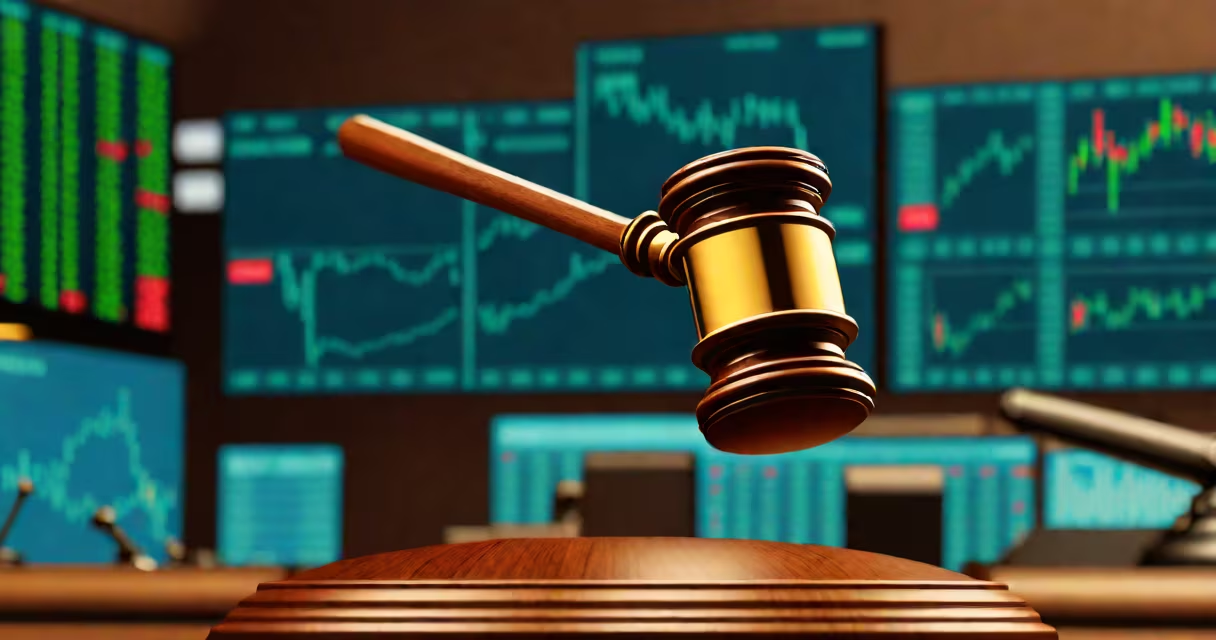
The share market opening bell marks the official start of daily trading on major stock exchanges, such as the New York Stock Exchange (NYSE) and NASDAQ. It signals the beginning of the trading day and triggers automated systems that begin processing buy and sell orders. The event occurs at 9:30 a.m. Eastern Time, when regular trading sessions commence.
At the NYSE, the opening bell is rung by a designated individual-often a company executive, celebrity, or community leader-before the market opens. This tradition dates back to the 19th century and serves both ceremonial and functional roles. The sound of the bell is broadcast globally and acts as a psychological cue for traders, analysts, and retail investors to begin monitoring price movements.
Trading begins when the exchange's electronic system activates and matches orders submitted during pre-market hours. The opening bell itself doesn't set prices-it's a symbolic trigger. Prices are determined by supply and demand through continuous bidding. The first few minutes after the bell often see higher volatility due to the influx of new orders and news-driven trades.
The opening bell is not a physical gatekeeper. It does not stop or delay trading. Instead, it synchronizes global attention and confirms that the market is officially open. On the NYSE, the bell is struck by a human using a gavel-like mallet. The sound is transmitted via audio feed and appears on financial news channels like CNBC and Bloomberg.
For the NASDAQ, the process is similar but less theatrical. The opening is marked by a digital chime rather than a physical bell. Both exchanges use high-frequency trading algorithms that begin operating milliseconds after the official start time. These systems analyze incoming orders and execute trades at speeds measured in microseconds.
A key misunderstanding is that the opening bell sets the day's opening price. That's false. The opening price is determined by the auction process that occurs between 9:28 a.m. and 9:30 a.m. Eastern Time. During this period, orders are collected and matched based on price and time priority. The first trade executed at 9:30 a.m. becomes the official opening price.
Different exchanges use different methods to mark the start of trading. The following table outlines the primary U.S. exchanges and their respective opening procedures:
| Exchange | Opening Signal | Time Zone | Key Feature |
|---|---|---|---|
| NYSE | Physical bell struck by a guest | Eastern Time (ET) | Traditional ceremony; guests include CEOs and public figures |
| NASDAQ | Digital chime (no physical bell) | Eastern Time (ET) | Automated; no human involvement in the signal |
| AMEX | Electronic beep | Eastern Time (ET) | Less publicized; part of NYSE American |
International exchanges follow similar patterns. The London Stock Exchange uses a digital horn at 8:00 a.m. UK time. Tokyo's TSE rings a bell at 9:00 a.m. Japan Standard Time. These signals serve the same purpose: to announce the start of trading and align participants globally.
The opening bell is a critical moment for institutional traders, hedge funds, and algorithmic systems. High-frequency trading firms rely on precise timing to capture microsecond advantages. A delay of even 100 milliseconds can affect execution quality and profitability.
For retail investors, the bell is a psychological anchor. Many watch the live feed on financial networks to gauge early momentum. For example, on January 3, 2023, the S&P 500 opened 1.2% higher after a positive earnings report from Apple Inc. The bell rang at 9:30 a.m. ET, and within five minutes, volume spiked 40% above average. This surge reflected immediate market reaction to the news.
A lesser-known fact: the NYSE has recorded over 1,000 opening bell ceremonies since 1996. Guests have included astronauts, athletes, and Nobel laureates. In 2021, actress Jennifer Lawrence rang the bell for a special event celebrating women in finance. These events draw media attention and increase public engagement with financial markets.
Many assume the opening bell causes price changes. It does not. Price action begins only after the market opens. The bell is a signal, not a cause. Another myth is that the bell happens simultaneously across all markets. It does not. Different exchanges operate in different time zones, so the opening sequence spans nearly 14 hours globally-from Sydney to New York.
Some confuse the opening bell with the closing bell. The closing bell occurs at 4:00 p.m. ET and marks the end of the trading day. It also features a ceremonial ring, but its function is different. Closing bells reflect daily performance and are used to calculate end-of-day indices like the S&P 500 closing value.
One correction often missed: the opening bell is not a regulatory requirement. There is no law mandating a bell or chime. The practice persists due to tradition and branding. The NYSE maintains the ritual not because it affects trading mechanics, but because it reinforces the identity of the exchange as a central institution in global finance.
On March 9, 2020, the S&P 500 dropped 7% in the first hour of trading-the largest single-day drop since 2008. The opening bell rang at 9:30 a.m. ET, but the crash had already begun in pre-market sessions. Traders saw the bell as a confirmation of panic, not a trigger. Volume surged past 1 billion shares in the first 30 minutes.
This event illustrates that the bell is reactive, not predictive. It reflects conditions already in motion. The actual cause was a combination of oil price collapse, pandemic fears, and algorithmic selling. The bell did not start the decline-it merely marked the beginning of a volatile trading session.
I attended the NYSE opening bell ceremony in 2019 during a visit to New York City. The room was packed with traders, journalists, and visitors. When the guest-a CEO from a renewable energy firm-struck the bell, the sound echoed through the trading floor. Within seconds, screens lit up with red and green indicators. The atmosphere shifted instantly from anticipation to action. It wasn't the sound that changed prices-it was the collective decision to trade.
The share market opening bell is a symbolic milestone marking the start of daily trading. It is not a mechanism that controls prices or determines market direction. Its role is cultural, historical, and psychological. For investors, understanding the bell's function separates myth from reality. The real action begins after the bell-when orders flow, prices adjust, and markets respond to information.
Market participation requires clarity about timing, structure, and behavior. The opening bell is just the beginning of a complex system that processes millions of transactions daily. Recognizing its role-and limitations-keeps investors grounded in facts, not rituals.