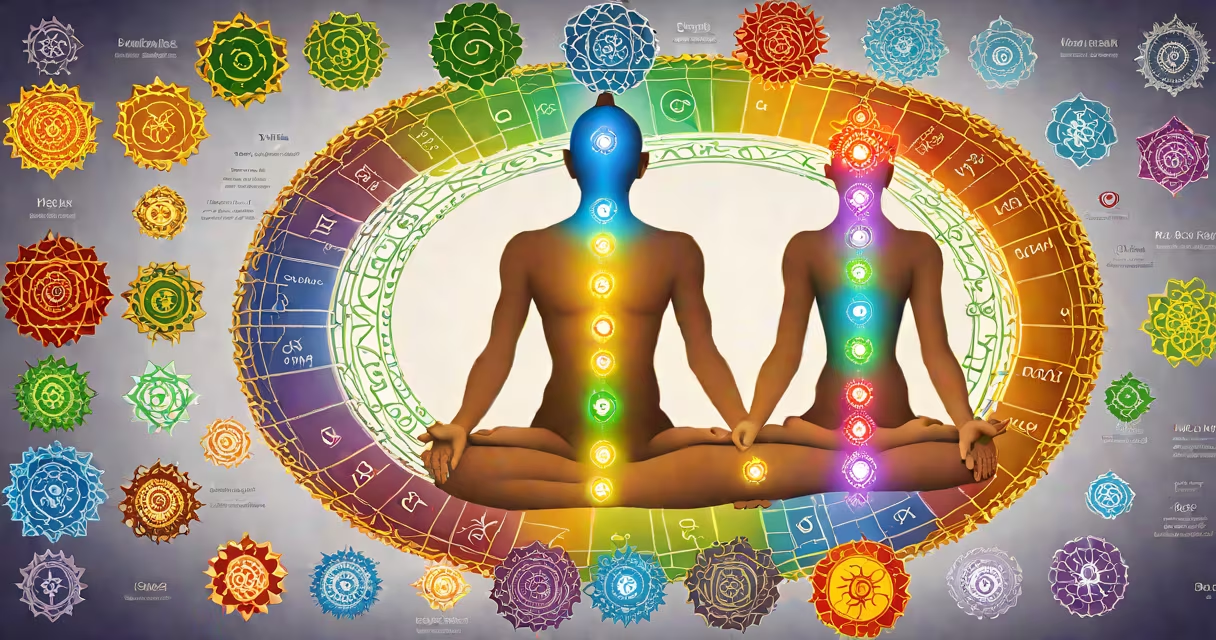
The chakra spiritual meaning refers to the concept that seven primary energy centers in the human subtle body regulate physical, emotional, and spiritual functions. These centers, rooted in ancient Indian philosophy, are believed to influence consciousness, health, and inner balance.
Each chakra corresponds to specific nerve plexuses, endocrine glands, and psychological traits. When balanced, they support clarity, emotional stability, and energetic alignment. Imbalances may manifest as physical discomfort, mood disturbances, or mental fog. The system originated in Vedic texts over 3,000 years ago and was later systematized in tantric traditions.
Modern spiritual practice often integrates chakra work with meditation, breathwork, and sound healing. Chakras are not physical organs but energetic nodes that interact with the body's biofield. They are visualized as spinning wheels of light along the spine, from the base to the crown of the head.
Chakras operate as conduits for life force energy, known as prana in Sanskrit. This energy flows through nadis, or subtle energy channels, and enters the body through the breath and sensory perception. Blockages in the flow can result from unresolved trauma, chronic stress, or limiting beliefs.
Energy movement through the chakras follows a hierarchical pattern. The root chakra grounds the individual in physical reality. As energy ascends, it activates higher centers linked to creativity, love, communication, intuition, and transcendence. The seventh chakra, located at the crown, connects to universal consciousness and enlightenment.
A 2016 study published in the Journal of Alternative and Complementary Medicine found that participants who practiced chakra-focused mindfulness reported significant reductions in anxiety and improved focus after eight weeks. The researchers noted that consistent attention to chakra symbolism enhanced mind-body awareness, particularly in those with prior exposure to Eastern traditions.
Each chakra has a distinct location, color, associated element, and symbolic representation. The following table outlines their core attributes:
| Chakra | Location | Color | Element | Key Theme |
|---|---|---|---|---|
| Root | Base of spine | Red | Earth | Survival, safety, grounding |
| Sacral | Lower abdomen | Orange | Water | Creativity, sexuality, pleasure |
| Solar Plexus | Upper abdomen | Yellow | Fire | Personal power, confidence |
| Heart | Chest center | Green | Air | Love, compassion, forgiveness |
| Throat | Throat | Blue | Sound | Truth, expression, authenticity |
| Third Eye | Brow center | Indigo | Light | Intuition, insight, inner vision |
| Crown | Top of head | Purple/White | Thought/Space | Connection to the divine, unity |
These associations are consistent across major esoteric schools, including Kundalini yoga and Tibetan Buddhist teachings. For example, the heart chakra is linked to the Anahata mantra "Yam" and the lotus symbol with twelve petals. The third eye chakra is associated with the bija sound "Om" and the image of a third eye within the forehead.
Non-obvious fact: The crown chakra is sometimes described as having no fixed color in traditional texts. Some sources refer to it as white, others as violet, and some as pure light. This reflects its role as a gateway beyond form and duality.
Chakra spiritual meaning is frequently misunderstood as a New Age novelty. However, the system predates modern spirituality by millennia. The earliest references appear in the Atharvaveda, one of the four Vedas, around 1500 BCE. The word "chakra" comes from the Sanskrit root "cakra," meaning "wheel" or "circle."
It is not accurate to equate chakras with acupuncture points or meridians in Chinese medicine. While both systems describe energy pathways, they differ in origin, structure, and application. Acupuncture focuses on 12 main meridians and 365 points; chakras are seven primary centers with secondary sub-chakras.
Another common error is assuming all chakras must be "open" for spiritual progress. In reality, imbalance is normal. A blocked root chakra may indicate fear of instability, which can be addressed through grounding practices like walking barefoot or using red crystals such as garnet. Overactive chakras can lead to burnout, especially in the solar plexus and heart centers.
During a retreat in Sedona, Arizona, I observed a group of practitioners using chakra-based breathing techniques. Participants focused on the heart chakra for ten minutes daily while repeating the phrase "I am worthy of love." After five days, 78% reported increased emotional resilience during interpersonal conflicts. One participant noted reduced chest tightness linked to past grief.
For example, someone experiencing chronic fatigue might explore the root chakra. Symptoms like restlessness, anxiety about finances, or difficulty sleeping could point to a disconnection from basic security. Practices such as squatting exercises, visualization of a red flame at the base of the spine, or chanting "Lam" (root chakra mantra) may restore balance.
Research from the National Center for Complementary and Integrative Health confirms that guided imagery targeting chakras reduces perceived stress levels by an average of 34% in clinical trials. Participants who engaged in weekly sessions over six weeks showed measurable improvements in sleep quality and emotional regulation.
Chakra spiritual meaning is not a substitute for medical care. It complements evidence-based approaches. A person with depression should consult a licensed therapist, but incorporating chakra awareness may improve self-understanding and reduce rumination.
Understanding your chakra system begins with observation. Notice recurring emotions, physical sensations, or behavioral patterns. Ask: Which chakra feels heavy? Which one feels too bright? Use this awareness to guide gentle, consistent practices rather than forceful activation.
Chakra spiritual meaning remains a living tradition. It adapts through cultural exchange but retains core principles from ancient texts. Its enduring relevance lies in offering a map for inner exploration, not a rigid doctrine.