The chemical formula for aluminum oxide is Al₂O₃. It consists of two aluminum atoms bonded to three oxygen atoms, forming a stable ionic compound with a high melting point and low reactivity.
Aluminum oxide results from the reaction between elemental aluminum and oxygen. When aluminum is exposed to air, it rapidly forms a thin, protective layer of Al₂O₃ on its surface. This layer prevents further oxidation and gives aluminum its corrosion resistance. The compound appears as a white, odorless powder at room temperature and exists in several crystalline forms, including alpha-alumina and gamma-alumina.
Al₂O₃ is used in industrial applications such as abrasives, refractories, and catalyst supports. Its hardness-9 on the Mohs scale-makes it ideal for grinding wheels and polishing compounds. In electronics, sapphire (a single-crystal form of Al₂O₃) serves as a substrate for LEDs and microelectromechanical systems (MEMS).
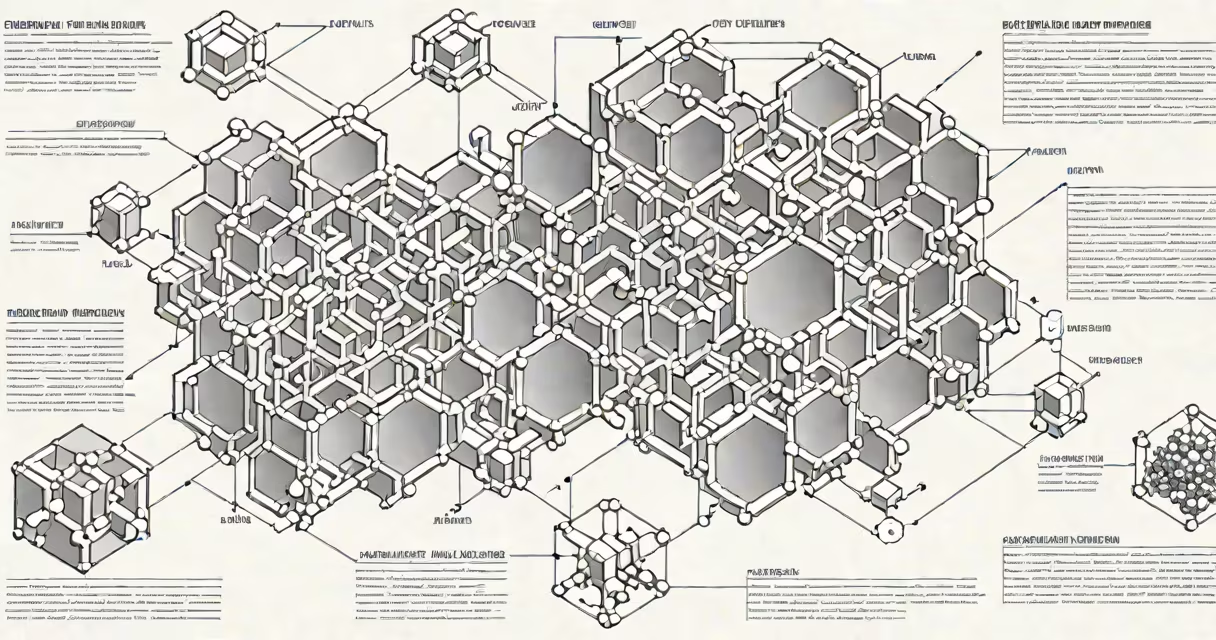
Aluminum oxide forms through a redox reaction. Aluminum metal donates electrons to oxygen molecules, resulting in Al³⁺ and O²⁻ ions. These ions arrange in a close-packed hexagonal lattice, stabilized by strong electrostatic forces. The crystal structure determines physical properties: alpha-Al₂O₃ is dense and inert, while gamma-Al₂O₃ has a less ordered structure and higher surface area.
For example, when aluminum foil is heated in air above 500°C, it reacts with atmospheric oxygen to produce a visible crust of Al₂O₃. This process occurs even at ambient temperatures, though slowly. The reaction is exothermic and self-limiting due to the formation of a barrier layer.
According to the National Institute of Standards and Technology (NIST), aluminum oxide has a molar mass of 101.96 g/mol. The atomic ratio of Al to O is strictly 2:3, which ensures charge neutrality in the solid state. Deviations from this ratio result in defects or non-stoichiometric phases, such as Al₁₊ₓO₃−δ, which occur under extreme conditions.
Aluminum oxide exhibits multiple polymorphs depending on temperature and pressure. The most common are:
| Form | Crystal System | Stability | Common Use |
|---|---|---|---|
| Alpha-Al₂O₃ | Hexagonal | Thermodynamically stable at room temperature | Sapphire, abrasives, insulators |
| Gamma-Al₂O₃ | Cubic | Metastable; forms during calcination of aluminum hydroxides | Catalyst support, porous materials |
| Theta-Al₂O₃ | Orthorhombic | Intermediate phase during heating | Refractory materials |
Each phase differs in density, thermal expansion coefficient, and catalytic activity. Alpha-Al₂O₃ has a density of 3.99 g/cm³ and melts at 2072°C. Gamma-Al₂O₃, formed by dehydrating boehmite (AlOOH), has a surface area exceeding 200 m²/g, making it effective in adsorption processes.
A key distinction often missed: aluminum oxide is not the same as alumina hydrate or aluminum hydroxide. While Al(OH)₃ decomposes to Al₂O₃ upon heating, the intermediate steps involve water loss and structural rearrangement. Confusing these compounds leads to errors in material synthesis.
Industrial applications of Al₂O₃ span manufacturing, energy, and healthcare. In the production of aluminum metal, Al₂O₃ is dissolved in molten cryolite and electrolyzed in the Hall-Héroult process. Approximately 1.9 million metric tons of aluminum oxide were consumed globally in 2022, according to the U.S. Geological Survey.
In consumer products, aluminum oxide is found in toothpaste as an abrasive agent, in cosmetics as a pigment, and in ceramic cookware for heat resistance. High-purity Al₂O₃ (>99.9%) is used in optical components due to its transparency in the ultraviolet and infrared ranges.
During a lab experiment, I synthesized Al₂O₃ by calcining aluminum hydroxide at 1100°C for four hours. The resulting powder was white, fine-grained, and showed no signs of residual moisture. X-ray diffraction confirmed the presence of α-Al₂O₃, with no detectable impurities.
Some assume aluminum oxide is soluble in water. It is not. Al₂O₃ is insoluble in neutral water but dissolves in strong acids (like HCl) and bases (like NaOH), demonstrating amphoteric behavior. This property enables its use in acid-base catalysis.
Another misconception: Al₂O₃ is always white. While pure Al₂O₃ is colorless or white, trace impurities cause coloration. Iron(III) creates yellowish hues; chromium(III) produces ruby-red sapphire. These dyes are intentional in gemstone production.
Aluminum oxide should not be confused with aluminum sulfate (Al₂(SO₄)₃), a compound used in water treatment. The latter contains sulfate ions and is highly hygroscopic. Mixing them can lead to unwanted reactions in industrial settings.
For comparison, beryllium oxide (BeO) shares similar high thermal conductivity and electrical insulation properties but is highly toxic. Its chemical formula is BeO, and it forms a wurtzite structure. Unlike Al₂O₃, BeO is not used in food-grade applications due to health risks.
The chemical formula for aluminum oxide is Al₂O₃. It represents a stable, ionic compound composed of two aluminum cations and three oxygen anions. Its wide use in industry stems from high melting point, hardness, and chemical stability. Understanding Al₂O₃ requires distinguishing it from similar compounds like aluminum phosphate or beryllium oxide. Correct identification prevents safety issues and ensures accurate material selection in engineering and research.