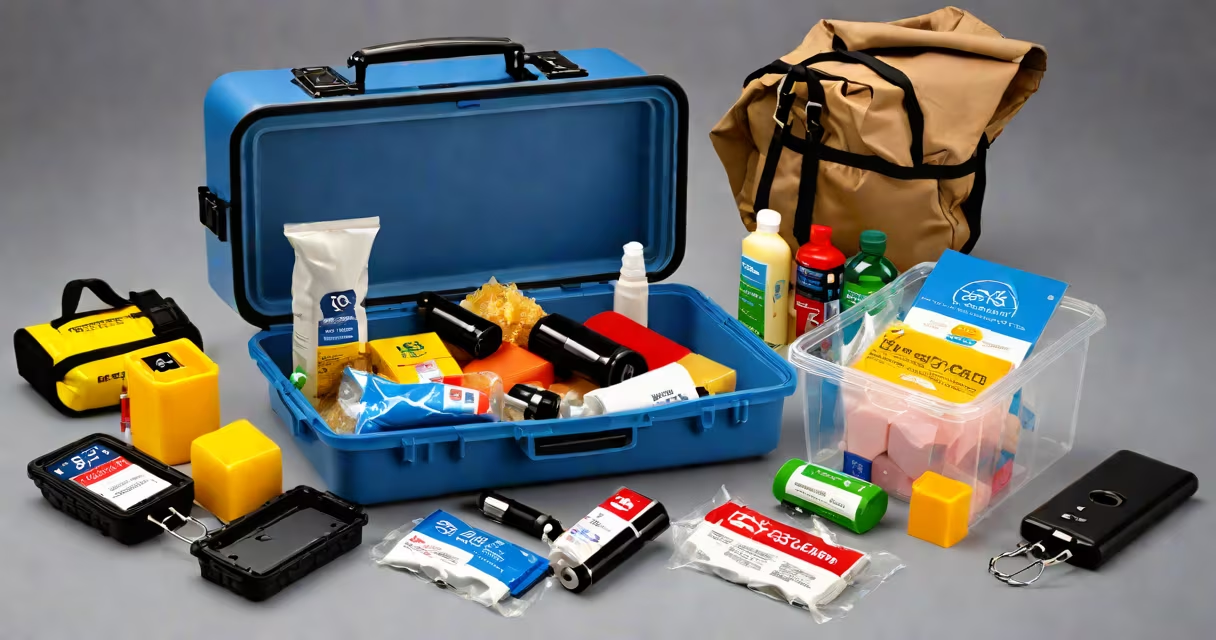
The Transportation Security Administration (TSA) permits personal electronics, liquids under 3.4 ounces in containers, and small toiletries in carry-on luggage. Items must fit in a clear quart-sized bag and be removed from bags during screening. Prohibited items include firearms, sharp objects, and large quantities of liquids.
TSA carry-on rules are designed to balance passenger convenience with aviation safety. The agency enforces federal regulations governing what passengers may bring into the cabin. These rules apply to domestic flights within the United States and international flights departing from U.S. airports. All carry-on items must pass through X-ray scanners and may be subject to physical inspection.
Passengers often misunderstand which items are allowed. For example, while a small bottle of hand sanitizer is permitted, larger bottles are not. Similarly, lithium-ion batteries must be carried in the cabin-not checked luggage-due to fire risk. The TSA publishes updated guidelines annually, with changes based on threat assessments and technological advances in screening.
When you arrive at the security checkpoint, you place all carry-on items-including laptops, shoes, and outerwear-into bins. The TSA uses advanced imaging technology and manual inspections to detect threats. Liquids, gels, and aerosols must be in containers no larger than 3.4 ounces (100 milliliters) and placed in a single clear quart-sized bag. This rule applies to all travelers, regardless of age or status.
Items such as medications, baby formula, and essential medical devices may be exempt from the liquid limit if declared to an officer. However, they still must be screened separately. The TSA requires that all electronic devices larger than a smartphone-such as tablets, laptops, and e-readers-be removed from bags and placed in bins for individual scanning.
A common misconception is that TSA agents can confiscate any item they deem suspicious. In reality, agents follow strict protocols. If an item triggers an alarm or appears ambiguous on the screen, it undergoes secondary screening. Only items classified as prohibited-like explosives, weapons, or flammable materials-are seized. Most items are returned after inspection.
Not all carry-on items are treated equally. The TSA categorizes them into three groups: permitted, restricted, and banned. Permitted items include personal electronics, books, clothing, and small toiletries. Restricted items require special handling, such as lithium batteries or dry ice. Banned items are strictly prohibited and cannot be brought onto the plane.
| Type | Examples | Allowance Status |
|---|---|---|
| Liquids | Shampoo, lotion, toothpaste | Permitted if ≤3.4 oz in clear bag |
| Electronics | Laptop, tablet, phone | Permitted; must be removed from bag |
| Medications | Pills, insulin, inhalers | Permitted; may be declared for screening |
| Sharp Objects | Scissors, razors, nail clippers | Banned if blade >4 inches; pocket knives allowed |
| Flammable Materials | Lighters, fuel, dry ice | Banned unless in specific quantities and packaging |
One non-obvious rule: TSA allows small amounts of alcohol in carry-ons, but only if it's less than 140 proof (70% alcohol by volume). Spirits above that strength are prohibited. Dry ice is permitted in quantities up to 5 pounds per passenger, but it must be packed properly to prevent pressure buildup in sealed containers.
Another overlooked detail is that TSA does not allow scissors with blades longer than 4 inches. Pocket knives with blades under 2.5 inches are allowed, but they must be sheathed. Travelers frequently misjudge blade size, leading to delays at checkpoints. A 3-inch folding knife is acceptable; a 4.1-inch model is not.
TSA carry-on policies stem from federal law and international aviation standards. The agency operates under the authority of the Department of Homeland Security and implements rules set by the International Civil Aviation Organization (ICAO). These standards ensure consistency across global air travel.
Security measures evolved after the 9/11 attacks. Since then, the TSA has refined screening procedures to detect threats without unduly disrupting travel. For example, the 3.4-ounce liquid rule was introduced in 2006 following a failed bomb plot involving liquid explosives. The rule remains in effect today, despite ongoing debate about its practicality.
Research from the National Institute of Standards and Technology (NIST) confirms that X-ray systems can identify high-risk materials with 98% accuracy when combined with trained operators. This supports the current screening process. However, NIST also notes that false positives occur in 5% of cases, leading to unnecessary secondary screenings.
Many travelers assume that TSA allows any amount of prescription medication. This is incorrect. While medications are exempt from the liquid rule, they must be declared and may be subject to inspection. A traveler once had their insulin confiscated because it wasn't labeled and wasn't in original packaging. The TSA later clarified that labeling is not mandatory, but documentation helps avoid delays.
Another frequent error involves power banks. Devices with capacities over 100 watt-hours are banned from carry-ons. A 120-watt-hour power bank, for example, exceeds the limit. The TSA states that batteries above 160 watt-hours are never allowed, even in checked bags. Passengers often overlook battery specifications printed on the device or charger.
I once watched a passenger attempt to bring a 150-watt-hour power bank through security. The agent asked for the product label. The traveler didn't have it. The item was denied. After checking the manufacturer's website, the correct specification was confirmed. The passenger had to ship the device separately.
Some believe that TSA allows all food items in carry-ons. While most solid foods are permitted, certain perishables-like fresh meat, dairy, or raw eggs-are restricted. These items may be flagged during screening due to contamination risks. The USDA prohibits importing fresh animal products into the U.S., and TSA enforces those rules at checkpoints.
What does TSA allow for carry on? Personal electronics, small toiletries in containers under 3.4 ounces, and essential medical items are permitted. Items must be placed in a clear quart-sized bag and removed from bags during screening. Firearms, large liquids, and sharp objects exceeding size limits are prohibited. Always check the TSA's official website before traveling.