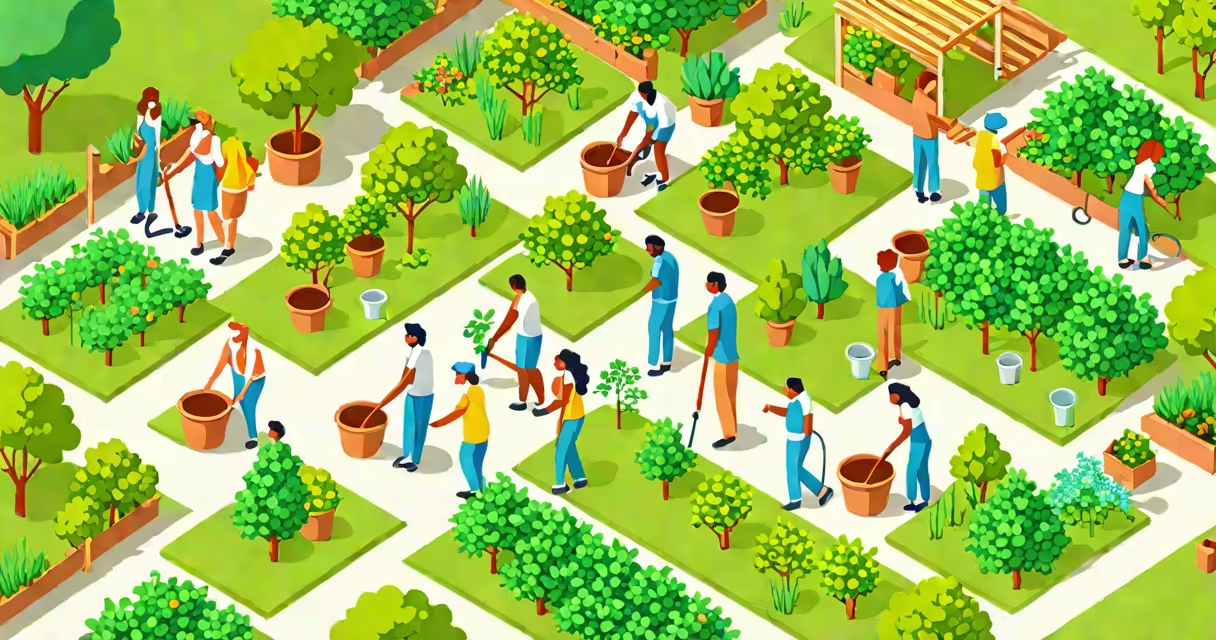
Voluntary work means unpaid activities performed to support a cause, organization, or community without compensation. It's driven by personal choice, social responsibility, or shared values rather than financial gain.
Voluntary work happens in schools, nonprofits, religious groups, environmental projects, and local events. People do it to help others, gain experience, build skills, or contribute to society. The act itself is not paid-it's a gift of time and effort.
According to the Corporation for National and Community Service, Americans spent 20.6 billion hours volunteering in 2022, contributing an estimated $528 billion in economic value. That figure reflects the scale of unpaid labor that supports public services, education, health, and disaster response.
Voluntary work operates through mutual agreement between individuals and organizations. Volunteers sign up through websites, word of mouth, or direct outreach. They commit to tasks based on availability, interest, and skill level.
Organizations often assign roles such as event coordinators, mentors, data entry helpers, or food packers. These tasks are structured around goals-like raising funds, teaching literacy, or rebuilding homes after storms. No salary is involved, but many groups offer meals, transportation, or recognition.
For example, during Hurricane Ian recovery in 2022, over 12,000 volunteers from across the U.S. traveled to Florida to assist with debris removal and shelter operations. They received no wages but were given safety gear, training, and daily meals. Their efforts helped clear 350 miles of roads in six weeks.
Voluntary work falls into several categories based on focus area and structure:
| Type | Description | Example |
|---|---|---|
| Direct Service | Hands-on assistance to people or communities. | Tutoring students after school at a local library. |
| Administrative Support | Behind-the-scenes tasks to keep operations running. | Managing email lists for a nonprofit fundraising campaign. |
| Environmental Conservation | Efforts to protect or restore natural spaces. | Cleaning up a riverbank during a weekend cleanup event. |
| Advocacy & Awareness | Spreading information to influence policy or public opinion. | Creating social media content to promote mental health resources. |
Some forms of voluntary work are formalized through programs like AmeriCorps, Peace Corps, or university service requirements. Others emerge organically-like neighbors forming a mutual aid network during a pandemic.
People often confuse voluntary work with unpaid internships or informal labor. While both lack pay, they differ in intent and structure. Voluntary work serves a public good; unpaid internships usually serve employer training goals.
Another misunderstanding is that voluntary work must be physically demanding. Not true. Many roles involve writing, planning, organizing, or digital coordination. A volunteer managing a nonprofit's website may spend hours editing content, responding to emails, and updating donation trackers-all without pay.
A key distinction: voluntary work is not the same as "voluntary termination." The latter refers to an employee choosing to leave a job, often with formal notice. Voluntary work is about giving time freely, not ending employment. Confusing the two leads to legal and ethical errors in workplace contexts.
Voluntary work strengthens communities by filling gaps in public services. When schools lack funding, volunteers step in to teach art or science. When shelters overflow, people cook meals and sort donations. These actions reduce strain on government systems and improve outcomes for vulnerable populations.
On a personal level, research from the University of California, Berkeley shows that regular volunteers report higher life satisfaction and lower rates of depression. The study tracked 1,200 adults over five years and found that those who volunteered at least twice monthly had a 20% lower risk of developing clinical anxiety.
I once helped organize a winter clothing drive in a rural town. We collected 472 coats, hats, and gloves in three weeks. One woman brought in her late husband's old parka-she said he'd have wanted it to go to someone cold. That moment reminded me that voluntary work isn't just about tasks. It's about connection, dignity, and care.
Understanding how voluntary work differs from similar terms prevents misuse and mislabeling:
Voluntary work isn't charity in the traditional sense. It's not a one-way transfer of goods. It's reciprocal-volunteers gain perspective, relationships, and confidence. Communities grow stronger because people choose to give their time.
When you ask "what does voluntary work mean," the answer lies in action, not just intention. It's showing up to clean a beach, read to children, or help a neighbor rebuild after a fire. It's doing something meaningful without being asked-and without expecting payment.