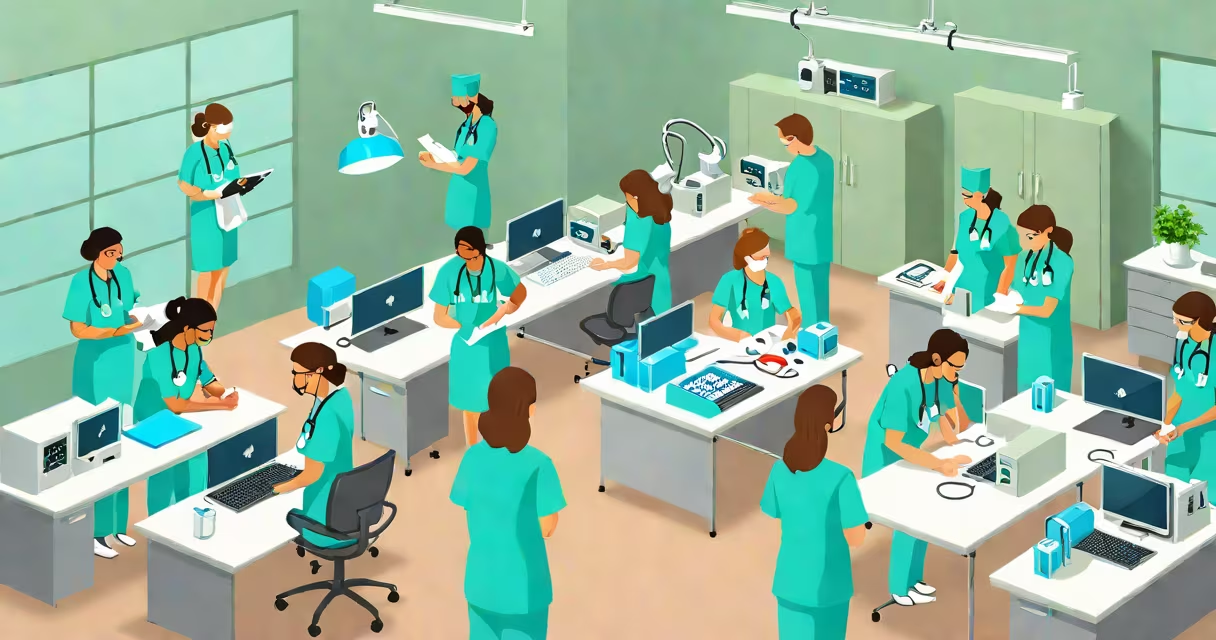
An accelerated Bachelor of Science in Nursing (BSN) program is a full-time, intensive undergraduate nursing track completed in 11 to 18 months. It enables individuals with a prior bachelor's degree in another field to earn a nursing license and qualify for registered nurse (RN) licensure in less than two years. These programs are structured for high academic rigor and hands-on clinical immersion.
Accelerated BSN programs are distinct from traditional four-year BSN tracks. They assume foundational knowledge from prior degrees in biology, psychology, or other sciences. Students enter with a bachelor's degree and complete a condensed curriculum covering anatomy, pharmacology, maternal-child health, and psychiatric nursing-all while fulfilling 600 to 1,000 clinical hours under supervision.
The U.S. Bureau of Labor Statistics reports that registered nurses earned a median annual wage of $77,600 in 2022, with employment projected to grow 6% through 2032. Accelerated BSN programs help meet demand by rapidly expanding the nursing workforce. According to the National League for Nursing, over 120 accelerated BSN programs were accredited in 2023, with institutions like Johns Hopkins University and the University of Pennsylvania offering them.
These programs operate on a cohort model. All students begin and progress through the same sequence of courses simultaneously. The academic calendar typically runs year-round, with classes held Monday through Friday, often from 8 a.m. to 5 p.m., and clinical rotations extending into evenings and weekends.
Courses are compressed into shorter semesters. For example, a typical accelerated BSN program may divide the academic year into three 10-week terms: fall, spring, and summer. This allows students to take multiple science-heavy courses-such as pathophysiology and medical-surgical nursing-back-to-back, with limited time between subjects.
Students must maintain a minimum GPA of 3.0 to remain in good standing. Failure to pass a course or clinical rotation results in immediate dismissal. The University of California, San Francisco's accelerated BSN program requires a 3.25 cumulative GPA for admission and enforces strict academic integrity policies.
Accelerated BSN programs consist of three core elements: didactic instruction, laboratory training, and clinical placements. Didactic instruction covers theory-how medications work, how to assess important signs, and how to interpret diagnostic imaging. Laboratory sessions simulate real-world scenarios using mannequins and standardized patients.
Clinical placements occur in hospitals, outpatient clinics, and long-term care facilities. Students rotate through departments such as emergency medicine, pediatrics, and intensive care units. A student at Emory University's accelerated BSN program spent 12 weeks in a Level I trauma center, managing patients with acute injuries under direct supervision.
Programs require completion of prerequisite courses before enrollment. Common prerequisites include human anatomy, physiology, microbiology, and statistics. Some schools accept AP or college-level credits for these, but most require them to be completed within five years of application.
| Component | Typical Duration | Hours/Week | Examples |
|---|---|---|---|
| Didactic Courses | 10-12 weeks per term | 20-25 | Pharmacology, Maternal Health |
| Laboratory Training | 1-2 days per week | 6-8 | IV insertion, wound care |
| Clinical Rotations | 8-12 weeks per placement | 35-40 | Emergency department, ICU |
Accelerated BSN programs are ideal for individuals who hold a bachelor's degree in a non-nursing field and seek a career change into healthcare. Common applicants include former teachers, engineers, and business professionals who want to use their existing education and work ethic in patient care.
Applicants must demonstrate strong time management skills. One student I observed during a visit to Duke University's program averaged 60 hours per week across coursework, labs, and clinicals. She completed her final semester while caring for a sick parent, relying on peer study groups and campus counseling services.
These programs are not suited for those seeking part-time flexibility. Most require full-time commitment, with limited options for remote learning. However, some hybrid models exist-such as the accelerated BSN offered by the University of Texas at Austin-where lectures are recorded and clinicals are scheduled in person.
Many confuse accelerated BSN programs with RN-to-BSN bridge programs. While both lead to a BSN, they differ in purpose and structure. An accelerated BSN is for non-nursing degree holders entering the profession. An RN-to-BSN bridge program is for licensed practical nurses (LPNs) or associate degree nurses (ADNs) seeking to advance their education and credentials.
A common misconception is that accelerated BSN programs are "easier" because they're shorter. In reality, they are more demanding. The pace is relentless. One study published in the Journal of Nursing Education found that 28% of students in accelerated BSN programs reported burnout symptoms by the end of their first term, compared to 14% in traditional programs.
Another myth is that graduates from accelerated programs are less competent. Research from the American Association of Colleges of Nursing shows that NCLEX-RN pass rates for accelerated BSN graduates were 94.3% in 2022-slightly higher than the national average of 92.7%. This suggests that the intensity of training leads to better preparedness.
Consider Maya, a 29-year-old former marketing analyst from Atlanta. She earned a bachelor's degree in communications and worked in corporate strategy for seven years. After volunteering at a free clinic, she decided to pursue nursing.
She applied to the accelerated BSN program at Georgia State University. Her application included a 3.7 GPA in her undergraduate degree, 120 hours of volunteer work at a community health center, and letters from supervisors attesting to her leadership and empathy. She was accepted and began in June.
Over the next 14 months, Maya took 18 credit hours per term, completed 800 clinical hours across six hospital departments, and passed the NCLEX-RN exam on her first attempt. She now works as an RN in the medical-surgical unit at Grady Memorial Hospital.
Her story reflects the typical trajectory: a motivated individual with transferable skills transitioning into nursing through a structured, high-intensity pathway.
If you're considering an accelerated BSN program, evaluate your readiness. You must be able to handle 60-hour workweeks, manage stress under pressure, and adapt quickly to new environments. Emotional resilience is as critical as academic performance.
An accelerated BSN program is not a shortcut-it's a concentrated route. It demands focus, discipline, and a clear vision of becoming a nurse. But for those ready to commit, it offers a proven path to licensure and a meaningful career in healthcare.
Understanding what is an accelerated BSN program clarifies its role in modern nursing education. It's not a substitute for traditional training-it's a strategic alternative for career changers seeking rapid entry into a stable, growing profession.