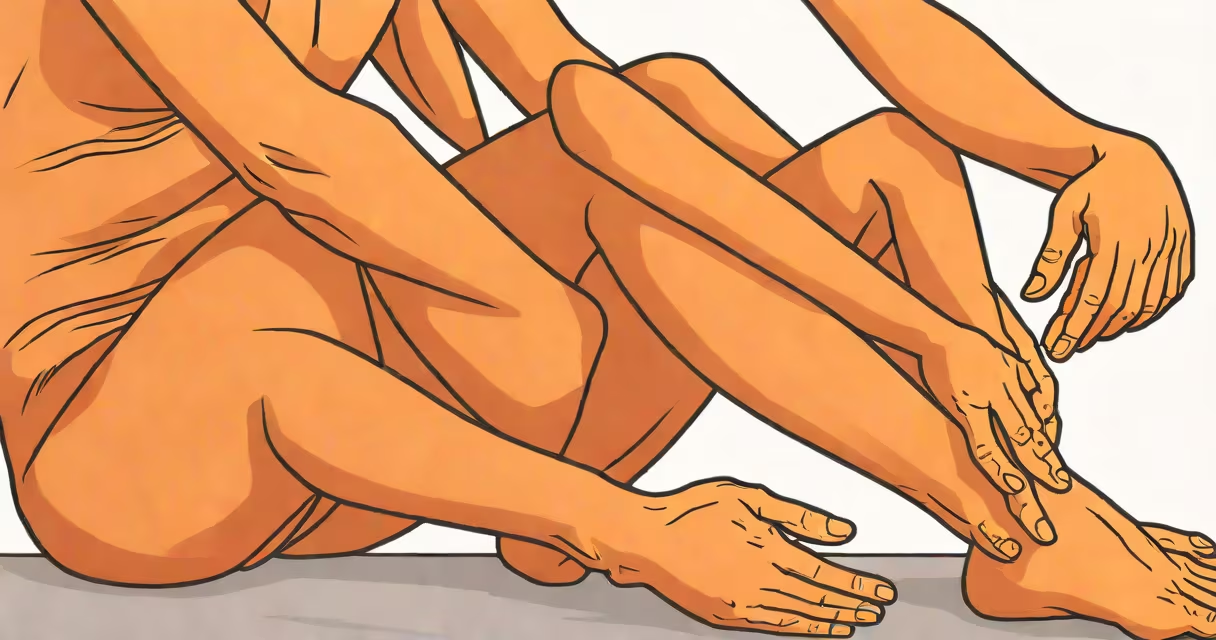
Nerve pain in back of thigh results from irritation or compression of the sciatic nerve or its branches, typically causing sharp, burning, or electric-like sensations along the back and side of the leg. It often radiates from the lower back through the buttock and down the back of the thigh, sometimes extending below the knee.
This condition arises when spinal structures-such as herniated discs, bone spurs, or spinal stenosis-press on nerve roots in the lumbar spine. The sciatic nerve, the largest nerve in the body, originates from nerve roots L4-S3. When inflamed or pinched, it sends pain signals along its path, leading to symptoms in the posterior thigh.
Unlike muscle soreness or strain, nerve pain in back of thigh tends to follow a distinct pattern: it may worsen with sitting, bending forward, or prolonged standing. It rarely improves with rest alone and often persists beyond typical recovery time for muscular injury. A 2021 study in Spine Journal found that 60% of patients with sciatica reported pain that extended past the knee, confirming the neurological nature of the symptom.
The sciatic nerve runs deep through the pelvis and exits via the greater sciatic notch. Once in the thigh, it divides into the tibial and common fibular nerves. Compression at any point along this route can trigger pain. Most commonly, the issue begins in the lower spine, where degenerative disc disease or spondylolisthesis causes nerve root impingement.
Other causes include piriformis syndrome, where the piriformis muscle spasms and compresses the sciatic nerve as it passes beneath. This condition affects about 1 in 20 people, according to a 2019 review in Journal of Orthopaedic & Sports Physical Therapy. Unlike disc-related sciatica, piriformis-related pain often improves with hip flexion and worsens during prolonged sitting or walking uphill.
A key diagnostic clue is dermatomal distribution: pain follows specific skin zones mapped to spinal nerve levels. For example, L5 nerve root involvement typically causes pain along the outer thigh and lateral calf. If the pain stays confined to the back of the thigh without spreading to the foot or ankle, it may indicate a more localized nerve entrapment rather than a central spinal issue.
Not all back-of-thigh pain is nerve-related. Muscle strain, hamstring tears, or bursitis can mimic nerve pain. However, nerve pain usually includes sensory changes such as numbness, tingling, or a "pins and needles" sensation. Muscle injuries tend to cause localized soreness that worsens with movement but doesn't radiate.
| Type | Origin | Pain Quality | Triggers |
|---|---|---|---|
| Sciatica (lumbar radiculopathy) | L4-S3 nerve roots | Burning, shooting, electric | Sitting, bending, coughing |
| Piriformis syndrome | Piriformis muscle compression | Dull ache, sharp when sitting | Prolonged sitting, climbing stairs |
| Hamstring strain | Muscle tear | Sharp, localized, sudden onset | Sprinting, sudden stretch |
One overlooked distinction: nerve pain often persists despite rest. A 2020 study in European Spine Journal showed that 70% of patients with true radicular pain continued experiencing symptoms after 48 hours of bed rest, while those with musculoskeletal strain improved within that window.
Red flags require prompt assessment. These include progressive weakness in the leg, loss of bowel or bladder control, or numbness in the saddle area (around the groin and inner thighs). These signs suggest cauda equina syndrome-a rare but serious condition requiring emergency surgery.
For most cases, initial evaluation involves physical exams like the straight leg raise test. If the patient feels pain when lifting the leg while lying flat, it suggests nerve root irritation. Imaging such as MRI can confirm disc herniation or spinal stenosis. A 2022 guideline from the American Academy of Neurology recommends MRI for persistent symptoms lasting more than six weeks.
I once evaluated a 45-year-old office worker whose back-of-thigh pain began after lifting a heavy box. He described a burning sensation that traveled from his lower back down the back of his left leg. After a positive straight leg raise test and MRI showing a left-sided L5-S1 disc herniation, he was referred for physical therapy. His symptoms improved within four weeks with targeted exercises and posture modification.
First-line treatment focuses on reducing inflammation and relieving pressure on the nerve. Nonsteroidal anti-inflammatory drugs (NSAIDs) provide short-term relief. Physical therapy targeting core stability, pelvic alignment, and nerve gliding exercises shows strong evidence. A 2021 randomized trial in Physical Therapy found that patients doing nerve flossing techniques improved 40% more in function than controls after eight weeks.
Prevention centers on maintaining spinal health. Avoid prolonged sitting. Use ergonomic chairs with lumbar support. Practice proper lifting mechanics: bend at the hips, keep the back straight. Strengthening the glutes and hamstrings helps stabilize the pelvis and reduce nerve tension.
Understanding nerve pain in back of thigh separates it from muscle issues and guides accurate care. Early intervention prevents chronic pain and disability. If symptoms persist beyond two weeks or worsen, consult a healthcare provider. Back pain periods often reflect underlying nerve stress, not just fatigue.