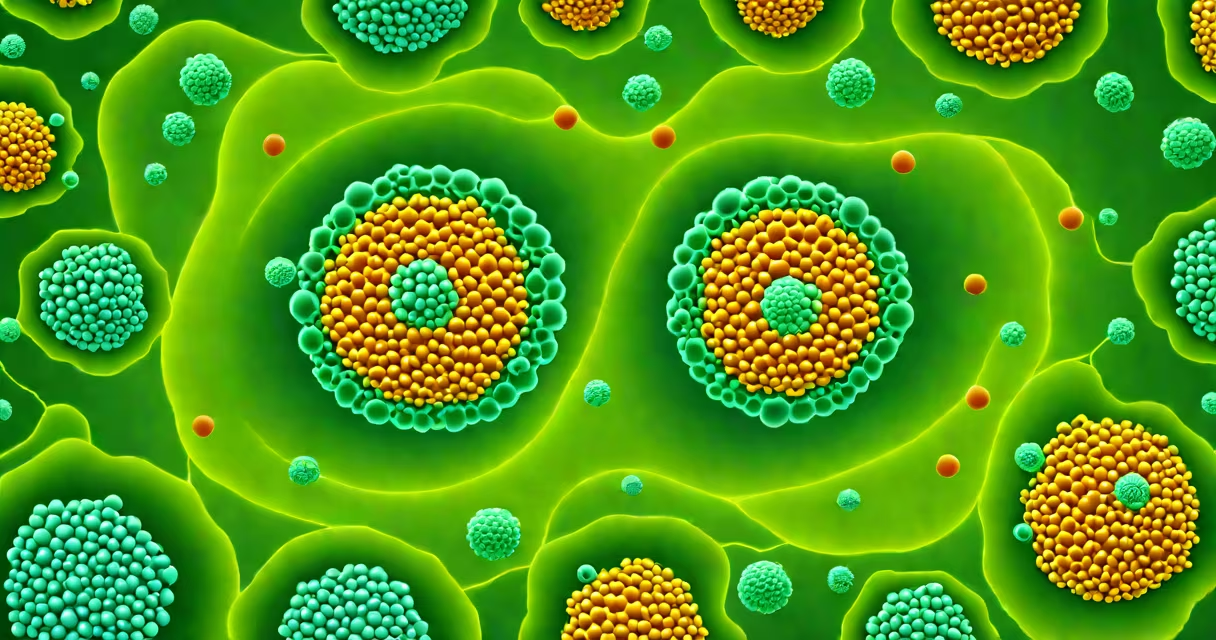
Vacuoles are membrane-bound organelles that serve as storage and regulatory centers in both plant and animal cells. In plants, a single large central vacuole dominates the cell's interior, while animal cells contain multiple smaller vacuoles or vesicles. These structures maintain homeostasis through water balance, nutrient storage, and waste disposal.
The central vacuole in plant cells occupies up to 90% of the cell's volume. It stores water, ions, sugars, amino acids, and pigments. This storage maintains turgor pressure-essential for structural support in non-woody plants. Without it, stems wilt and leaves droop. The vacuole also sequesters toxic compounds and metabolic byproducts, preventing damage to the rest of the cell.
In animal cells, vacuoles are smaller and more transient. They function primarily in endocytosis, exocytosis, and intracellular transport. Lysosomes-a specialized type of vacuole-break down macromolecules using hydrolytic enzymes. These enzymes operate optimally in acidic environments maintained by proton pumps in the lysosomal membrane.
Vacuoles form through the fusion of small vesicles derived from the Golgi apparatus and endoplasmic reticulum. In plant cells, the tonoplast-the vacuolar membrane-regulates ion and solute movement via specific transport proteins. Proton pumps acidify the vacuole interior, creating an electrochemical gradient that drives secondary active transport of nutrients and ions.
For example, potassium ions accumulate in the central vacuole of a leaf cell. This lowers the water potential inside the vacuole, drawing water in by osmosis. The resulting turgor pressure pushes against the cell wall, keeping the leaf rigid. When water is scarce, the vacuole releases ions to reduce internal pressure and prevent bursting during rehydration.
Animal cells use vacuoles in phagocytosis and pinocytosis. A white blood cell engulfs a bacterium via a plasma membrane invagination, forming a food vacuole. This vesicle fuses with a lysosome, which delivers digestive enzymes. After digestion, the breakdown products are released into the cytoplasm for reuse.
Differences between plant and animal vacuoles reflect their distinct roles. Plant vacuoles are large, stable, and often permanent. Animal vacuoles are changing, short-lived, and part of a continuous cycle of formation and degradation.
| Feature | Plant Cell Vacuole | Animal Cell Vacuole |
|---|---|---|
| Size | Large; up to 90% of cell volume | Small; variable, often microscopic |
| Number | One dominant central vacuole | Multiple small vacuoles |
| Primary Function | Turgor maintenance, storage, detoxification | Transport, digestion, waste processing |
| Membrane Type | Tonoplast | Generalized vesicular membrane |
A key distinction lies in the tonoplast's role in regulating ion gradients. Research shows that the tonoplast contains Ca²⁺-ATPases and H⁺-ATPases that control calcium signaling and pH regulation. These mechanisms influence stress responses and developmental processes in plants.
Many assume vacuoles exist only in plant cells. This is incorrect. While plant vacuoles are larger and more prominent, animal cells rely on vacuolar-like vesicles for essential functions. Confusion often arises because animal vacuoles lack a fixed location and do not dominate the cell's volume.
Another misconception is equating all vacuoles with lysosomes. Lysosomes are a subset of vacuoles found in animal cells. They contain hydrolytic enzymes such as proteases, lipases, and nucleases. These enzymes degrade proteins, lipids, and nucleic acids. Defects in lysosomal enzyme activity lead to disorders like Tay-Sachs disease, affecting lipid metabolism in neurons.
Some believe vacuoles store energy directly. They do not. Energy is stored in ATP, glycogen, or fats. Vacuoles store precursors-like amino acids or sugars-that cells later convert into usable energy. For example, the central vacuole in a potato tuber stores starch granules, which are broken down into glucose during germination.
During ripening, tomato fruit cells undergo dramatic changes. The central vacuole expands, increasing in volume by nearly 60%. This expansion compresses the cytoplasm and forces organelles toward the cell periphery. As the vacuole fills, it accumulates sugars, organic acids, and anthocyanins-pigments responsible for red coloration.
Researchers at the University of California, Davis, studied gene expression in developing tomatoes. They found that vacuolar H⁺-ATPase subunits were upregulated during the breaker stage of ripening. This increase enhanced proton pumping into the vacuole, lowering internal pH and activating enzymes involved in pigment synthesis. The result was accelerated color development and improved flavor profile.
On a personal note, I once observed this process firsthand while growing heirloom tomatoes. The fruit swelled rapidly over five days, and the skin stretched taut. Inside, the central vacuole had expanded to fill most of the cell space. When cut open, the juice was intensely sweet-proof of sugar accumulation in the vacuole.
Plant vacuoles are not equivalent to animal lysosomes, despite both being membranous compartments. The tonoplast in plant cells lacks the high concentration of hydrolytic enzymes found in lysosomes. Instead, plant vacuoles use alkaline conditions and proteolytic enzymes like cysteine proteases for protein degradation under stress.
Another overlooked point: vacuoles contribute to programmed cell death in plants. During senescence, vacuoles release enzymes that break down cellular components. This process is tightly regulated and prevents uncontrolled tissue decay. In contrast, animal cells use mitochondria and caspases to initiate apoptosis.
Vacuoles do not contain DNA. Unlike mitochondria or chloroplasts, they lack genetic material. Their function relies entirely on imported proteins and lipids. The central vacuole's membrane is synthesized in the endoplasmic reticulum and modified in the Golgi before delivery.
Understanding vacuole functions in plant and animal cells reveals how cellular organization supports survival across species. These organelles are not passive storage units-they actively regulate internal conditions, manage resources, and respond to environmental cues. Their varied forms reflect evolutionary adaptation to different biological needs.