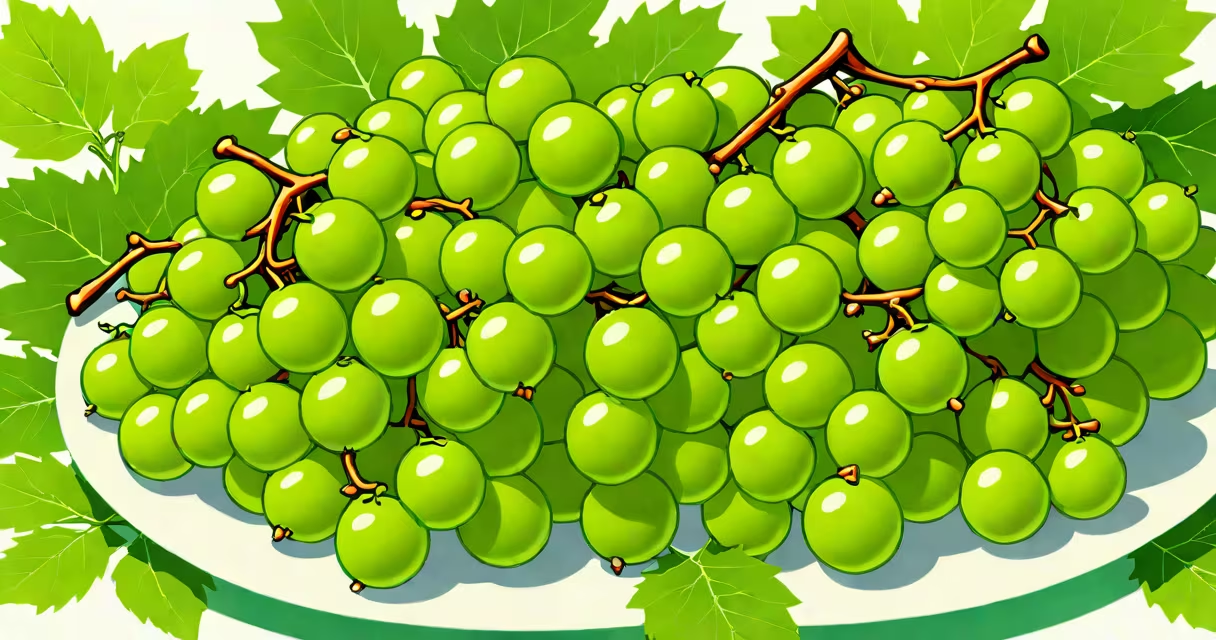
Shine Muscat grapes are a sweet, seedless variety developed in Japan, prized for their intense honey-like flavor, firm texture, and lack of seeds. They are typically sold in clusters of 12 to 16 grapes, with a pale green to yellowish skin and translucent flesh.
These grapes originated from a cross between the Koshu grape and the Muscat of Alexandria. The name "Shine" reflects their glossy appearance and high sugar content, while "Muscat" indicates their aromatic profile. They are grown primarily in Japan's Nagano and Yamanashi prefectures, though commercial production now extends to California, Chile, and parts of China.
Shine Muscat grapes are not a wild species-they are a cultivated hybrid bred for consumer appeal. Their development began in the early 2000s, with commercial release in Japan around 2007. Unlike many table grapes, they do not require cold storage to maintain quality, making them ideal for long-distance shipping.
The sweetness of Shine Muscat grapes comes from a high concentration of fructose and glucose, averaging 18-22 Brix (a measure of sugar content). This level exceeds most common table grapes, which average 12-16 Brix. The flavor is balanced by mild acidity, preventing cloying sweetness.
They ripen in late summer to early fall. Growers monitor sugar levels daily during harvest. Once picked, they are cooled rapidly to 32°F (0°C) to slow respiration and preserve freshness. This process extends shelf life to 21 days under refrigeration, compared to 7-10 days for standard red or green grapes.
Consumers often mistake Shine Muscat for regular green grapes due to similar color. But Shine Muscat has a denser flesh and a distinct floral aroma-reminiscent of lychee and citrus-due to terpenes like linalool and geraniol. These compounds are less prominent in other grape varieties.
Shine Muscat grapes differ from other popular varieties in several key ways:
| Variety | Sugar Level (Brix) | Texture | Aroma | Seed Status |
|---|---|---|---|---|
| Shine Muscat | 18-22 | Firm, juicy | Honey, lychee, citrus | Seedless |
| Greenhouse Thompson | 14-16 | Soft, watery | Mild, grassy | Seedless |
| Red Flame | 16-18 | Firm, slightly tart | Fruity, berry-like | Seedless |
| Concord | 15-17 | Chewy, pulpy | Strong grape, foxy | With seeds |
Unlike Concord grapes, which are used for juice and jellies, Shine Muscat is eaten fresh. Its firmness allows it to hold shape during transport and handling, reducing bruising. The skin is thin but resilient-resistant to cracking even under pressure.
Shine Muscat grapes are sold in premium grocery chains like Whole Foods, Trader Joe's, and specialty retailers such as FreshDirect. They appear in seasonal fruit boxes and are often marketed as "luxury" or "gourmet" produce.
They are popular in gift baskets and holiday season displays. A single cluster can cost $8-$12 USD depending on region and time of year. In Japan, they are given as New Year gifts (shōgatsu) due to their association with prosperity and good fortune.
Food service professionals use them in salads, cheese platters, and desserts. Chefs appreciate their visual appeal and consistent sweetness. One chef in San Francisco reported using Shine Muscat in a chilled melon and goat cheese salad, where the grapes added natural sweetness without overpowering the tang of the cheese.
Many people assume Shine Muscat grapes are genetically modified. They are not. They were developed through traditional cross-breeding techniques, with selection based on taste, size, and yield. The U.S. Department of Agriculture confirms that no genetically engineered components are used in commercial Shine Muscat lines.
Another misconception is that all seedless grapes are the same. Shine Muscat differs from seedless green grapes in flavor, texture, and sugar content. For example, a blind taste test conducted by the University of California, Davis, showed that participants consistently rated Shine Muscat higher in sweetness and enjoyment compared to standard seedless green grapes.
Some consumers also confuse Shine Muscat with "Muscats" sold in bulk. Not all Muscat varieties are the same. The term "Muscat" applies to over 200 grape types worldwide, including wine grapes like Muscat Blanc à Petits Grains. Shine Muscat is a specific cultivar with a registered name and trademark protection in Japan and the U.S.
In 2022, a California grower shipped 12,000 pounds of Shine Muscat grapes to a distributor in New York. The shipment traveled 3,000 miles via refrigerated truck. Upon arrival, 98% of the grapes passed quality inspection-no mold, no shriveling, and no off-flavors. The retailer sold them within five days at a premium price of $14.99 per pound.
This performance highlights the durability and market demand for Shine Muscat. The grower attributed success to precise timing of harvest and immediate cooling after picking. They also used a controlled atmosphere storage system during transit, maintaining oxygen levels below 5% to reduce spoilage.
I tasted Shine Muscat grapes at a farmers' market in Los Angeles and was struck by the contrast with regular green grapes. The first bite released a burst of floral sweetness, followed by a clean, crisp finish. The flesh held together without crumbling. I later bought a bag from a local store and stored it in the crisper drawer at 34°F. After seven days, the grapes still tasted fresh-no mushiness, no sour notes.
Shine Muscat grapes are a premium table grape variety known for their sweetness, seedlessness, and firm texture. They are not genetically modified and are distinct from other grape types in both flavor and quality. When selecting them, look for plump, shiny clusters with no soft spots or discoloration. For best results, consume within two weeks of purchase.