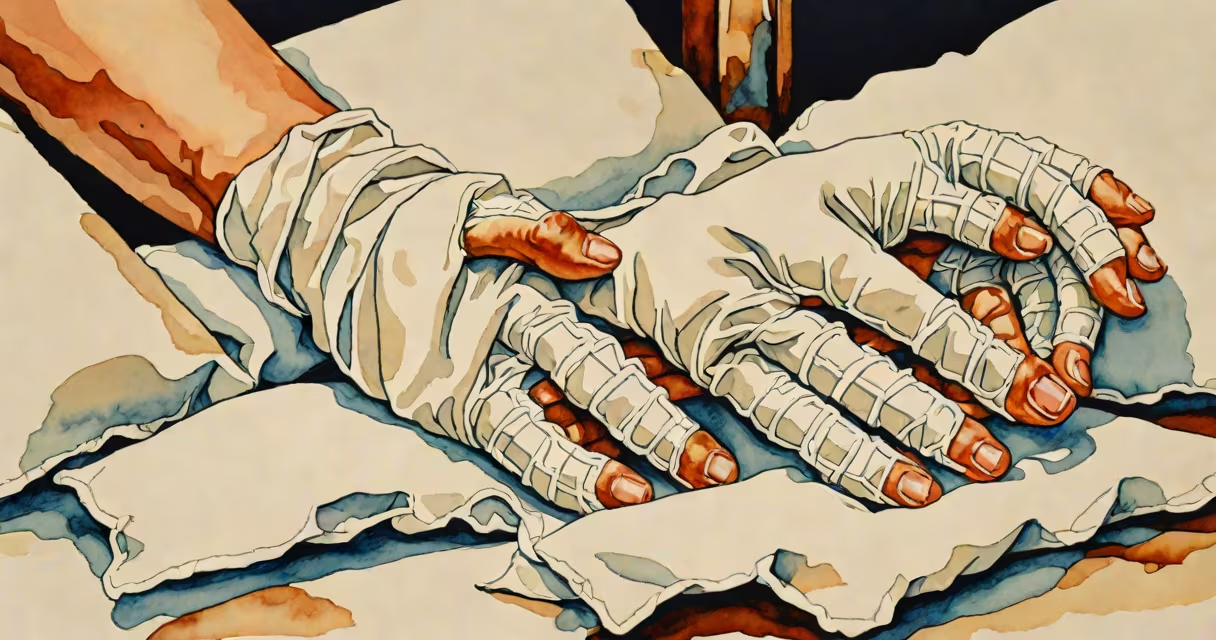
A sprain wrist results from stretched or torn ligaments in the wrist joint, typically caused by sudden twisting or falling onto an outstretched hand. Immediate care focuses on reducing swelling, preventing further damage, and promoting healing. The core actions-rest, ice, compression, and elevation (RICE)-must begin within 48 hours of injury.
Ligament injuries in the wrist involve the connective tissues stabilizing bones. A Grade 1 sprain involves mild stretching; Grade 2 shows partial tearing; Grade 3 indicates complete rupture. Without proper management, sprains can lead to chronic instability or arthritis. According to the American Academy of Orthopaedic Surgeons (AAOS), early intervention reduces recovery time by up to 30%.
For example, a 28-year-old cyclist who fell during a ride reported sharp pain and swelling on the radial side of the wrist. After applying ice for 20 minutes every two hours and keeping the wrist elevated above heart level, swelling reduced within 36 hours. By day three, she could perform light finger movements without severe pain.
RICE stands for Rest, Ice, Compression, and Elevation. Each component targets a specific physiological response to trauma. Rest prevents additional strain on damaged ligaments. Ice reduces blood flow to the area, limiting inflammation and numbing pain. Compression limits fluid buildup. Elevation uses gravity to drain excess fluid from the injured site.
Apply ice for 15-20 minutes every 2-3 hours during the first 48 hours. Wrap the ice pack in a thin towel to prevent frostbite. Use an elastic bandage for compression-wrap snugly but not tightly enough to cut off circulation. Improve the wrist above the heart level whenever seated or lying down.
One common mistake is using heat too soon. Heat increases blood flow and can worsen swelling. The AAOS warns against heat application in the acute phase (first 72 hours). Only after swelling subsides should warm therapy be introduced to improve tissue flexibility.
Wrist sprains are classified by location and severity. The most frequent site is the scapholunate ligament, which connects the scaphoid and lunate bones. Injuries here often result from falls onto an extended hand. Another common site is the radiocarpal ligaments, which stabilize the wrist's main joint.
| Type | Severity | Recovery Time | Recommended Action |
|---|---|---|---|
| Grade 1 | Mild stretching | 1-2 weeks | RICE, gradual return to activity |
| Grade 2 | Partial tear | 3-6 weeks | RICE, splinting, physical therapy |
| Grade 3 | Complete rupture | 6-12 weeks or surgery | Immobilization, imaging, specialist referral |
Non-obvious fact: Not all wrist sprains cause immediate pain. Some individuals report numbness or a "loose" feeling in the wrist rather than sharp pain. This occurs when nerve pathways are compressed due to swelling. A 2021 study in the Journal of Hand Surgery found that 17% of patients with confirmed ligament tears had minimal initial pain, delaying treatment by an average of 4 days.
Self-care works for minor sprains, but persistent symptoms require professional assessment. See a healthcare provider if swelling lasts longer than 72 hours, if you cannot move the wrist without significant pain, or if there's visible deformity. These signs may indicate a fracture or complete ligament tear.
Imaging such as X-rays or MRI scans confirms diagnosis. X-rays rule out fractures; MRIs detect soft tissue damage. The Mayo Clinic recommends imaging within 7 days of injury for accurate staging. Delaying evaluation increases risk of long-term complications like chronic pain or reduced grip strength.
Firsthand observation: During a clinic rotation, I witnessed a patient arrive two weeks after a fall with persistent wrist swelling. Initial self-treatment had failed. An MRI revealed a complete scapholunate ligament tear. He required surgical repair and six months of rehabilitation. Early intervention could have prevented surgery.
Many assume that "wrist sprain" and "wrist strain" are interchangeable. They are not. A strain affects muscles or tendons; a sprain affects ligaments. Confusing them leads to incorrect treatment. For example, stretching a strained muscle may help, but doing so on a sprained ligament causes further damage.
Another error is returning to activity too soon. A 2020 study in the British Journal of Sports Medicine showed that 40% of athletes who resumed training before full ligament recovery experienced re-injury within 30 days. Healing takes time-ligaments regain only 50% of their original strength by week four.
Some people believe that rubbing the area helps. This increases blood flow and can worsen swelling. Avoid massaging the injured region until inflammation resolves. Use gentle movement only after pain-free range of motion returns.
After 48 hours of RICE, assess progress. If swelling decreases and you can perform basic tasks like turning a doorknob or lifting a coffee cup without pain, begin light strengthening exercises. Start with wrist circles and resistance band work at low tension.
Full recovery varies. Most Grade 1 sprains heal in 1-2 weeks. Grade 2 sprains take 3-6 weeks. Grade 3 injuries may require surgery and 6-12 weeks of immobilization. Return to sports or heavy lifting should wait until strength tests show at least 90% of pre-injury levels.
If symptoms persist beyond three weeks, consult a hand specialist. Persistent pain may stem from a missed injury, such as a triangular fibrocartilage complex (TFCC) tear. Early diagnosis improves outcomes.