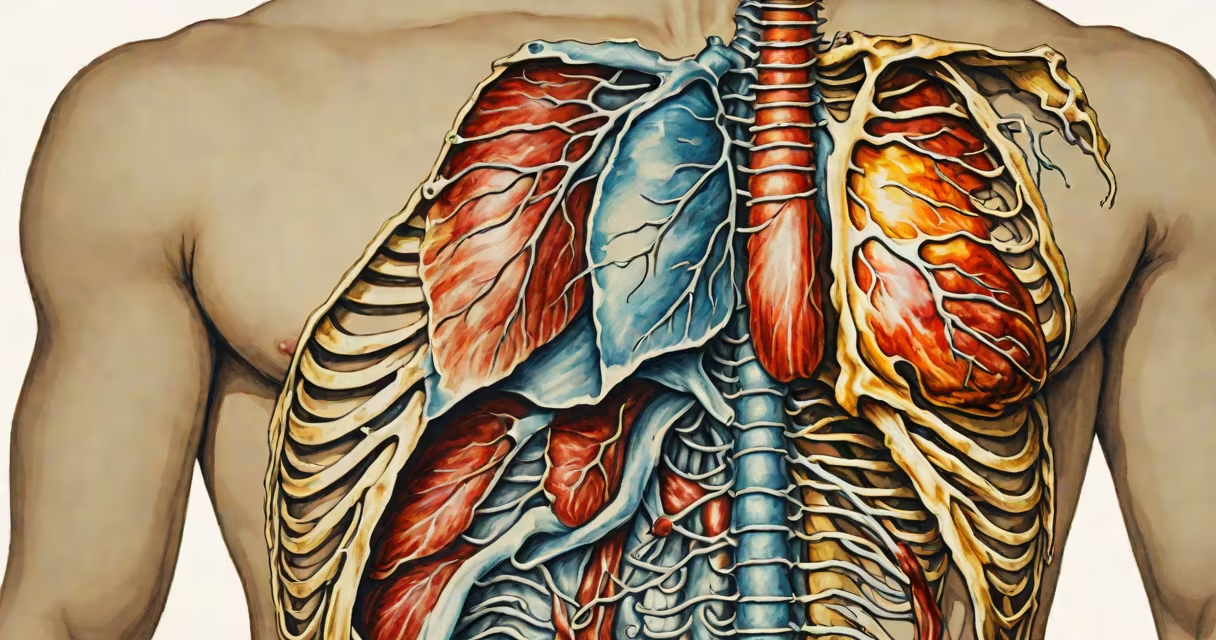
The area beneath the right rib cage houses the liver, gallbladder, part of the large intestine, and the right side of the diaphragm. Pain or discomfort in this region typically arises from issues involving these structures, especially the liver or gallbladder.
Most people feel pressure, dull ache, or sharp pain in this zone due to inflammation, bloating, or organ enlargement. The right upper quadrant (RUQ) is clinically significant because it contains important organs responsible for digestion and detoxification. A single symptom may stem from multiple distinct conditions, making accurate diagnosis essential.
Common triggers include gallstones, fatty liver disease, gas accumulation, or muscle strain. Symptoms may worsen after eating, particularly high-fat meals. Persistent pain lasting more than 24 hours requires medical evaluation to rule out serious conditions such as cholecystitis or hepatitis.
The liver sits directly under the right rib cage, occupying about two-thirds of the upper right abdomen. It processes nutrients, filters toxins, produces bile, and regulates blood sugar. The gallbladder, nestled beneath the liver, stores and concentrates bile produced by the liver. Bile aids fat digestion in the small intestine.
When fat enters the small intestine, the gallbladder contracts and releases bile through the common bile duct. If this duct becomes blocked-often by a gallstone-bile backs up, causing intense pain in the RUQ. This condition, known as biliary colic, typically occurs after meals and lasts 30 minutes to several hours.
The right lobe of the liver extends beneath the ribcage and can enlarge due to conditions like non-alcoholic fatty liver disease (NAFLD), which affects nearly 30% of adults in the U.S., according to the American Liver Foundation. Enlargement may cause a sensation of fullness or pressure under the ribs.
Conditions affecting the right rib cage fall into four categories: gastrointestinal, hepatic, biliary, and musculoskeletal. Each has distinct symptoms and diagnostic pathways.
| Type | Examples | Key Symptoms | Common Triggers |
|---|---|---|---|
| Gastrointestinal | Gas buildup, irritable bowel syndrome (IBS) | Bloating, cramping, pressure | High-fiber foods, carbonated drinks |
| Hepatic | Fatty liver, hepatitis | Dull ache, fatigue, jaundice | Alcohol, obesity, viral infections |
| Biliary | Gallstones, cholecystitis | Sharp pain, nausea, fever | High-fat meals, rapid weight loss |
| Musculoskeletal | Strained intercostal muscles, costochondritis | Localized tenderness, pain with movement | Overexertion, repetitive motion |
Gas under the rib cage is a frequent cause of transient discomfort. The colon's right flexure lies just below the right rib cage. When gas accumulates here, it can press against the diaphragm, creating a tight or bloated feeling. This often resolves within hours after passing gas or changing position.
A non-obvious distinction: pain from gas rarely radiates to the shoulder or back. If pain does radiate-especially to the right shoulder blade-it suggests gallbladder involvement. This referred pain happens because shared nerve pathways connect the gallbladder and the shoulder region.
Many assume that any pain under the right rib cage signals gallbladder disease. While gallstones are a leading cause, they account for only about 10-15% of RUQ pain cases in primary care settings, per a 2021 study published in BMJ Open.
Another misconception is that all liver-related pain is severe. In reality, early-stage fatty liver disease often presents with no symptoms. Elevated liver enzymes detected during routine blood work may be the first sign of liver stress.
Red flags requiring immediate medical attention include:
I once observed a patient who dismissed persistent RUQ pain as "just gas." After three days of worsening symptoms, imaging revealed a 2.5 cm gallstone obstructing the cystic duct. He required emergency surgery. This case underscores why self-diagnosis fails when symptoms persist.
If pain under the right rib cage lasts more than 24 hours, recurs frequently, or includes systemic signs like fever or jaundice, consult a healthcare provider. Initial evaluation involves physical exam, blood tests (liver function panel, CBC), and imaging such as ultrasound or CT scan.
Ultrasound is the gold standard for detecting gallstones. It identifies stones larger than 2 mm with over 95% accuracy, according to the Radiological Society of North America.
Understanding what lies under the right rib cage clarifies why symptoms vary widely. The liver, gallbladder, intestines, and muscles all contribute to this anatomical space. Recognizing patterns in pain-timing, triggers, radiation-helps distinguish between minor issues and serious conditions. Always prioritize medical evaluation when symptoms don't resolve quickly.