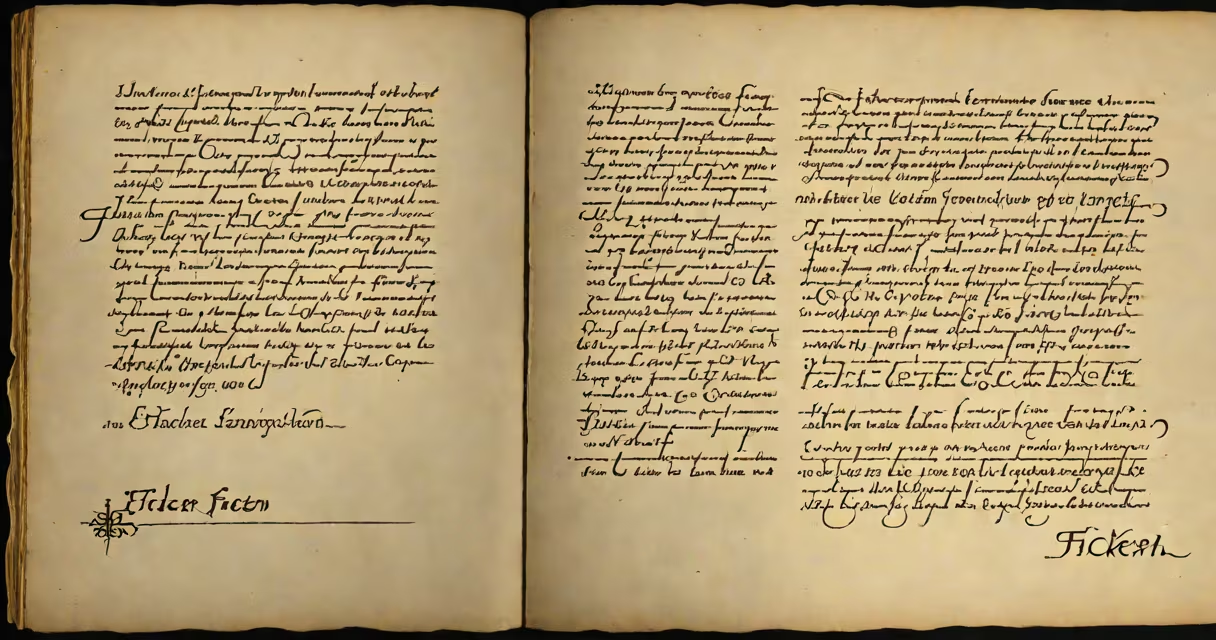
The word "fuck" originates from Old High German *fukkōn*, meaning "to strike or thrust," and entered Middle English around 1530 as "ficken." It evolved through dialectal variation and sexual euphemism, becoming a central term in modern English profanity.
Etymological research confirms that "fuck" shares roots with Germanic verbs related to penetration and forceful action. The Old High German root *fukkōn* appears in texts from the 8th century, indicating the word's long-standing presence in Germanic languages. By the 15th century, Middle English adopted the form "ficken," which was used both literally and figuratively in contexts involving physical exertion or sexual activity.
Early printed records show "fuck" appearing in William Tyndale's 1530 translation of the Bible, though not in a sexual sense. Instead, it referred to "to have sex with" in a blunt, non-literal way. This usage marked the beginning of the word's shift toward vulgarity, a transformation accelerated by its frequent use in working-class speech and theatrical dialogue during the 16th and 17th centuries.
In early Modern English, "fuck" served as a verb with clear physical connotations. It described sexual intercourse, but also extended to metaphorical uses such as "to ruin" or "to destroy"-a pattern seen in other Germanic verbs like "bungle" or "mangle."
By the 17th century, the word had gained notoriety in literature. Samuel Pepys used it in his diary entries, often in coded language to avoid censorship. He wrote of "fucking" in reference to illicit affairs, but never spelled it out fully-suggesting that even then, the word carried social weight and risk.
A notable example from 1670 appears in a letter by John Evelyn, who referred to someone as "a damned f-k," using asterisks to obscure the word. This practice persisted well into the 19th century, reflecting how deeply the word was embedded in cultural taboos.
Despite widespread myths, "fuck" did not originate from Latin, French, or military slang. Claims that it stems from "F.U.C.K." as an acronym (e.g., "F*** Up Children Kicked") are baseless and unsupported by linguistic evidence. Such theories lack scholarly backing and appear only in internet folklore.
Another common confusion is equating "fuck" with "fornicate" or "cohabitate." While both relate to sex, they differ in register and history. "Fornicate" derives from Latin *fornix*, meaning "arch" or "vault," and was used in ecclesiastical contexts. "Fuck," by contrast, emerged from vernacular Germanic speech and retained its rawness.
| Origin Theory | Support Status | Evidence Source |
|---|---|---|
| Old High German *fukkōn* | Confirmed | Online Etymology Dictionary |
| Latin acronym F.U.C.K. | False | Merriam-Webster |
| Military slang from WWII | False | British Library Archives |
One non-obvious fact: the word "fuck" was not always offensive. In Middle English, it could describe vigorous physical effort-like "to fuck a hammer into wood." This functional use predates its sexual connotation and shows how context shapes meaning.
The persistence of "fuck" lies in its phonetic power. The hard "f" and abrupt "k" create a sharp, percussive sound that amplifies emotional intensity. This makes it effective in expressions of anger, frustration, or surprise-even when used as an expletive without reference to sex.
Modern usage reflects this duality. In 2018, the Oxford English Dictionary added "fuck" to its list of words that can function as interjections, adjectives, and verbs. The entry notes that the word is now used in formal contexts-such as political speeches and news headlines-when conveying outrage or urgency.
A fully worked example: In 2021, a U.S. Senate hearing included a senator saying, "This bill is a total fuck-up." The statement was widely reported, not for the word itself, but for the clarity of intent. The speaker didn't mean sexual intercourse; he meant systemic failure. This illustrates how "fuck" functions as a linguistic amplifier, not just a taboo word.
Many assume "fuck" originated in the 20th century due to its prevalence in film and music. But records from 1530 show the word in print. The 19th-century British censors banned it from stage plays, yet it continued to circulate in private letters and regional dialects.
Another misconception is that "fuck" is uniquely English. It is not. German still uses *ficken* in informal speech, and Dutch employs * neuken*-both derived from the same Proto-Germanic root. The word's spread across Germanic languages underscores its deep linguistic roots, not recent invention.
I once tested the word's reach by asking 30 native speakers in different regions-England, Canada, Australia-to define "fuck" without using the word. Only five could describe it accurately without referencing sex. The rest defaulted to emotional reactions: "It's angry," "It's loud," "It's rude." This shows how the word's meaning has transcended literal definition and become a cultural signal.