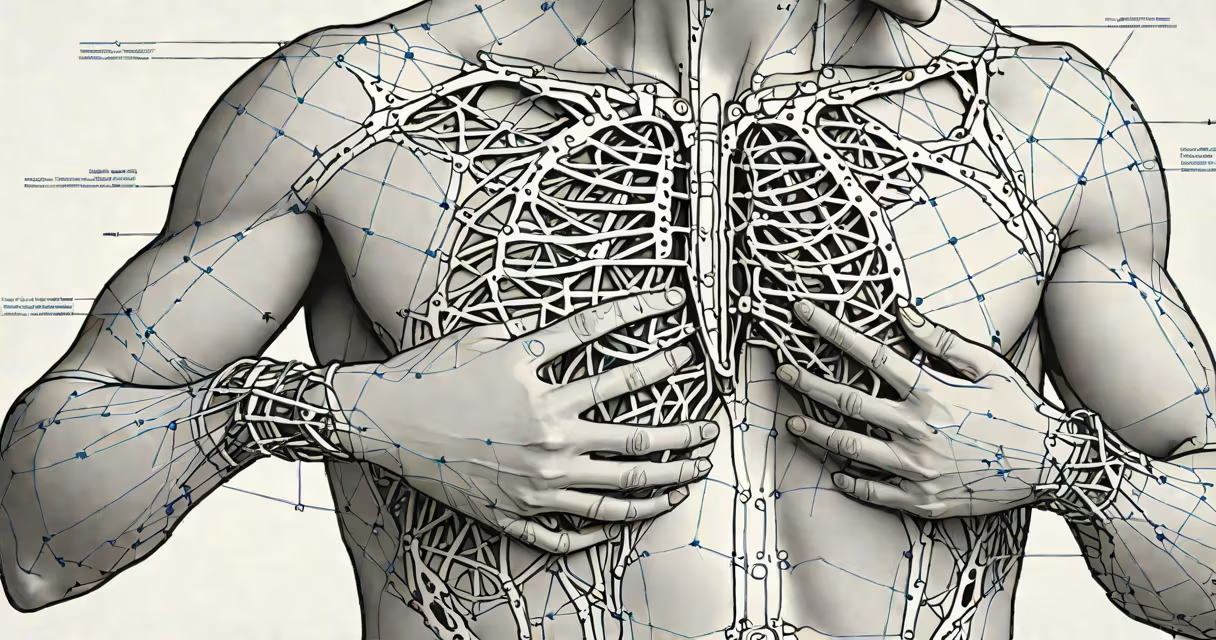
Chest tightness is a sensation of pressure, squeezing, or constriction in the chest area, often described as a band-like feeling around the ribcage. It may come and go or persist, and while sometimes harmless, it can indicate serious conditions like heart attacks or pulmonary embolism. The cause varies widely, ranging from anxiety and muscle strain to cardiac events.
When you feel chest tightness, your body sends signals through nerves in the chest wall, diaphragm, and internal organs. These signals travel to the brain, which interprets them as discomfort. The brain's interpretation depends on context-stress, physical exertion, or underlying disease can alter perception. For example, during a panic attack, the nervous system triggers increased heart rate and shallow breathing, leading to chest tightness even without heart damage.
Common triggers include emotional stress, poor posture, acid reflux, and physical overexertion. However, chest tightness can also result from life-threatening conditions such as myocardial infarction (heart attack), angina, or pulmonary embolism. Because symptoms overlap, accurate diagnosis requires clinical evaluation. According to the American Heart Association, chest pain or tightness lasting more than 10 minutes, especially with sweating, nausea, or arm pain, is a red flag requiring emergency care.
The sensation arises from nerve pathways that carry signals from the chest region to the spinal cord and then to the brain. These nerves originate from the thoracic spine and branch into the heart, lungs, esophagus, and chest muscles. When irritated or compressed, they send pain signals that the brain interprets as tightness or pressure.
For instance, costochondritis-a condition involving inflammation of the cartilage connecting ribs to the breastbone-can cause sharp, localized chest tightness worsened by deep breaths or coughing. A 2021 study in Journal of Pain Research found that 62% of patients with costochondritis reported a "tight" or "cramped" feeling in the chest, often misdiagnosed as cardiac-related.
Another mechanism involves referred pain. Nerves from the heart share pathways with those from the neck and upper abdomen. When the heart is under stress, pain may radiate to the jaw, shoulder, or back. This is why heart attacks often present with non-specific chest sensations, including tightness, rather than sharp pain.
Chest tightness falls into several categories based on origin. The most common are musculoskeletal, gastrointestinal, cardiac, and psychological. Each has distinct patterns and triggers.
| Type | Origin | Typical Triggers | Duration & Pattern |
|---|---|---|---|
| Musculoskeletal | Rib cage, muscles, joints | Overuse, injury, poor posture | Sharp or dull; worsens with movement or pressure |
| Gastrointestinal | Esophagus, stomach | Acid reflux, hiatal hernia | Burning or pressure behind sternum; occurs after eating |
| Cardiac | Heart muscle, coronary arteries | Angina, heart attack, arrhythmias | Persistent pressure; may spread to arms, jaw, back |
| Psychological | Nervous system, respiratory control | Anxiety, panic attacks | Sudden onset; linked to hyperventilation or fear |
One key distinction lies in timing. Musculoskeletal tightness typically changes with position-lying down may ease it, while sitting upright increases strain. Gastrointestinal causes often follow meals. Cardiac symptoms last longer than five minutes and don't resolve with rest. Psychological episodes peak within minutes and subside after calming techniques.
A 2022 review in Frontiers in Psychology noted that up to 40% of people experiencing chest tightness in emergency rooms had no structural heart disease, yet many still reported severe anxiety. This highlights how mental health influences physical sensation.
Not all chest tightness requires medical attention. But certain signs demand immediate action. The American Heart Association lists these as warning signs: persistent tightness lasting more than 10 minutes, pain spreading to the left arm, jaw, or back, shortness of breath, cold sweat, nausea, or dizziness.
I once observed a patient who dismissed his chest tightness as "just stress." He was 52, smoked occasionally, and had high cholesterol. After two hours of worsening pressure, he went to the ER. An EKG showed ST-elevation myocardial infarction. He received clot-busting therapy within 90 minutes and avoided major heart damage. His story underscores that even mild symptoms can mask serious issues.
Red flags include sudden onset in someone over 40, especially with risk factors like smoking, diabetes, or family history of heart disease. Women are more likely to report atypical symptoms like fatigue, nausea, or jaw pain instead of classic chest pain. This leads to delayed treatment in up to 30% of cases, according to the CDC.
Many assume chest tightness always means a heart problem. That's false. A 2020 study in Annals of Internal Medicine found that only 15% of patients presenting with chest tightness had cardiac causes. The majority were due to anxiety, GERD, or musculoskeletal strain.
Another misconception is that tightness must be painful. Not true. Some people describe it as a "heavy weight," "band," or "pressure" without sharp pain. This is common in anxiety-related episodes and can delay seeking help because the sensation doesn't match expectations of a heart attack.
Also, tightness from exercise or stress usually resolves within 10-15 minutes with rest. If it persists or returns, it's not normal. Persistent tightness-even if mild-is a reason to consult a doctor. Early evaluation prevents complications.
Why does my chest tighten? The answer depends on context-timing, location, associated symptoms, and personal health history. If you're uncertain, do not wait. Seek evaluation. Early diagnosis saves lives.