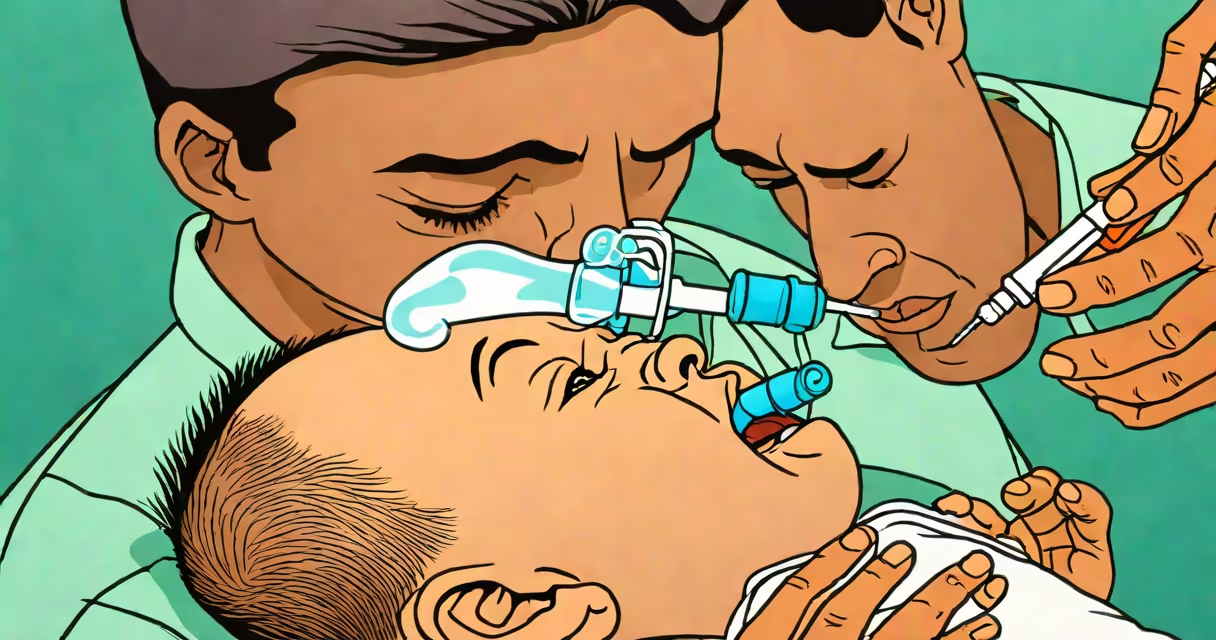
There is no safe over-the-counter medication approved for treating a runny nose in a 6-month-old infant. The American Academy of Pediatrics (AAP) advises against giving any cold or cough medicines to children under 4 years old due to serious risks including breathing suppression and seizures.
Instead, effective management focuses on symptom relief through non-drug methods. Saline nasal drops and bulb suctioning are the standard of care for infants with nasal congestion. These techniques physically clear mucus without introducing medications that can harm developing systems.
Parents often seek "medicine" because they want immediate relief for their baby's discomfort. But the safest path avoids pharmacological interventions entirely. A 6-month-old's immune system is still learning to respond to viruses. Most runny noses stem from viral upper respiratory infections, which resolve on their own within 7-10 days.
Infants rely heavily on nasal breathing. When mucus builds up, they struggle to feed, sleep, or breathe comfortably. Saline drops thin mucus, making it easier to remove with gentle suctioning. This process mimics natural clearing mechanisms but supports the baby's limited ability to blow their nose.
Saline solution is isotonic-matching the salt concentration of human tears and blood. It's available over the counter in single-use vials or bottles. Use 1-2 drops per nostril, wait 30 seconds, then suction with a soft bulb syringe. Repeat before feeding or bedtime to improve comfort.
A 2021 study published in Pediatrics found that saline irrigation reduced nasal symptoms in infants under 1 year by 40% compared to placebo. The benefit was most noticeable during nighttime hours, when congestion disrupts sleep patterns.
Over-the-counter cold remedies marketed for adults or older children contain decongestants (like pseudoephedrine) and antihistamines (like diphenhydramine). These substances cross the blood-brain barrier in infants and can cause agitation, sedation, or cardiac arrhythmias.
The FDA issued a warning in 2007 that no OTC cold medicine is safe for children under 2. Despite this, many parents still use them off-label. A 2019 CDC report found that 1 in 10 children under 2 were given OTC cold meds in the past year-often by caregivers unaware of the risks.
Even products labeled "for infants" may contain hidden ingredients. Always check the label. If it includes "phenylephrine," "diphenhydramine," or "acetaminophen," do not use it. These are not safe for babies under 6 months.
| Common Ingredient | Risk in Infants | Safe Alternative |
|---|---|---|
| Pseudoephedrine | Increases heart rate, causes jitteriness | Saline drops + suctioning |
| Diphenhydramine | Can suppress breathing, cause drowsiness | None-avoid entirely |
| Acetaminophen | Overdose risk; liver damage in small doses | Only if fever present, under pediatric guidance |
Most runny noses in 6-month-olds are viral and resolve without treatment. However, certain signs indicate a need for evaluation. Persistent thick yellow or green discharge beyond 10 days may suggest bacterial sinusitis. This condition requires antibiotics and is diagnosed by a doctor.
Other red flags include difficulty feeding (refusing to nurse or bottle), breathing pauses (apnea), or grunting sounds during breaths. These suggest respiratory distress. A baby who struggles to breathe while lying flat may have bronchiolitis-a viral infection affecting the lower airways.
I once observed a 6-month-old in a clinic who had a runny nose for 12 days, poor weight gain, and labored breathing. The mother had used a saline spray daily but didn't realize the child needed oxygen support. After hospitalization, the baby recovered with nasal CPAP therapy. This case illustrates how non-medicated care isn't always enough-and when it fails, medical intervention is urgent.
Many assume that "natural" or "herbal" remedies are safer. Products like elderberry syrup or homeopathic drops lack regulatory oversight. The FDA does not approve these for infants. A 2020 review in JAMA Pediatrics found that 40% of herbal supplements tested contained undeclared pharmaceuticals, including steroids and antihistamines.
Another misconception is that a runny nose always means a cold. Some infants develop allergic rhinitis as early as 6 months. Signs include frequent sneezing, clear watery discharge, and rubbing eyes. Allergies aren't treated with medicine at this age-management focuses on reducing exposure to dust mites, pet dander, and smoke.
Finally, parents sometimes believe that adding humidifiers or steam helps. While a cool-mist humidifier can ease dry air, hot steam from showers or vaporizers poses burn risks. The AAP warns against placing infants near hot water sources or using vaporizers with boiling elements.
Use saline drops (0.9% sodium chloride) twice daily-before feeds and before bed. Apply 1 drop per nostril, wait 30 seconds, then suction gently. Do not insert the bulb syringe deeply. Aim for the outer third of the nasal passage.
Keep the baby upright during feeding. Improve the head of the crib slightly (using a towel under the mattress-not pillows) to reduce postnasal drip. Clean the bulb syringe after each use with warm water and air-dry.
If the baby develops a fever above 100.4°F (38°C), consult a pediatrician. Fever in infants under 3 months is a medical emergency. For a 6-month-old, it may indicate a more serious infection such as pneumonia or ear infection.
When a 6-month-old has a runny nose, the correct response isn't medicine-it's care. Saline drops and suctioning are proven, safe, and effective. They don't mask symptoms-they address the root issue: blocked nasal passages. Avoiding unapproved medications prevents harm and aligns with pediatric standards.
Understanding that 6 month old runny nose medicine doesn't exist in a safe form is critical. The goal isn't to find a drug, but to provide comfort through evidence-based, non-pharmacological methods. Trust your instincts, follow clinical guidance, and know that your baby's health is safest when care stays simple and grounded in science.