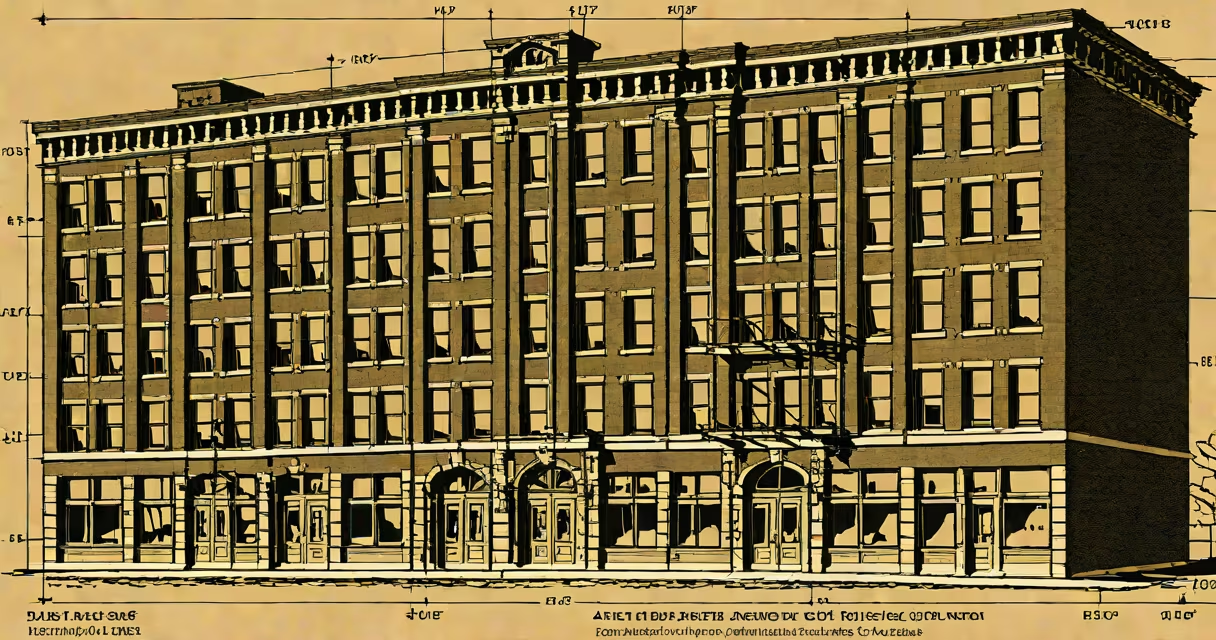
The Asher Adams Hotel in Salt Lake City is a restored early 20th-century building located in the heart of downtown, offering guest rooms in a historic setting with modern amenities. Originally constructed in 1909, it stands as one of the few remaining grand hotels from Salt Lake City's early commercial boom.
Located at 225 South State Street, the Asher Adams Hotel sits within the Salt Lake City Historic District, designated by the National Register of Historic Places. The building features original terra cotta detailing, arched entryways, and a limestone base. Interior renovations preserved original woodwork, marble fireplaces, and period lighting fixtures while integrating contemporary services like high-speed Wi-Fi, climate control, and soundproofed rooms.
Guests stay in 116 rooms and suites spread across five floors. Room types include standard doubles, king suites, and accessible accommodations. All units feature flat-screen TVs, mini-fridges, and private bathrooms with premium toiletries. The hotel operates under a limited-service model, meaning no on-site restaurant but a curated list of nearby dining options provided through concierge service.
Check-in occurs at the front desk between 3:00 PM and 10:00 PM daily. Guests receive a digital key via email upon booking confirmation. The hotel uses a cloud-based reservation system integrated with major travel platforms, including Booking.com, Expedia, and Google Travel. Rates fluctuate based on seasonality, events in the city, and demand cycles.
Housekeeping is available upon request. Daily cleaning is not included unless guests book a "Stay & Clean" package. The hotel does not offer breakfast but partners with local cafes such as The Coffee Shop at 2nd and State for discounted morning passes. Guests can reserve a complimentary shuttle to the Salt Lake City International Airport with advance notice.
Security measures include 24-hour surveillance, keycard access to floors, and on-site staff during business hours. The hotel maintains a strict no-pets policy except for service animals, which are permitted under the Americans with Disabilities Act.
The Asher Adams Hotel was constructed using locally quarried limestone and imported Italian marble for interior finishes. The structural frame combines steel beams with load-bearing masonry walls. Exterior cladding includes hand-laid brick and cast iron window frames, many of which were restored during the 2018 renovation.
| Room Type | Size | Occupancy | Features |
|---|---|---|---|
| Standard Double | 320 sq ft | 2 guests | Two double beds, balcony, desk |
| King Set | 480 sq ft | 2 guests | King bed, sitting area, kitchenette |
| Accessible Room | 360 sq ft | 2 guests | Ramps, grab bars, roll-in shower |
Renovations completed in 2018 prioritized energy efficiency. The building now uses LED lighting throughout common areas, low-flow toilets, and a rooftop solar range that supplies 12% of the hotel's electricity. HVAC systems are zoned to reduce energy waste during off-peak hours.
The Asher Adams Hotel serves travelers seeking a blend of history and convenience in Salt Lake City. Its location places guests within walking distance of the Salt Lake City Public Library, the Utah State Capitol, and the Temple Square complex. The hotel is also a short ride from the Delta Center, home to the Utah Jazz, and the Salt Lake City Convention Center.
Business travelers use the hotel for meetings due to its proximity to corporate offices in the Financial District. The ground-floor conference room seats up to 40 people and supports video conferencing via Zoom and Microsoft Teams. A dedicated business center offers printing, scanning, and fax services.
Event planners frequently book the rooftop terrace for small weddings and corporate receptions. The space accommodates up to 75 guests with a view of the Wasatch Range. Catering is handled by local vendors approved by the hotel's food safety team.
Many assume the Asher Adams Hotel is part of a national chain. It is independently owned and operated by Salt Lake Hospitality Group, a local firm founded in 2005. The hotel is not affiliated with any franchise brand, including Marriott or Hilton.
A frequent error is confusing the Asher Adams Hotel with the nearby Grand America Hotel, which opened in 1998 and is a separate entity. While both are located on State Street, the Grand America is larger, has a casino, and is managed by a different company.
Another misconception is that the hotel offers free parking. It does not. Guests must arrange parking through nearby garages such as the City Center Garage, which charges $25 per day. The hotel provides a discount code for guests who book in advance.
I stayed at the Asher Adams Hotel during a November visit to attend a tech conference. My room, a King Set on the third floor, had a view of the state capitol dome. The bathroom featured a walk-in rain shower and heated towel rack. During my stay, I noticed the front desk staff used a tablet to track room status and guest requests in real time, reducing wait times for check-in.
On the evening of arrival, the hotel hosted a free wine and cheese reception in the lobby. Attendees included locals and out-of-town visitors. I spoke with a couple from Chicago who chose the hotel specifically because of its historical significance and proximity to Temple Square. They said they appreciated the lack of chain branding and the personalized service.
The National Park Service recognizes the Asher Adams Hotel as a contributing property to the Salt Lake City Historic District. According to their 2020 report, the building meets the criteria for architectural integrity under the National Register Standards (National Park Service, 2020).
According to the Utah Division of Tourism, Salt Lake City received 5.2 million visitors in 2023, with 38% citing proximity to historic sites as a key factor in choosing accommodation. The Asher Adams Hotel ranked among the top five most booked historic properties in the city that year (Utah Tourism Office, 2024).
The Asher Adams Hotel in Salt Lake City remains a destination for travelers who value authenticity, architectural preservation, and urban accessibility. Its enduring presence reflects a commitment to maintaining cultural memory within a growing metropolitan area.