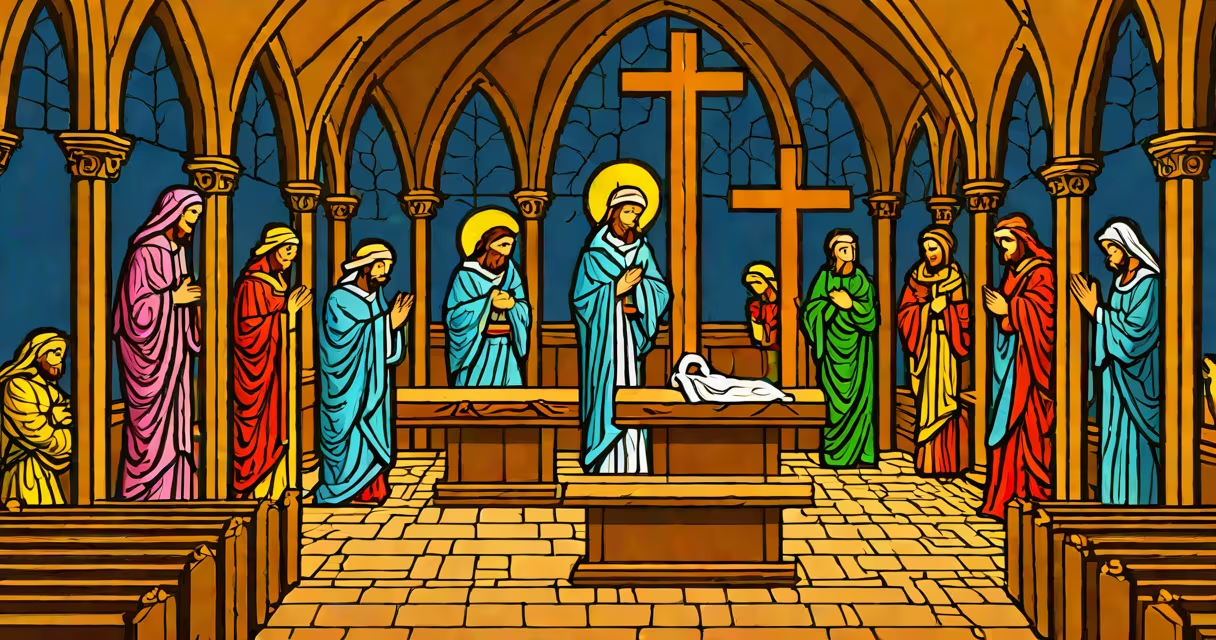
The stations of the cross are fourteen symbolic scenes depicting Jesus Christ's final hours, from his condemnation to his burial. They serve as a meditative path through his suffering and sacrifice, central to Catholic and some Protestant devotional practices, especially during Lent.
Each station marks a specific event on the route to Calvary. Pilgrims or worshippers move from one station to the next, praying and reflecting on Christ's physical and emotional trials. The sequence begins with Jesus being condemned by Pontius Pilate and ends with his body being placed in the tomb. These moments are not just historical recollections-they are spiritual encounters meant to draw believers deeper into the mystery of redemption.
According to the Vatican's Congregation for Divine Worship and the Discipline of the Sacraments, the stations are intended to "help the faithful to relive the passion of Christ" and build personal conversion. The practice dates to the 14th century, rooted in pilgrimages to Jerusalem's holy sites, where early Christians walked the actual path Jesus may have taken.
Worshippers typically begin at the first station and progress through each one, pausing to pray, reflect, or recite a short prayer. Many churches display the stations as artwork-carved wood, painted panels, or sculpted figures-arranged in a circuit around the sanctuary or along a chapel wall. Some parishes hold processions during Good Friday or Holy Week, where participants walk the stations in silence or with chanting.
Each station includes a brief narrative based on Gospel accounts. For example, Station 3-Jesus falls under the weight of the cross-is drawn from Luke 23:26, which notes that Simon of Cyrene was compelled to carry the cross after Jesus collapsed. The act of carrying the cross becomes a metaphor for personal burden and endurance.
A common misconception is that the stations were created by Pope Urban VIII in the 17th century. In reality, they evolved gradually. The formal set of fourteen stations was standardized by Pope Clement XI in 1724, though earlier versions existed in monastic traditions. The number fourteen corresponds to key events described in Scripture and later expanded upon by medieval theologians.
While most commonly associated with Roman Catholicism, the stations are also practiced in Anglican, Lutheran, and some Methodist traditions. However, usage varies widely. In Catholic churches, the stations are often part of the liturgical calendar, especially during Lent. In Protestant settings, they may appear in special services but are less frequently integrated into regular worship.
Some communities use alternative versions. The "Stations of the Cross in the Modern World" series, developed by the Jesuit Refugee Service, replaces traditional scenes with contemporary images of suffering-refugees crossing borders, victims of war, people experiencing homelessness. These adaptations maintain the structure but reinterpret the meaning for current global crises.
Another variation is the "Luminous Stations," proposed by Pope John Paul II in 2004. Though not officially adopted as a replacement, these five additional stations focus on Jesus' teachings and miracles, such as the wedding at Cana and the Transfiguration. They aim to balance the sorrowful stations with themes of light and revelation.
| Station | Event | Biblical Source |
|---|---|---|
| 1 | Jesus is condemned to death | Matthew 27:15-26 |
| 2 | Jesus takes up his cross | John 19:17 |
| 3 | Jesus falls the first time | Implied in Luke 23:26 |
| 4 | Jesus meets his mother | John 19:25-27 |
| 5 | Simon of Cyrene helps carry the cross | Mark 15:21 |
The fourth station-Jesus meeting his mother Mary-is not explicitly mentioned in the Gospels. It is based on theological tradition and artistic interpretation. The Virgin Mary's presence at the cross is implied in John 19:25, where she stands near the cross, but the direct encounter between mother and son is a later addition to the narrative. This illustrates how the stations blend Scripture with devotional imagination.
Many assume the stations are a form of ritualistic repetition with no personal relevance. But the practice aims to be deeply introspective. Each station invites the believer to ask: "Where am I in this moment?"-not just in history, but in their own life. A person struggling with guilt might reflect on Station 1, where Jesus is condemned unjustly, drawing parallels to their own sense of unworthiness.
Another error is thinking the stations are only for Catholics. While the Catholic Church formally promotes them, many non-Catholic Christians engage with them during Lent. The United Methodist Church includes the stations in its annual Lenten resources, and the Episcopal Church offers downloadable guides for home use.
I once attended a Good Friday service at a small parish in rural Pennsylvania where the stations were enacted using actors and live music. At Station 7-Jesus is stripped of his garments-the priest removed his stole and handed it to a volunteer. The silence that followed wasn't empty-it was charged with presence. That moment made the abstract tangible. The stations aren't about performance; they're about participation.
Research from the Pew Research Center shows that 54% of U.S. Catholics participate in Lenten observances, including the Stations of the Cross. Among those who attend, 78% report feeling a stronger connection to their faith during the season. The stations offer a structured way to process grief, loss, and moral responsibility-issues increasingly relevant in modern life.
For example, Station 10-Jesus dies on the cross-can be interpreted not just as a historical event but as a call to confront injustice. The Catholic Church's 2022 document *On the Dignity of the Human Person* cites the crucifixion as a model for responding to systemic oppression. When believers meditate on Jesus' final breath, they are reminded that love persists even in defeat.
Understanding what the stations of the cross mean requires moving beyond visual art or ritual. They are a living practice-a way to walk with Christ through pain, not to escape it. The full cycle ends not with despair, but with hope: Jesus is buried, but he will rise.