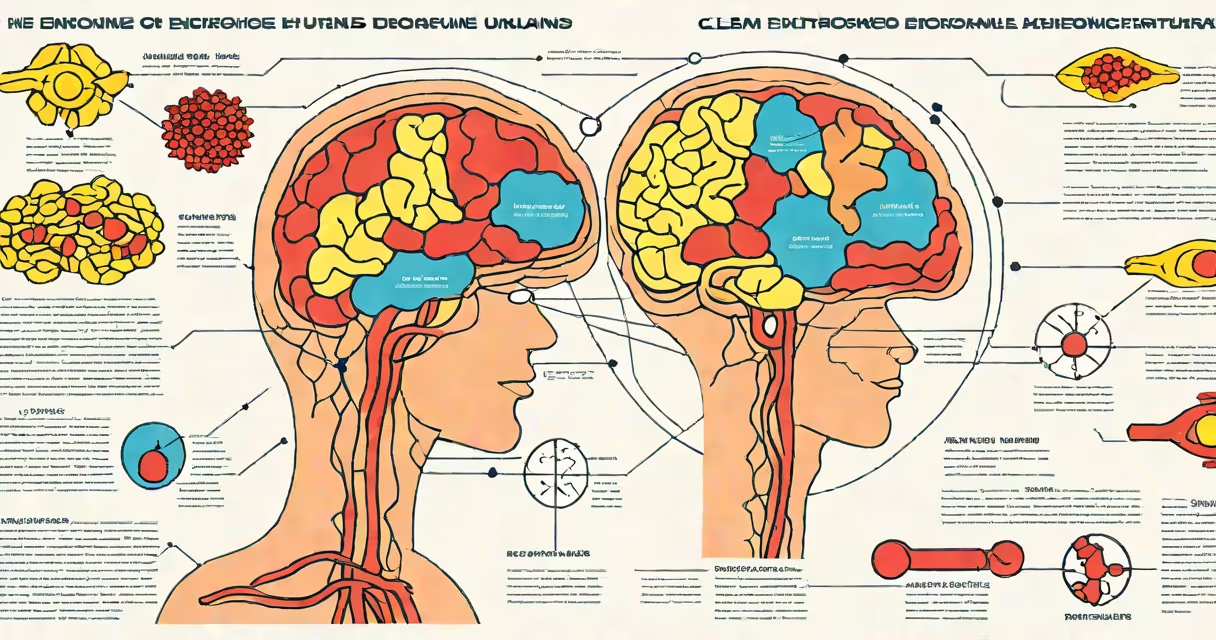
The definition of endocrine refers to the system of ductless glands that secrete hormones directly into the bloodstream to regulate physiological processes such as metabolism, growth, development, and reproduction.
Endocrine function begins with specialized cells in organs like the hypothalamus, pituitary, thyroid, parathyroids, adrenal glands, pancreas, and gonads. These cells produce signaling molecules called hormones. Unlike exocrine glands-which release substances through ducts, like sweat or saliva-endocrine glands release hormones into the blood, allowing them to travel throughout the body.
Hormones act on distant target tissues by binding to specific receptors. For example, insulin from the pancreas lowers blood glucose levels by signaling muscle and fat cells to absorb sugar. This mechanism ensures precise control over internal conditions, maintaining homeostasis.
When a stimulus triggers a gland-such as low blood sugar triggering the pancreas-the gland releases a hormone into capillaries. The hormone circulates until it reaches cells with matching receptors. Once bound, the hormone initiates a cellular response, such as activating enzymes or altering gene expression.
Feedback loops maintain balance. A rise in cortisol due to stress signals the brain to reduce further cortisol production. This negative feedback prevents overactivity. Disruption of this loop can lead to disease-like Cushing's syndrome, caused by excessive cortisol.
Some hormones act slowly. Thyroid-stimulating hormone (TSH) takes hours to affect metabolism. Others act rapidly-epinephrine increases heart rate within seconds during fight-or-flight responses.
The primary endocrine glands include:
| Gland | Primary Hormone(s) | Main Function |
|---|---|---|
| Pituitary | GH, TSH, ACTH, FSH, LH | Master regulator; controls other glands |
| Thyroid | Thyroxine (T4), Triiodothyronine (T3) | Regulates metabolic rate |
| Adrenals | Cortisol, Aldosterone, Epinephrine | Stress response, electrolyte balance, energy mobilization |
| Pancreas | Insulin, Glucagon | Blood sugar regulation |
| Ovaries/Testes | Estradiol, Testosterone | Reproduction, secondary sex characteristics |
Not all endocrine activity occurs in dedicated glands. The kidneys produce erythropoietin, which stimulates red blood cell formation. The stomach lining secretes gastrin, influencing digestion. These are examples of diffuse endocrine systems.
One non-obvious fact: many hormones are derived from amino acids, not lipids. While steroid hormones (like cortisol) come from cholesterol, peptide hormones (like insulin) are made from chains of amino acids. This difference affects how they cross cell membranes and interact with receptors.
People often confuse endocrine with nervous system signaling. Both transmit messages, but the endocrine system uses slow, long-lasting chemical signals via blood. The nervous system uses fast electrical impulses through nerves. A single adrenaline surge can last minutes; nerve signals take milliseconds.
Another misconception: all hormones are male or female. Sex hormones like estrogen and testosterone do influence reproductive traits, but they also affect bone density, mood, and fat distribution. Men have estrogen too-about 10% of circulating estradiol comes from testicular conversion of testosterone.
Some assume endocrine disorders are rare. They're not. According to the American Association of Clinical Endocrinologists, over 18 million Americans have diabetes, a disorder rooted in endocrine dysfunction. Hypothyroidism affects about 1 in 50 people in the U.S., with higher rates in women.
Consider a 14-year-old diagnosed with type 1 diabetes. Their immune system destroys beta cells in the pancreatic islets-specialized clusters responsible for insulin production. Without insulin, glucose cannot enter cells. Blood sugar rises, leading to fatigue, blurred vision, and increased urination.
Without treatment, this condition causes diabetic ketoacidosis-a life-threatening state where the liver breaks down fats into ketones. The body becomes acidic. Emergency care involves intravenous insulin and fluids.
Management requires daily insulin injections or pump use. Continuous glucose monitors track blood sugar every five minutes. This illustrates how tightly the definition of endocrine governs health outcomes. A failure in one component disrupts entire systems.
I once observed a patient with Addison's disease-a rare disorder where adrenal glands fail to produce cortisol and aldosterone. Her blood pressure dropped to 80/50 mmHg. She reported chronic fatigue and darkened skin patches. After starting hydrocortisone replacement therapy, her energy returned within days. This case confirmed how central endocrine function is to survival.
While both systems involve secretion, endocrine glands lack ducts. Exocrine glands-like salivary or sweat glands-release their products through ducts onto surfaces or into cavities. Sweat cools the skin; saliva aids digestion.
Endocrine secretion is systemic. A single hormone can influence multiple organs. Cortisol, for example, affects the liver (glucose production), fat tissue (lipolysis), and immune cells (suppression).
Exocrine secretion is local. Digestive enzymes from the pancreas enter the small intestine through the pancreatic duct. They don't circulate widely.
Understanding the definition of endocrine enables accurate diagnosis and treatment. Misdiagnosis of hyperparathyroidism-caused by overactive parathyroid glands-can mimic anxiety or depression. High calcium levels cause confusion, constipation, and kidney stones. Correct identification prevents unnecessary psychiatric intervention.
Research continues to uncover new roles for hormones. Leptin, discovered in 1994, regulates appetite and fat storage. Its discovery reshaped obesity science. Today, scientists study ghrelin, the "hunger hormone," for potential weight-loss therapies.
For clarity: the term "endocrine" describes the system's method of delivery-hormones into the blood-not the organ itself. A tumor in the breast may secrete estrogen, making it endocrine-active even though the breast is primarily exocrine.
Accurate terminology prevents errors. Calling a sweat gland "endocrine" misrepresents its function. The definition of endocrine centers on secretion into circulation, not location or purpose.
The definition of endocrine underpins much of modern medicine. From managing diabetes to treating hormonal cancers, knowing how this system operates allows targeted interventions. It is not a vague concept-it is a precise biological structure governing internal communication.