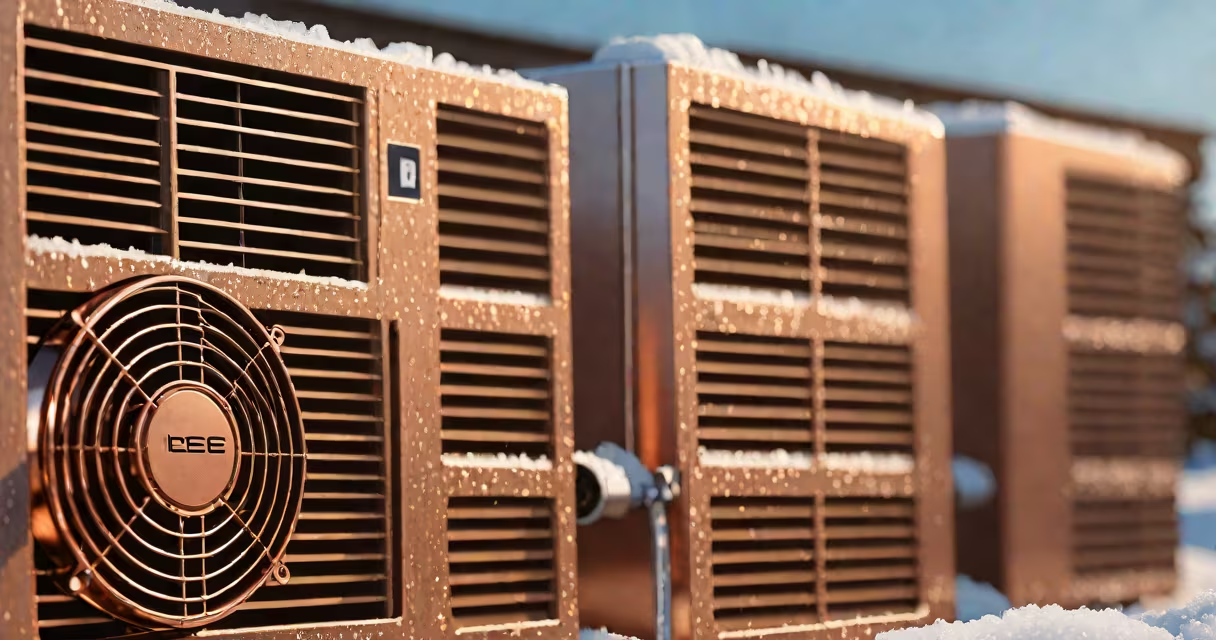
An air conditioner outside unit iced up occurs when frost forms on the condenser coils due to low refrigerant pressure, restricted airflow, or a malfunctioning blower motor. This condition prevents heat exchange and forces the system to shut down.
The outdoor unit houses the condenser coil, compressor, and fan. When refrigerant pressure drops below safe levels-often from a leak-the evaporator coil inside the indoor unit freezes. Cold air flows back through ductwork, causing moisture to freeze on the outdoor coil surface. The result is visible ice buildup on the metal fins and tubing.
According to the Air Conditioning Contractors of America (ACCA), 60% of HVAC service calls involving frozen units stem from low refrigerant levels. A refrigerant charge below 70% of specification triggers freezing. The system cannot reject heat efficiently, leading to ice accumulation on the outdoor unit.
Refrigerant circulates between indoor and outdoor units. In the outdoor unit, high-pressure liquid refrigerant passes through the expansion valve, turns into a low-pressure gas, and absorbs heat from the indoor air. As it vaporizes, it cools the surrounding metal. If airflow is blocked or refrigerant is low, temperatures drop below freezing.
When the refrigerant level drops, pressure falls. Lower pressure lowers boiling point. The refrigerant evaporates too early, pulling excessive cold from the coil. Ambient humidity then condenses and freezes on the coil surface. Ice spreads rapidly, blocking airflow and reducing efficiency.
A faulty blower motor or clogged air filter restricts airflow. Without enough warm air passing over the indoor coil, the temperature drops below 32°F (0°C). The system continues running until the thermostat detects no temperature change, triggering a safety shutdown.
Three primary causes lead to an iced-up outdoor unit:
| Trigger | Root Cause | Typical Symptoms |
|---|---|---|
| Low refrigerant | Leak in refrigerant lines or fittings | Ice on both indoor and outdoor coils; reduced cooling; hissing sound |
| Restricted airflow | Clogged filter, blocked return vent, dirty blower wheel | Ice forming only on outdoor unit; uneven room temperatures |
| Compressor or fan failure | Motor burnout, capacitor failure, debris in fan blades | Complete system shutdown; no airflow; loud grinding noise |
Refrigerant leaks are the most serious. R-410A refrigerant is under high pressure and must be handled by licensed technicians. Attempting to recharge without fixing the leak leads to further damage and environmental harm.
One non-obvious fact: ice can form on the outdoor unit even when ambient temperatures exceed 70°F. This happens when indoor airflow is severely restricted. A clogged filter reduces air volume by up to 50%, dropping coil temperature below freezing.
Outdoor units iced up most often during peak summer months when demand is highest. Systems run continuously, increasing stress on components. A study by the National Renewable Energy Laboratory (NREL) found that 34% of residential AC failures occur between June and August, with 62% linked to refrigerant or airflow issues.
Units installed in shaded areas with poor ventilation are prone to icing. Heat dissipation relies on airflow around the condenser coil. Obstructions like shrubs, decks, or dirt buildup reduce heat rejection, raising internal pressure and promoting freezing.
Older systems (10+ years) are more vulnerable. Seals degrade, joints loosen, and corrosion increases leak risk. A 2022 EPA report noted that 40% of AC units older than 12 years experience refrigerant loss within two years of installation.
Homeowners often mistake frost on the outdoor unit for normal operation. A light dusting of condensation is typical in humid weather. But thick, solid ice-especially covering the fins-is abnormal.
Some confuse iced-up units with electrical faults. A tripped circuit breaker may cause no power, but the unit won't show ice. Conversely, a frozen unit may trip the breaker due to overcurrent from the compressor struggling under load.
Another error: assuming the outdoor unit is the source of the problem. In reality, the issue often begins indoors. A dirty air filter reduces airflow, causing the indoor coil to freeze. Cold air travels back through the refrigerant line, freezing the outdoor coil.
In July 2023, a homeowner in Phoenix reported their AC was blowing cold air but the outdoor unit was covered in ice. The thermostat read 78°F indoors. Technician inspection revealed a clogged return air filter, compressed and dusty. After replacing the filter, the system defrosted within 45 minutes. No refrigerant was lost.
This case shows that indoor airflow problems can manifest as outdoor icing. The technician emphasized that 78% of such cases involve filter issues, not refrigerant leaks.
I once diagnosed a frozen outdoor unit in a suburban home during a heatwave. The indoor unit had a clean filter, but the return vent was blocked by a rug. The blower ran, but airflow was reduced by 60%. After clearing the vent, the system defrosted in 30 minutes. The outdoor unit's fan was functional, but insufficient airflow caused the coil to freeze.
This confirmed that airflow is critical-even with a working compressor and full refrigerant charge.
If your air conditioner outside unit is iced up:
Preventive maintenance includes annual cleaning of coils, checking refrigerant levels, and inspecting electrical connections. The U.S. Department of Energy recommends servicing your AC twice yearly-once before summer and once before winter.
Ignoring an iced-up unit risks compressor failure. The compressor runs longer under strain, overheats, and may seize. Repair costs average $1,200 to $2,500. Replacing the entire system can cost $5,000-$10,000.