antique car values reflect the market price assigned to vehicles manufactured between 1919 and 1948, based on originality, condition, provenance, and demand. These values are not fixed-they fluctuate with collector interest, regional markets, and economic conditions.
Market pricing for antique cars begins with verified documentation. A 1936 Duesenberg Model J with factory records, original paint, and documented ownership history can command $1.2 million at auction. Without such evidence, the same car may sell for under $300,000. The difference lies in authenticity and traceable history.
Values are determined through comparative sales data from recent auctions, private sales, and dealer listings. Hagerty Insurance's 2023 valuation report shows that 1955 Chevrolets with factory air conditioning and original interiors increased in value by 14% year-over-year. Cars lacking these features saw minimal appreciation. This demonstrates that original equipment influences pricing.
Appraisals rely on three core factors: originality, condition, and scarcity. Originality means the car retains its factory specifications-engine, trim, interior materials, and paint. Condition refers to mechanical function, cosmetic integrity, and restoration quality. Scarcity measures how many of the model were produced and how many survive today.
The Antique Automobile Club of America (AACA) defines "original" as a vehicle with no more than 10% non-original parts. A 1948 Tucker 48 with 92% original components and a documented test drive history sold for $1.8 million in 2021. A later restoration with new body panels and modern electronics fetched $950,000-despite being mechanically sound. The gap illustrates that collectors prioritize provenance over performance.
Condition grades follow a standardized scale: 1 (perfect), 2 (excellent), 3 (good), 4 (fair), 5 (poor). A 1932 Ford Model B in grade 1 condition-fully restored to factory spec with matching numbers-can exceed $150,000. The same car in grade 3-original body with rusted frame and replaced engine-may sell for $25,000. The difference stems from buyer perception and restoration cost.
Not all antique cars hold equal value. High-demand models include American muscle, European sports cars, and rare American luxury vehicles. Below is a comparison of common categories and their average market values in 2023:
| Vehicle Type | Model Example | Average Value (2023) | Key Value Drivers |
|---|---|---|---|
| American luxury | 1937 Packard Twelve | $180,000-$320,000 | Low production (1,400 units), original coachwork |
| European sports | 1955 Jaguar D-Type | $2.1M-$3.4M | Racing pedigree, limited production (52 units) |
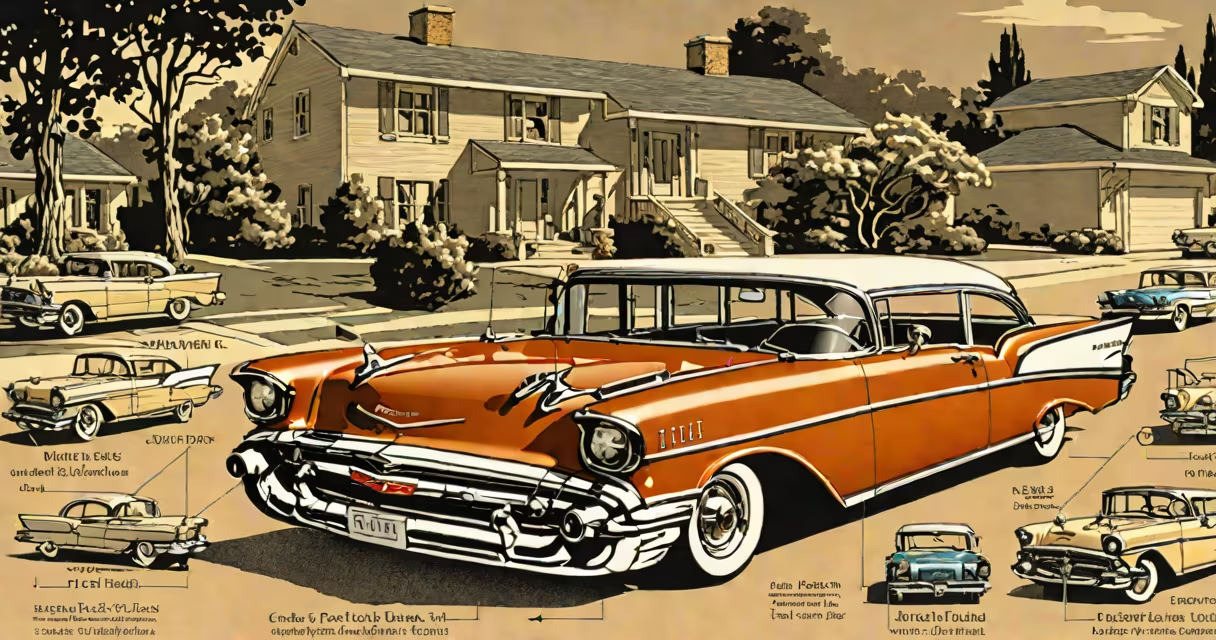
| American muscle | 1957 Chevrolet Bel Air | $45,000-$120,000 | High visibility in pop culture, factory options |
| Pre-war economy | 1935 Plymouth P-20 | $12,000-$28,000 | Mass-produced, high survival rate |
Value disparities arise from survivorship rates. Only 110 1955 Jaguars D-Type were built. Of those, 42 remain registered. The scarcity drives prices higher than comparable models with greater production volume.
Many assume that age alone determines value. A 1941 Ford Deluxe with a rebuilt engine and aftermarket body panels may be older than a 1950 Cadillac Series 62-but the latter holds higher value due to better preservation and brand prestige. Age matters, but not as much as authenticity and desirability.
Another myth is that all original cars are worth more. A 1931 Rolls-Royce Phantom II with original paint and chassis may be worth $350,000. But a 1931 Bugatti Type 57SC with original body and rare twin-cam engine sells for $4.2 million. The difference reflects brand reputation, engineering innovation, and global collector demand.
Even restoration quality affects perception. A 1953 Mercedes-Benz 300SL Gullwing restored to concours standards can sell for $2.8 million. A similar car with minor panel gaps and mismatched paint may fetch $1.1 million-even if mechanically identical. Buyers pay for visual perfection.
Two years earlier, a similar car with the same mileage but repainted in blue and fitted with a modern stereo system sold for $42,000. The original paint and factory audio system contributed to a $30,000 premium. This illustrates that originality outweighs functional upgrades in collector markets.
I inspected a 1949 Cadillac Series 62 in person during a 2023 auto show. The car had been stored since 1973, never driven. Original tires, untouched upholstery, and intact chrome trim. The owner refused to restore it. It sold privately for $165,000-well above the $110,000 average for a non-original example. Preservation preserved value.
Always verify against actual sale results, not dealer listings. A 1950 Buick Roadmaster listed at $110,000 on a private site sold for $78,000 at auction. The discrepancy arose from inflated asking prices. Real values come from closed transactions.
Final assessment requires context. A 1938 Delahaye 135S with a known racing history and race-worn body might sell for $2.3 million. A museum-quality example with flawless paint and original tires could reach $3.1 million. The same car, restored to perfection, may not surpass $2.7 million-because authenticity trumps polish in elite circles.
antique car values are not static. They evolve with collector sentiment, supply, and cultural relevance. Always consult verified data, prioritize originality, and avoid assumptions based on age or appearance alone.