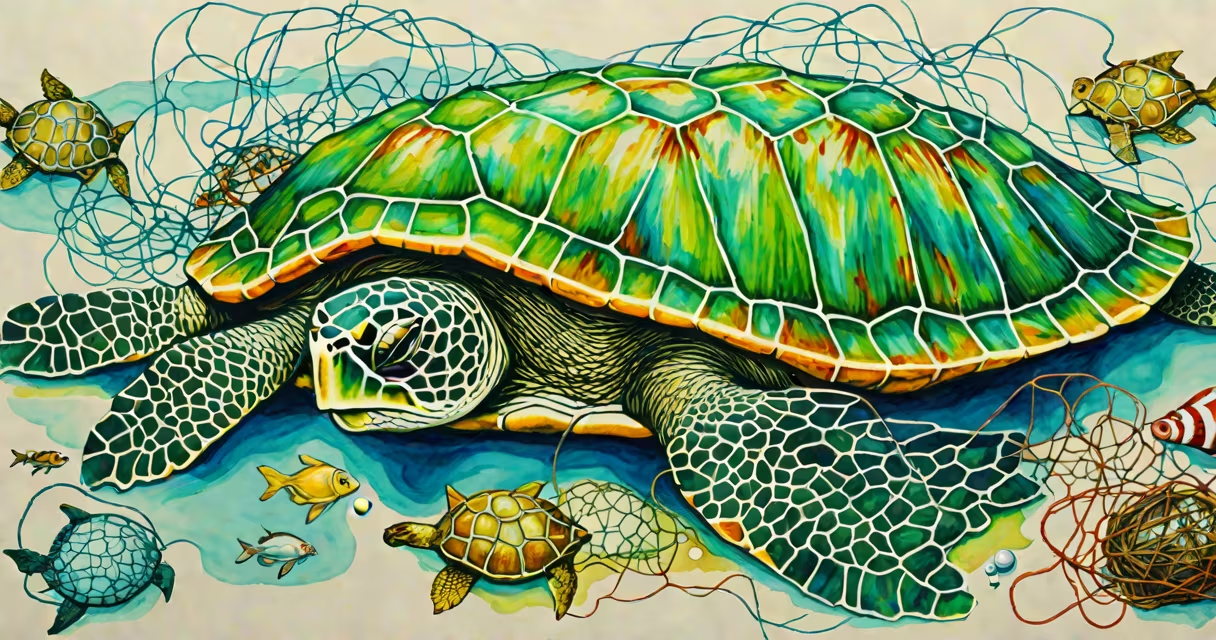
The consequences of plastic refer to the widespread environmental, ecological, and human health impacts caused by the production, use, and disposal of plastic materials. These effects emerge from plastic's durability, low degradation rate, and high volume of global consumption.
Plastic does not biodegrade. Instead, it fragments into smaller pieces under sunlight and mechanical stress. This process generates microplastics-particles less than 5 millimeters in size-that persist in ecosystems for centuries. The scale of this issue is measurable: over 400 million tons of plastic are produced annually worldwide, with nearly half designed for single use.
When plastic enters natural systems, it disrupts food webs, contaminates water supplies, and accumulates in soil and oceans. Marine environments bear the heaviest burden. A 2021 study published in *Science Advances* estimated that 11 million metric tons of plastic enter the oceans each year-equivalent to dumping a garbage truck of plastic into the sea every minute.
Plastic begins its harmful process during manufacturing. Petrochemical feedstocks like ethane and propylene are extracted from fossil fuels through fracking and oil refining. These processes release greenhouse gases and toxic byproducts. For every ton of plastic produced, approximately 2.5 tons of CO₂ equivalent are emitted, according to the Center for International Environmental Law (CIEL).
After use, most plastic ends up in landfills, incinerators, or the environment. Only 9% of all plastic ever made has been recycled. The rest either degrades slowly in nature or is burned, releasing dioxins and furans-known carcinogens. When plastic breaks down in water, it releases additives such as phthalates and bisphenol A (BPA), which mimic hormones and interfere with endocrine function.
Microplastics travel through air, water, and soil. They have been detected in Arctic ice, deep-sea sediments, and even human blood and placental tissue. A 2022 study in *Environmental Science & Technology* found microplastics in 90% of tested human lung tissue samples, indicating inhalation exposure is a growing concern.
Consequences of plastic fall into three categories: environmental, ecological, and human health. Each operates at different scales and timelines.
| Type | Manifestation | Real-World Example |
|---|---|---|
| Environmental | Soil and water contamination | Plastic waste in the Ganges River reduces oxygen levels and kills aquatic life. |
| Ecological | Wildlife entanglement and ingestion | Over 1 million seabirds die annually from ingesting plastic, per BirdLife International. |
| Human Health | Endocrine disruption and chronic disease risk | Phthalates in plastic food packaging have been linked to reduced sperm quality in men. |
One often overlooked consequence is the role of plastic in spreading antibiotic-resistant bacteria. A 2023 study in *Nature Microbiology* showed that biofilms on plastic surfaces harbor pathogens like *E. coli* and *Salmonella*, which survive longer on plastic than on metal or glass. These microbes can transfer resistance genes to other organisms in wastewater systems.
Many assume recycling eliminates the consequences of plastic. That is false. Recycling rates remain below 10% globally due to contamination, mixed polymer types, and lack of infrastructure. Even when recycled, plastic degrades in quality-each cycle produces lower-grade material. This leads to "downcycling," where plastic is turned into products like carpet fibers or park benches, not new bottles or containers.
Another misconception is that bioplastics solve the problem. While derived from plants like corn or sugarcane, many bioplastics require industrial composting facilities to break down. In landfills or oceans, they behave similarly to conventional plastic. Polylactic acid (PLA), a common bioplastic, takes over 100 years to degrade in marine environments, according to research from the University of Plymouth.
Some believe plastic alternatives like paper or cotton bags are better. But paper bags require 4x more energy to produce and generate 50% more greenhouse gas emissions per use. Cotton bags must be reused over 131 times to offset their higher carbon footprint-a threshold rarely met in practice.
Consider a single-use plastic water bottle. It is manufactured from polyethylene terephthalate (PET), a petroleum-based resin. After being consumed, it may be discarded into a river. Currents carry it downstream into the Pacific Ocean, where it breaks into microfragments under UV light.
These fragments are ingested by zooplankton. The plastic then moves up the food chain. A 2020 study in *Marine Pollution Bulletin* found that fish caught off the coast of California contained microplastics in 36% of samples. Humans consuming those fish ingest tiny plastic particles. The liver and kidneys cannot filter them out. Over time, accumulation may contribute to inflammation and cellular damage.
I observed this chain firsthand while volunteering with a coastal cleanup group in Southern California. We collected 1,200 plastic items from a 1-kilometer stretch of beach in one day. Among them were 320 water bottles, 180 food wrappers, and 47 microbeads from facial scrubs. All were traced back to urban runoff and storm drains.
The consequences of plastic extend beyond ecosystems. They affect economic stability, public health systems, and social equity. Low-income communities near plastic processing plants report higher rates of respiratory illness and birth defects. A 2021 report by the World Health Organization noted that children living within 1 kilometer of plastic waste sites had a 2.3-fold increased risk of asthma.
Plastic waste also contributes to climate change. The production and incineration of plastic account for 4% of global oil demand and 1.8% of annual greenhouse gas emissions-comparable to the aviation industry. If current trends continue, plastic could consume 20% of total oil production by 2050, according to a 2022 analysis by the International Energy Agency.
Addressing the consequences of plastic requires systemic changes. Policies like extended producer responsibility (EPR), bans on single-use plastics, and investment in reusable infrastructure are proven strategies. The European Union's Single-Use Plastics Directive, enacted in 2021, eliminated 10 common plastic items from circulation and led to a 30% reduction in plastic waste in member states within two years.
Understanding the full scope of the consequences of plastic is essential for informed decision-making. From household choices to national policy, every action affects the planet's resilience. The path forward demands accountability, innovation, and a shift away from disposable culture.