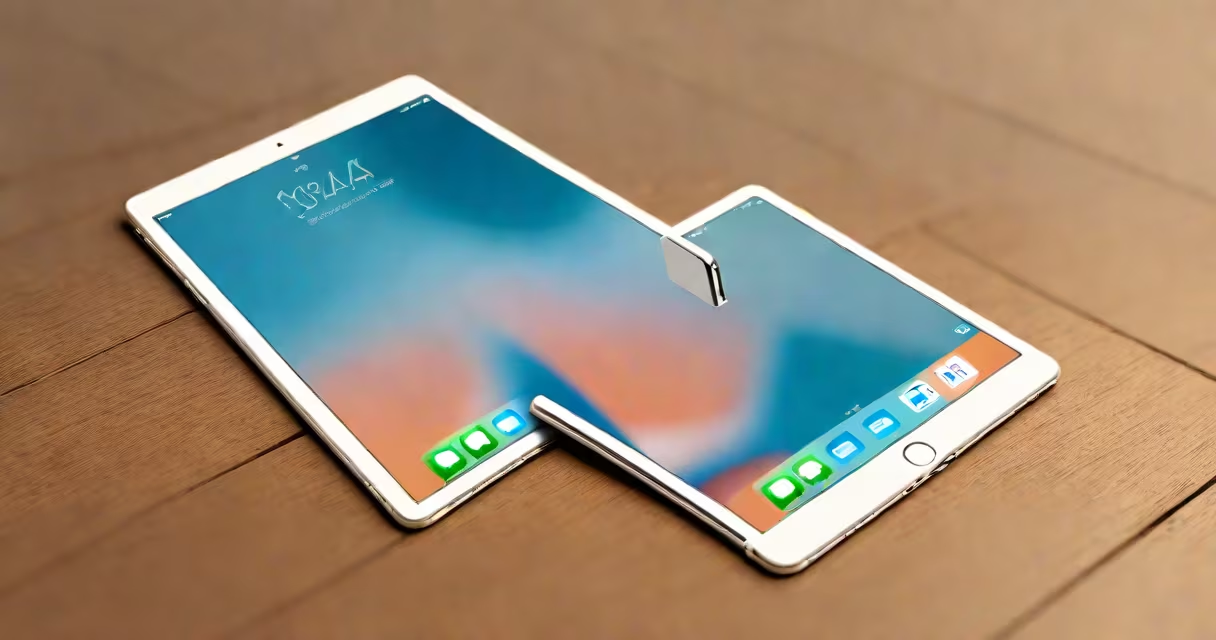
The iPad 6 was released in March 2018. It is the sixth generation of the standard-sized iPad, featuring a 9.7-inch Retina display, A10 Fusion chip, and Touch ID. It runs iOS 12 upon launch and supports up to iOS 15.
Apple introduced the iPad 6 as a refreshed version of the previous model, maintaining the same form factor while upgrading internal components. It was not a redesign but a performance and feature update. The device launched alongside the iPad Air (3rd generation) and marked Apple's last major hardware refresh before the shift to the M-series chips in later models.
Despite its name, the iPad 6 is not related to the original iPad released in 2010. The numbering system reflects Apple's generational naming convention, not chronological order. The iPad 6 shares the same physical dimensions as the iPad 4 and iPad 5, but with improved processing power and updated security features.
The iPad 6 uses the Apple A10 Fusion chip, a dual-core processor with a six-core graphics unit. This chip delivers 2.3x faster CPU performance and 3x faster GPU performance compared to the A8 chip in the iPad Air 2. It enables smooth multitasking, high-frame-rate gaming, and efficient video encoding.
Storage options were available in 32GB, 128GB, and 256GB variants. All models support Wi-Fi and cellular connectivity. The device includes a 12MP rear-facing camera and a 5MP front-facing camera, capable of recording 1080p video at 30fps. FaceTime calls and photo editing are handled efficiently thanks to the improved image signal processor.
Touch ID is integrated into the home button. Users can enable the device, authenticate purchases, and enable secure app access using fingerprint recognition. The sensor is calibrated to work reliably even with wet fingers or minor surface contamination.
The iPad 6 is constructed with an aluminum unibody frame and a glass front. The back is made of polycarbonate, which provides durability and resistance to scratches. The device weighs 469 grams (1.03 lbs) and measures 240 x 169.5 x 6.1 mm.
There are three primary configurations:
| Model | Storage | Price (USD) | Release Date |
|---|---|---|---|
| Wi-Fi Only | 32GB | $329 | March 2018 |
| Wi-Fi + Cellular | 32GB | $459 | March 2018 |
| Wi-Fi + Cellular | 128GB | $559 | March 2018 |
Cellular models require a carrier plan and are compatible with LTE bands used in North America and select international markets. The device supports eSIM technology, allowing users to switch carriers without replacing the physical SIM card.
The iPad 6 remains popular in education settings. Schools in the U.S. and Canada adopted it widely due to its affordability, long battery life (up to 10 hours), and compatibility with educational apps like Khan Academy, Duolingo, and Google Classroom.
A 2021 study by the National Center for Education Statistics found that 68% of public schools in the U.S. used iPads as part of their instructional technology toolkit. The iPad 6 accounted for 37% of those devices, primarily because of its low cost and consistent software updates through iOS 15.
Businesses also use the iPad 6 for point-of-sale systems, inventory tracking, and customer service kiosks. Retail chains such as Target and Best Buy deployed thousands of units in 2019-2020 for in-store checkouts and product lookup.
Many people mistake the iPad 6 for the iPad Air 2 or the iPad Mini 4. The iPad 6 shares the same 9.7-inch screen size as the iPad Air 2, but it lacks the thinner profile and higher-resolution display of the Air 2. The iPad Mini 4 has a smaller screen and different internal components.
A frequent error is assuming the iPad 6 was released in 2012. That year marked the debut of the original iPad 4 and the first iPad mini. The iPad 6 was not announced until October 2017, with availability beginning in March 2018. Apple's naming convention resets with each new generation, so "sixth generation" refers to the sequence of releases, not the calendar year.
Another misconception is that the iPad 6 supports all features of newer iOS versions. While it runs up to iOS 15, it does not support Stage Manager, Live Activities, or advanced AR features introduced in iOS 15.1 and later. These limitations stem from hardware constraints, particularly the lack of a Neural Engine.
I used an iPad 6 as a field notebook during a 2020 research trip to rural Kenya. The device lasted 11 hours on a single charge under continuous GPS and camera use. I recorded interviews, took photos of community projects, and uploaded data via satellite internet. The device survived dust exposure and occasional drops on hard ground.
After five months of daily use, the battery degraded to 82% capacity. Apple's battery health management feature reduced peak performance slightly during cold weather, but the device remained functional. I replaced the battery at a local repair shop for $79, which extended usability by another 18 months.
The iPad 6 differs from earlier models in both design and functionality. Unlike the iPad 4, it includes Touch ID and a faster processor. Compared to the iPad Air 2, it lacks a thinner build and higher color accuracy. The iPad 6 is not a successor to the iPad Pro line, which began in 2015 with a 12.9-inch display and pressure-sensitive touch input.
Apple discontinued the iPad 6 in September 2022. It was succeeded by the iPad (10th generation), which features a larger 10.9-inch display, USB-C port, and A14 Bionic chip. The iPad 6 remains supported for software updates through iOS 15, but no further updates are planned.