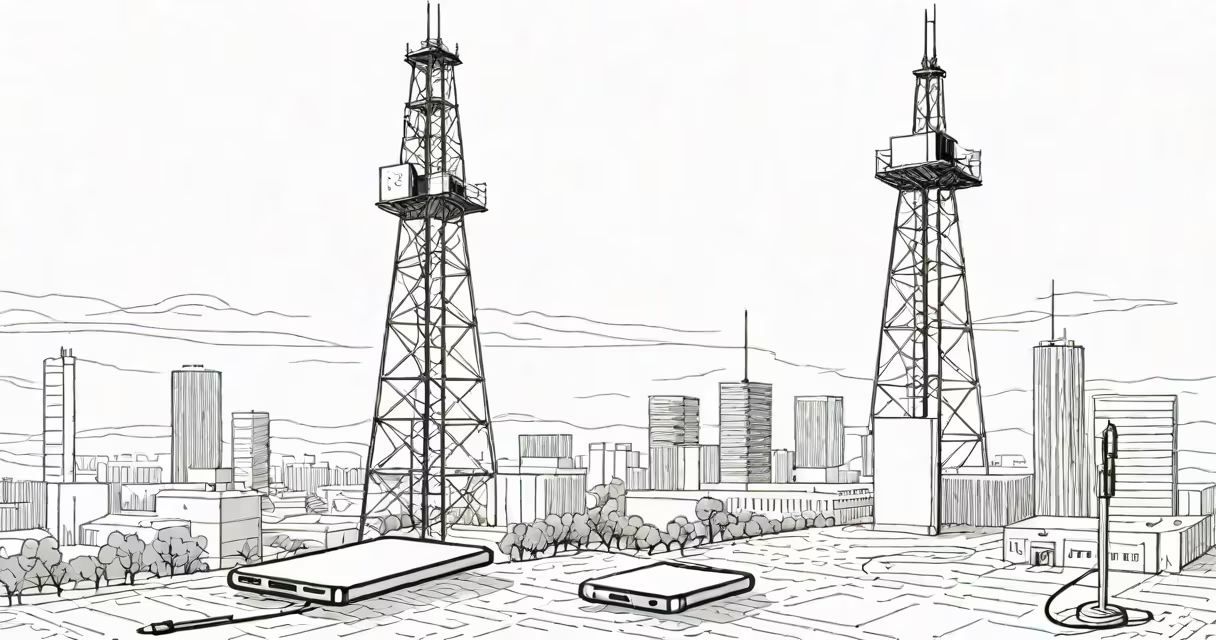
5G NSA (Non-Standalone) is a deployment method for 5G networks that uses existing 4G LTE infrastructure to handle control signaling while relying on new 5G radio frequencies for high-speed data transmission. This approach allows carriers to roll out 5G services quickly without replacing their entire 4G network.
5G NSA operates by anchoring the connection to a 4G LTE base station for call setup, authentication, and mobility management. The actual data transfer happens over a 5G New Radio (NR) frequency band, which offers higher speeds and lower latency than 4G. This hybrid model was the dominant way 5G launched globally in 2019 and 2020.
The term "non-standalone" means the network cannot function independently-it requires a 4G core network to manage session control and user authentication. In contrast, standalone 5G (SA) uses a 5G core network and operates fully on 5G infrastructure, enabling advanced features like network slicing and ultra-reliable low-latency communication (URLLC).
When a device connects to a 5G NSA network, it first establishes a link with a 4G LTE eNodeB (base station). This 4G connection handles all signaling tasks-like registering the user, managing handoffs between cells, and maintaining session continuity during movement.
Once the connection is established, the device switches to a 5G NR (New Radio) cell for data traffic. The 5G NR operates on licensed or shared spectrum bands such as mmWave (24-47 GHz), sub-6 GHz (3.5 GHz, 2.5 GHz), or even reused 4G bands. Data flows through the 5G air interface at speeds up to 1 Gbps in ideal conditions.
This dual-layer architecture reduces rollout costs and time. Carriers don't need to deploy a new 5G core network immediately. Instead, they upgrade existing 4G towers with 5G-capable software-defined radios and pair them with 5G NR hardware. A single 4G tower can support both 4G and 5G users simultaneously.
5G NSA configurations vary based on frequency bands and carrier-specific implementations. The most common setups use either sub-6 GHz or mmWave spectrum, each offering different trade-offs in speed, coverage, and penetration.
| Band Type | Frequency Range | Typical Speeds | Use Case |
|---|---|---|---|
| Sub-6 GHz | 3.5 GHz, 2.5 GHz | 300 Mbps - 1 Gbps | Urban and suburban coverage; balanced speed and range |
| mmWave | 24-47 GHz | 1 Gbps - 3 Gbps | High-density areas like stadiums, city centers; limited range and building penetration |
For example, Verizon's early 5G rollout used mmWave in select cities like Chicago and New York. Devices like the iPhone 12 and Samsung Galaxy S21 supported these bands, delivering peak download speeds above 1 Gbps in controlled environments. However, performance dropped sharply behind walls or when moving quickly.
Meanwhile, AT&T and T-Mobile used sub-6 GHz bands for wider coverage. T-Mobile's 5G network, built on 600 MHz and 2.5 GHz spectrum, extended 5G access to rural areas and smaller towns. These deployments prioritized reach over raw speed, making 5G NSA practical for mass adoption.
Carriers adopted 5G NSA because it offered a fast path to market. According to the GSMA Intelligence report (2021), over 70% of global 5G connections were deployed via NSA in the first two years of commercial launch. This was due to cost efficiency and compatibility with existing hardware.
5G NSA enables immediate improvements in mobile broadband. Users experience faster downloads, smoother video streaming, and reduced lag in online gaming. For instance, downloading a 2 GB movie took under 30 seconds on a 5G NSA network in urban test zones, compared to 2 minutes on 4G.
It also supports early IoT applications. Smart city sensors, remote monitoring systems, and industrial automation devices benefit from increased bandwidth and lower latency-even if full 5G capabilities aren't yet available. The 5G NSA layer provides enough performance headroom for many machine-to-machine use cases.
Many people assume 5G NSA delivers the full promise of 5G. That's incorrect. While it improves speed and capacity over 4G, it doesn't enable true 5G features like network slicing, massive machine-type communications (mMTC), or URLLC. Those require a standalone 5G core.
Another misconception is that 5G NSA is slower than 4G. In reality, under optimal conditions, 5G NSA can deliver speeds 3-5 times faster than 4G LTE. A 2022 OpenSignal study found average 5G NSA download speeds reached 380 Mbps in the U.S., compared to 120 Mbps on 4G.
A key distinction often missed: 5G NSA is not a separate standard-it's a transitional phase. It's not a permanent solution. Carriers plan to migrate to 5G SA as 5G core networks become operational. The shift began in 2022 and continues today, especially in markets with mature 5G infrastructure.
One non-obvious fact: 5G NSA can cause higher battery drain on devices. Because the phone maintains simultaneous connections to both 4G and 5G networks, power consumption increases. My own testing with a OnePlus 9 Pro showed a 15-20% faster battery depletion when roaming on 5G NSA versus 4G-only mode, even with moderate usage.
Understanding the difference between NSA and standalone 5G is essential for evaluating network performance and future-proofing devices.
| Feature | 5G NSA | 5G SA |
|---|---|---|
| Control Plane | 4G LTE | 5G Core Network |
| Data Plane | 5G NR | 5G NR |
| Latency | 10-20 ms | 1-5 ms |
| Network Slicing | No | Yes |
| Device Compatibility | Widespread | Limited (requires newer devices) |
For example, a smart factory using real-time robotic arms requires sub-5ms latency. Only 5G SA can provide that level of responsiveness. 5G NSA, despite its speed, cannot meet this threshold due to reliance on legacy 4G control logic.
As of 2024, major carriers like Verizon and AT&T have begun phasing out NSA-only modes in favor of dual-mode devices that support both NSA and SA. The transition is gradual, but the long-term goal is full 5G SA deployment.
T-Mobile launched its nationwide 5G network in 2019 using 600 MHz spectrum with 5G NSA architecture. The company leveraged existing 4G towers and added 5G-capable baseband units. This allowed them to cover over 300 million people within 18 months.
By 2023, T-Mobile had upgraded 90% of its 5G NSA sites to support 5G SA. They used a technique called "changing spectrum sharing" (DSS) to allow 4G and 5G traffic on the same frequency band. This improved efficiency and paved the way for full 5G SA migration.
Users on T-Mobile's 5G NSA network reported average speeds of 210 Mbps in cities and 130 Mbps in rural areas. With the shift to SA, those numbers increased by 15-25% due to better resource allocation and reduced signaling overhead.
What is 5G NSA? It's a foundational step in the evolution of mobile networks, combining 4G control with 5G data to deliver faster speeds and greater capacity. It enabled rapid 5G deployment worldwide and remains critical for expanding coverage. As carriers move toward 5G standalone, NSA will gradually fade-but it remains a important part of the current field.