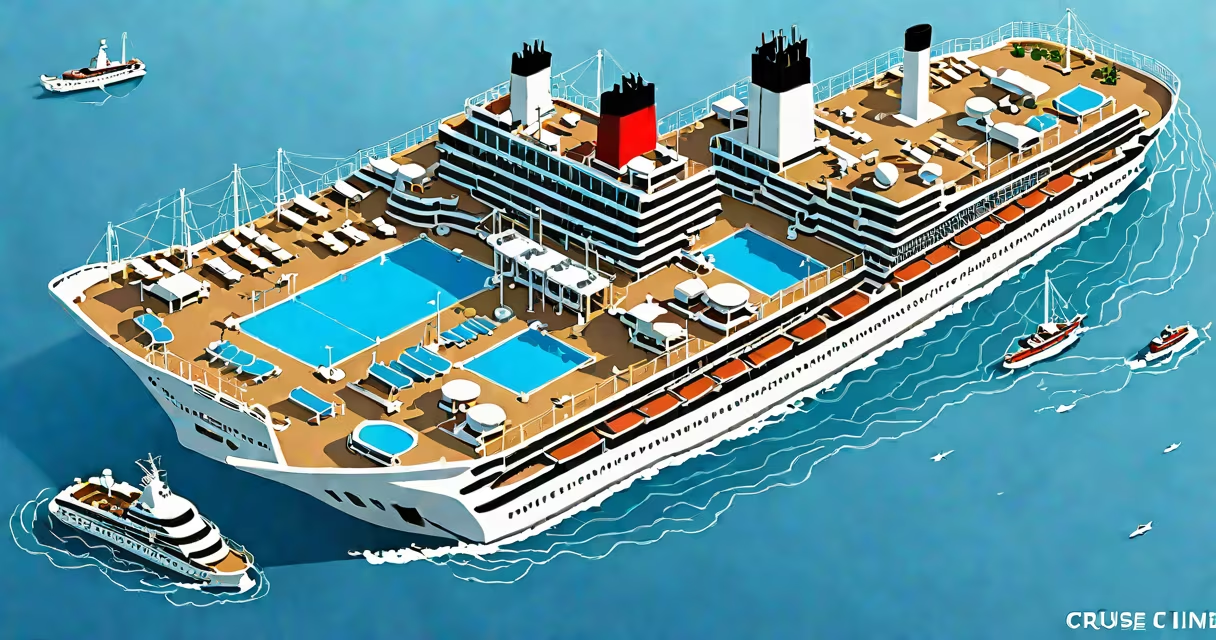
What are some cruise lines? Major cruise lines operate passenger ships that sail international routes, offering vacations on water with accommodations, dining, entertainment, and ports of call. These companies manage fleets ranging from small expedition vessels to massive floating resorts.
Cruise lines differ in service level, destination focus, ship size, and onboard experience. They are categorized by market segment-luxury, mainstream, family-oriented, and adventure-focused-with distinct pricing, amenities, and travel styles. The largest operators run multiple ships under unified branding, while niche lines emphasize unique themes or destinations.
Major players include Royal Caribbean International, Norwegian Cruise Line, Carnival Cruise Line, Princess Cruises, and Celebrity Cruises. Each offers different itineraries, such as Caribbean roundtrips, Alaskan fjords, Mediterranean tours, or transatlantic crossings. Ships vary from 2,000 to 6,000 passengers, with some ultra-luxury vessels accommodating fewer than 300 guests.
Cruise lines book passengers for set itineraries on fixed schedules. They contract with shipyards to build or acquire vessels, then staff them with crew from diverse countries. Operations include navigation, safety compliance, catering, guest services, and port logistics.
Revenue comes from ticket sales, onboard spending (dining, excursions, spa), and premium packages. Lines adjust pricing based on demand, seasonality, and cabin location. For example, a balcony stateroom on a Royal Caribbean Quantum-class ship may cost $2,800 for a seven-day Caribbean cruise in peak season, while an interior cabin in the same category could be $1,900.
Regulatory oversight falls under the International Maritime Organization (IMO) and national maritime authorities. All cruise ships must meet SOLAS (Safety of Life at Sea) standards, including lifeboat capacity, fire suppression systems, and emergency drills. The U.S. Coast Guard enforces these rules for ships operating in American waters.
Cruise lines fall into four primary categories based on audience and experience:
| Type | Focus | Examples | Passenger Profile |
|---|---|---|---|
| Luxury | High-end service, smaller ships, exclusive destinations | Cunard Line, Silversea Cruises, Regent Seven Seas | Travelers seeking refined experiences, often over 50 years old |
| Mainstream | Broad appeal, large ships, variety of activities | Royal Caribbean International, Carnival Cruise Line, Norwegian Cruise Line | Families, couples, groups of friends |
| Family-Focused | Children's programs, kid-friendly facilities, themed entertainment | Disney Cruise Line, Virgin Voyages (family-oriented segments) | Parents traveling with children under 12 |
| Adventure & Expedition | Remote regions, nature immersion, educational programming | Quark Expeditions, Lindblad Expeditions, Hurtigruten | Outdoor enthusiasts, scientists, travelers interested in wildlife and polar regions |
Some lines blend categories. Disney Cruise Line, for example, operates family-focused ships but includes premium dining, adult-only areas, and sophisticated design-making it a hybrid between mainstream and luxury.
A common misconception is that all cruise lines offer the same level of service. In reality, a 2023 report by Cruise Critic found that 87% of travelers rated luxury lines higher for staff attentiveness and meal quality compared to mainstream brands. This difference stems from staffing ratios-luxury lines average 1.5 crew members per passenger, while mainstream lines average 1.1.
Travelers select cruise lines based on trip purpose, budget, preferred destinations, and desired lifestyle. A couple celebrating a honeymoon might choose a luxury line like Regent Seven Seas for private butler service and access to ports like Santorini or Dubrovnik. A family with young kids may opt for Disney Cruise Line due to character meetups, themed cabins, and supervised youth activities.
For example, a 14-day voyage from Miami to Rio de Janeiro aboard a Norwegian Cruise Line ship costs approximately $4,200 per person for a set. The itinerary includes stops in St. Lucia, Barbados, and Salvador, Brazil. Onboard, guests enjoy open-seating dining, a rock climbing wall, and nightly shows. This contrasts with a 10-day Alaskan cruise on a Lindblad Expeditions vessel, which costs $12,500 per person and includes guided hikes, wildlife spotting, and lectures on glacial geology.
Another key factor is environmental impact. According to the International Council on Clean Transportation (ICCT), cruise ships emit about 30 grams of CO₂ per passenger-kilometer-higher than short-haul flights but lower than long-haul air travel. However, newer ships like those from Royal Caribbean's Quantum class feature waste heat recovery systems and scrubbers that reduce sulfur oxide emissions by up to 98%. This makes certain lines more sustainable than others.
I once sailed on a 12-day process from Lisbon to Barcelona aboard a Costa Cruises ship. The onboard experience was standard for mainstream cruising: buffet dining, casino games, and daily trivia. But the real difference came during port days-locals in Cadiz offered free tapas at a fish market, and in Málaga, we walked through a historic olive grove. These moments weren't planned by the cruise line but emerged from local engagement, showing that the value of a cruise lies beyond the ship itself.
Many assume all cruise lines are owned by the same parent company. That's false. Royal Caribbean International is part of Royal Caribbean Group, while Carnival Cruise Line belongs to Carnival Corporation. These are separate publicly traded entities with distinct financial strategies and fleet expansion plans.
Another misunderstanding is that "cruise line" refers only to the brand name. In fact, a cruise line is a legal entity that holds the vessel's certificate of registry and operates under maritime law. For example, the ship *Norwegian Bliss* is registered under the flag of the Bahamas and operated by Norwegian Cruise Line Holdings-a separate corporate structure from the parent company.
Finally, people often confuse "cruise line" with "cruise operator." While the terms are used interchangeably in marketing, technically, a cruise line owns and manages the ships, whereas an operator may handle bookings, marketing, or tour logistics without owning vessels. For instance, a travel agent might sell a trip on Celebrity Cruises but partner with a local tour agency to arrange shore excursions-this is an operator role, not a line ownership.
Understanding what are some cruise lines begins with recognizing their diversity. Whether seeking relaxation, adventure, or cultural exploration, travelers can match their preferences to a specific line's offerings. The right choice depends not on popularity alone, but on travel goals, budget, and personal values.