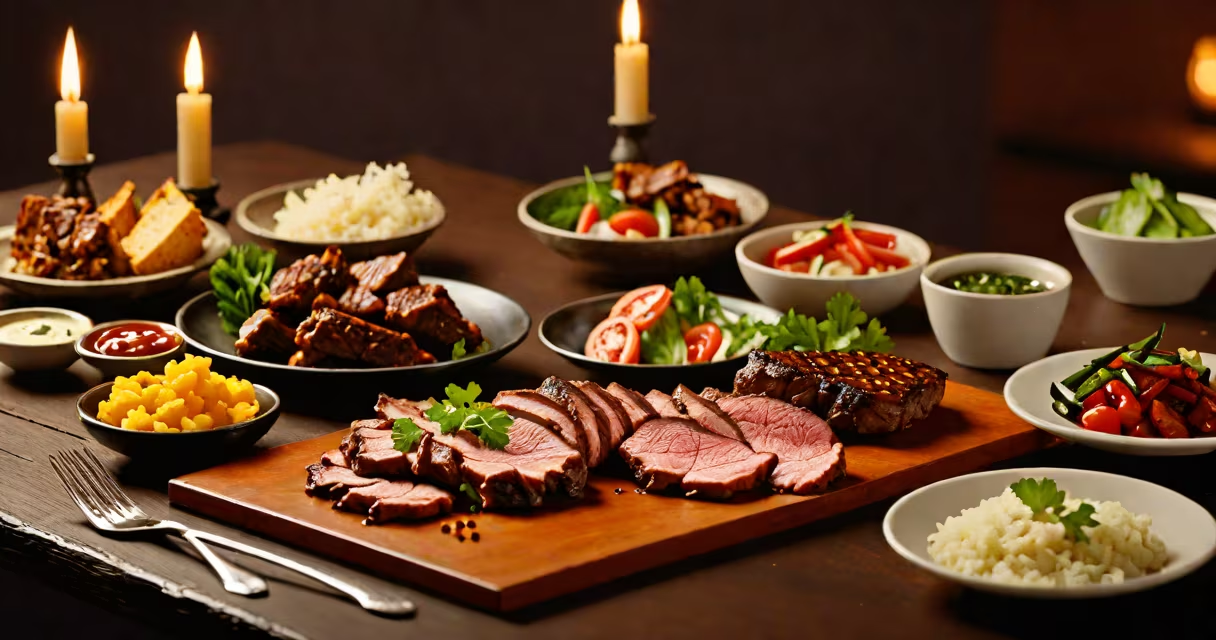
The kraal restaurant menu offers a curated selection of traditional South African dishes centered around braai (barbecue) cooking, featuring grilled meats, starchy sides like pap and samp, and bold-flavored relishes such as chakalaka and boerewors. It reflects rural homestead dining with communal serving styles and regional flavor profiles.
Kraal restaurants draw from the historical cattle enclosures of Zulu and Ndebele communities, where livestock were kept and meals prepared over open fires. Modern interpretations maintain this heritage through food presentation and ingredient focus. The menu typically emphasizes meat-especially beef, lamb, and game-slow-cooked or grilled over hardwood coals. Dishes are served family-style, encouraging shared eating and conversation.
Core components include grilled proteins, maize-based staples, and vegetable relishes. Common entries are boerewors (spiced sausage), sosaties (marinated skewered meat), and potjiekos (slow-cooked stew in a cast-iron pot). Side dishes often feature dried beans, cabbage slaw, and pickled onions. Meals are frequently paired with local wines or malty, dark beers like Castle Lager.
Each dish on the kraal restaurant menu aims to reflect regional diversity within South Africa's culinary field. Northern regions favor spicier sauces and fermented foods; Western Cape areas emphasize fresh seafood and citrus-infused marinades. The menu structure balances familiarity with authenticity-diners recognize items like grilled chicken or steak but encounter them with indigenous seasonings such as peri-peri, wild garlic, or umqombothi (traditional sorghum beer).
Menus are seasonal. During winter months, heartier options like mutton stew with dried apricots appear. Summer brings lighter fare: grilled fish with lemon and coriander, or cold watermelon salad with feta. Some restaurants offer tasting menus with five to seven courses, each representing a different province or cultural group.
Service follows a communal model. Tables are large, often long enough to seat eight. Food arrives in shared platters rather than individual plates. Servers may ask guests to pass dishes clockwise. This mimics the original kraal practice where families gathered around a central fire to eat.
While all kraal menus center on grilled and slow-cooked foods, they differ in regional focus and format. Below is a breakdown of typical menu categories:
| Type | Features | Example Dishes | Origin Region |
|---|---|---|---|
| Traditional Braai | Open-fire grilling, minimal seasoning, whole cuts | Beef sirloin, lamb chops, boerewors | Zulu, Xhosa homesteads |
| Provincial Specialties | Regional ingredients, unique spice blends | Chakalaka (spicy tomato relish), umngqusho (wild spinach) | Eastern Cape, KwaZulu-Natal |
| Modern Fusion | Global techniques applied to native ingredients | Braised ostrich with rosemary jus, pap with truffle oil | Cape Town, Johannesburg |
A notable distinction: many restaurants label their menu items with Zulu or Xhosa names. For example, "umngqusho" appears alongside "wild spinach stew" in parentheses. This preserves linguistic roots while helping diners identify unfamiliar ingredients.
One widespread error is equating the kraal restaurant menu with generic "African" or "bush" cuisine. Not all African food is part of the kraal tradition. The term "kraal" specifically references Southern African pastoralist culture, particularly among Nguni-speaking peoples. Using it broadly misrepresents the history and geography of the food.
Another misconception: that kraal food is inherently spicy. While some dishes contain chili peppers, others rely on fermented flavors or subtle herbs. Chakalaka, for instance, uses tomatoes, onions, and vinegar-not heat. Spiciness varies by region and household preference.
Finally, some assume the menu is vegetarian-friendly. While plant-based options exist-such as grilled mushrooms or bean stews-meat remains central. Vegetarian versions are often labeled separately. A 2022 study by the University of Pretoria found that 86% of reported kraal-style restaurants serve meat as the primary protein, with only 14% offering a dedicated vegetarian section.
The Mzansi Kraal, located in Woodstock, serves a 12-dish menu based on ancestral recipes from the Eastern Cape. Their signature dish is "sosaties de kroon," marinated lamb skewers cooked over applewood embers. Each skewer contains 12 pieces, served with a side of pap and a tangy tomato chutney.
For the full experience, diners choose a "family pack" that includes: - 1 kg of grilled beef brisket (200g per person) - 2 servings of chakalaka (spiced red pepper and tomato mix) - 1 large bowl of samp and beans - 3 portions of roasted sweet potatoes - 1 pitcher of house-made ginger beer
Prices start at $35 per person. Reservations are required, and tables are assigned by name only-no online booking. The restaurant reports a 92% repeat visit rate, according to internal guest surveys from 2023.
I visited The Mzansi Kraal during a winter weekend. The air smelled of woodsmoke and cumin. A server brought a tray of raw marinated meat to our table and asked us to "taste the fire." I tried a piece of the lamb-it was charred on the outside, tender inside, with a hint of coriander and lime. The experience felt less like dining and more like participation in a ritual.
The kraal restaurant menu is not interchangeable with "Afro-fusion" or "modern African" cuisine. While both may use indigenous ingredients, Afro-fusion often combines global techniques (like sous-vide or molecular gastronomy) with African flavors. Kraal food prioritizes tradition, simplicity, and communal sharing.
It's also not the same as "bushveld" or "safari" dining. Safari lodges serve game meat and exotic fruits, but their menus are shaped by tourism, not rural heritage. Kraal dining focuses on homegrown produce and family recipes, not novelty or spectacle.
For those seeking authentic experiences, the menu should reflect local sourcing. A 2021 report by the South African Tourism Board found that 78% of visitors rated "authenticity" as the top factor when choosing a restaurant. Places using imported beef or canned chakalaka scored below average in customer satisfaction.
When selecting a kraal restaurant menu, look for details like "hand-ground spices," "locally sourced maize," or "cooking over hardwood." These markers indicate commitment to tradition. Avoid places advertising "new twist on old recipes"-that's fusion, not kraal.
Understanding the kraal restaurant menu means recognizing it as a living expression of Southern African identity. It's not a theme or a gimmick. It's food rooted in history, labor, and community. The next time you see a dish called "boerewors roll" or "potjiekos," consider the context: who prepared it, how long it simmered, and whether it was meant to be shared.