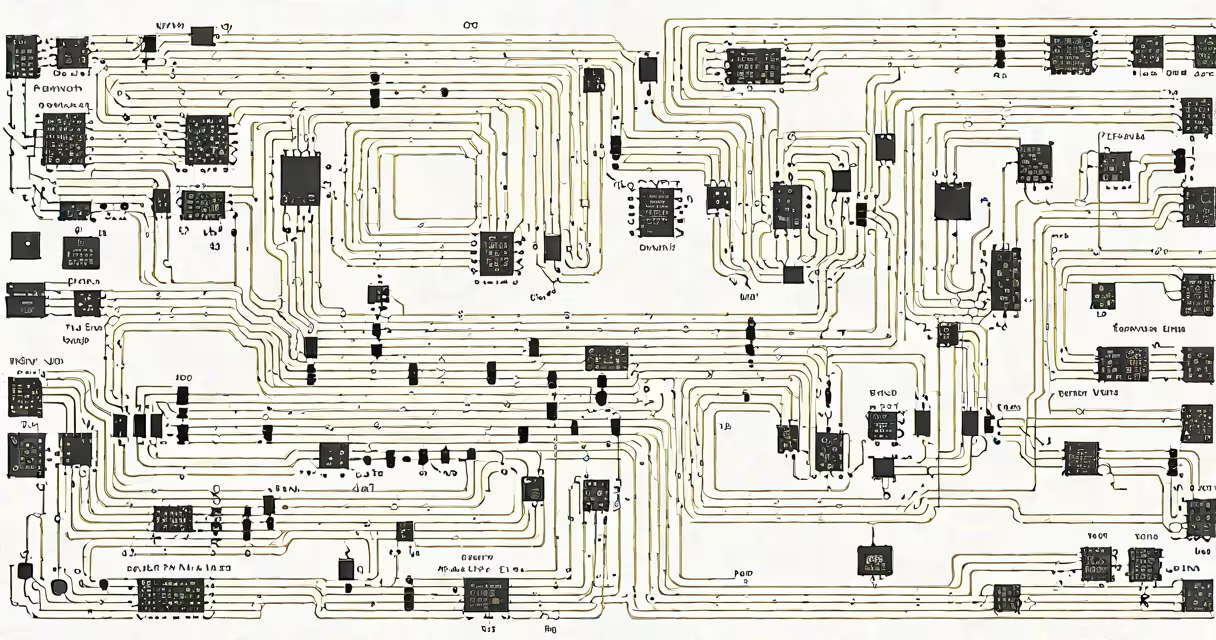
A decoder is a digital circuit or software process that converts encoded data into a form that can be understood or acted upon. It reverses encoding to restore original information, such as translating binary signals into control commands or converting compressed video streams into displayable images.
Decoders operate in systems where data must be transmitted efficiently or stored compactly. They are essential in devices ranging from smartphones to satellite receivers. For example, a TV set-top box uses a video decoder to convert MPEG-4 encoded streams into frames displayed on screen.
According to the IEEE Standard Dictionary of Electrical and Electronics Terms, a decoder is "a logic circuit that converts a binary code into a set of outputs representing specific conditions." This definition emphasizes its role in interpreting signals rather than generating them.
At its core, a decoder takes a binary input-typically a sequence of 0s and 1s-and activates one of several output lines based on the input pattern. A 2-to-4 decoder receives two bits and turns on one of four output lines. Each unique input combination corresponds to a single output.
For instance, a 3-bit binary input (000 to 111) can activate one of eight output lines. This is used in memory addressing, where each address selects a different memory cell. The decoder ensures only the correct cell responds during read or write operations.
Modern decoders often include error detection and correction features. In audio streaming, a decoder may detect corrupted packets and request retransmission or interpolate missing data, maintaining playback continuity.
Decoders come in various forms depending on their application domain. The most common types include:
| Type | Input Size | Output Lines | Common Use |
|---|---|---|---|
| Binary Decoder | 2-8 bits | 4-256 | Memory selection, multiplexing |
| Priority Encoder | Multiple inputs | 1 output | Interrupt handling in microprocessors |
| Video Decoder | Encoded bitstream | RGB/YUV frames | Streaming media, Blu-ray players |
| Audio Decoder | Compressed audio stream | PCM audio signal | MP3, AAC, Dolby decoding |
Each type serves a distinct purpose. Binary decoders are fundamental building blocks in digital logic design. Video and audio decoders handle complex compression formats like H.264 or AC-3, requiring significant computational power.
One non-obvious fact: many modern CPUs integrate hardware decoders for instruction sets. Intel's x86 architecture uses a microcode decoder to translate complex instructions into simpler micro-operations executed by the execution units. This allows high-level code to run efficiently on low-level hardware.
Decoders appear in nearly every electronic system that processes data. In consumer electronics, they decode broadcast signals-whether analog or digital-for display. In telecommunications, base stations use decoders to extract voice and data from modulated radio waves.
In computing, the instruction decoder is part of the CPU's control unit. It interprets machine code instructions fetched from memory and routes them to the appropriate functional units. Without this step, the processor couldn't execute programs.
For example, when you play a 4K movie on a smart TV, the device runs a video decoder that parses the H.265-encoded stream, reconstructs each frame, and sends it to the display. This process happens in real time-around 24 to 60 frames per second-using dedicated GPU cores optimized for decoding.
Many people confuse decoders with encoders. An encoder converts information into a coded format-like compressing a photo into JPEG. A decoder performs the reverse: it restores the original data from the code. They are complementary components, not interchangeable.
Another misconception is that decoders always produce perfect output. In practice, lossy compression formats (such as MP3 or JPEG) discard data during encoding. A decoder cannot recover lost detail-it only reconstructs what remains. This leads to artifacts like pixelation or audio distortion, especially at low bitrates.
Some assume all decoders are hardware-based. However, software decoders exist and are widely used. VLC Media Player, for example, uses software-based decoders to play video files without needing specialized hardware. These are slower but more flexible, supporting a wider range of formats.
I once tested a Raspberry Pi running a custom Python script to decode a raw H.264 stream using OpenCV. The system handled 720p video at 15 fps-adequate for surveillance-but struggled with higher resolutions. This demonstrated that software decoders depend heavily on processing power and optimization.
The concept of decoding is closely tied to data integrity and signal fidelity. When a decoder fails to interpret a signal correctly, it results in errors-such as frozen video, garbled audio, or program crashes. This highlights the importance of accurate encoding and solid decoding algorithms.
Decoding is not just a technical function-it's a foundational element of human-computer interaction. From unlocking encrypted messages to rendering web pages, the meaning of decoder lies in its ability to make hidden information visible and usable.