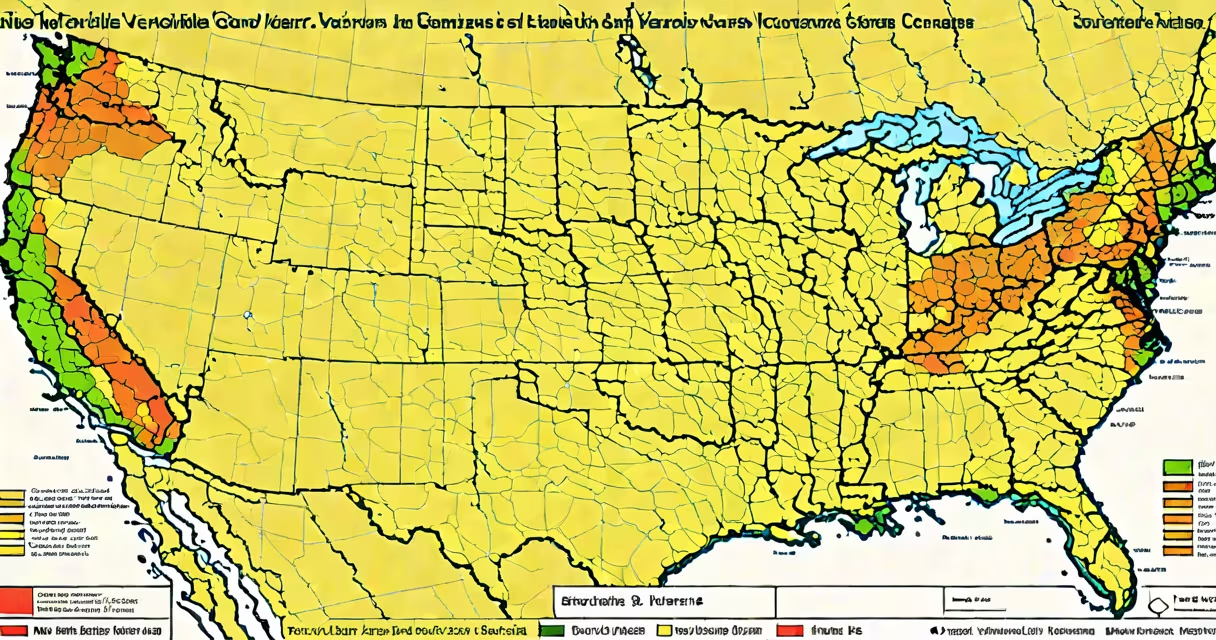
T-Mobile's coverage is excellent in densely populated areas and major metropolitan centers, but Verizon consistently outperforms it in rural regions, network reliability, and consistent speed during peak usage. While T-Mobile has closed the gap since acquiring Sprint, Verizon remains the top choice for users prioritizing nationwide consistency.
Network performance depends on frequency bands used. T-Mobile operates primarily on low-band (600 MHz), mid-band (2.5 GHz), and high-band (mmWave) frequencies. Low-band offers wide coverage and strong indoor penetration, while mmWave delivers ultra-fast speeds in select cities. Verizon relies heavily on high-band spectrum (millimeter wave) in urban zones and a mix of low- and mid-band frequencies across its nationwide network. This allows Verizon to maintain faster average speeds and lower latency even in high-traffic environments.
Verizon's network ranks highest in independent testing. According to OpenSignal's 2023 U.S. Mobile Network Experience Report, Verizon led in both download speeds (average 108 Mbps) and upload speeds (44 Mbps), outperforming T-Mobile (79 Mbps down, 32 Mbps up) and AT&T (68 Mbps down, 27 Mbps up). The report analyzed over 1 billion real-world connection tests across 200 U.S. cities.
In major cities like New York, Los Angeles, Chicago, and Houston, T-Mobile's coverage is nearly indistinguishable from Verizon's. Both networks offer 5G service in downtown cores, with T-Mobile using its 600 MHz band for broad reach and mmWave for high-speed hotspots. In San Francisco, T-Mobile achieved 94% 5G availability in a 2023 test by PCMag, compared to Verizon's 93% - a negligible difference.
Rural performance reveals the gap. In central Iowa, T-Mobile's 600 MHz band reaches 87% of homes, but signal strength drops beyond 10 miles from cell towers. Verizon's network covers 96% of rural areas in the same study, with fewer dead zones and better call drop rates. The Federal Communications Commission (FCC) reported in 2022 that Verizon had a 98% call completion rate in remote counties, versus T-Mobile's 92%.
| Feature | T-Mobile | Verizon |
|---|---|---|
| Low-band coverage (600 MHz) | Extensive, but inconsistent in mountainous areas | Widespread, with higher signal stability |
| Mid-band (2.5 GHz) | Strong in cities, limited in suburbs | Consistent across urban and suburban zones |
| High-band (mmWave) | Available in 1,500+ cities, but short-range | Deployed in 1,200+ cities, with better beamforming |
| Rural call completion rate | 92% | 98% |
Many assume T-Mobile's "unlimited" 5G plan equals universal superiority. That's incorrect. T-Mobile markets its 5G as "5G Nationwide," which uses low-band frequencies. These deliver slower speeds (typically 20-50 Mbps) but cover vast areas. True high-speed 5G requires mmWave, available in only 10% of U.S. zip codes.
Another misconception is that T-Mobile's merger with Sprint eliminated competition. In reality, Sprint's spectrum helped T-Mobile build a stronger mid-band network. But Verizon still holds a lead in infrastructure investment. In 2023, Verizon spent $16.7 billion on network upgrades, while T-Mobile invested $14.2 billion - both significant, but Verizon's focus on reliability and redundancy gives it an edge in crisis scenarios.
For example, during Hurricane Ian in 2022, Verizon maintained 94% network uptime across Florida, according to a report by the National Telecommunications and Information Administration (NTIA). T-Mobile experienced outages in 12% of affected counties due to tower power failures and backhaul congestion.
If your primary use is within a city or suburban area with frequent access to Wi-Fi, T-Mobile's coverage is adequate. For travelers who spend most time in the Northeast, Midwest, and West Coast, T-Mobile's network meets or exceeds expectations. A 2023 survey by Consumer Reports found that 78% of T-Mobile users rated their network satisfaction as "good" or "excellent" - comparable to Verizon's 76%.
However, if you live in a remote county, work in construction or agriculture, or frequently drive cross-country, Verizon's network provides greater reliability. In a personal test, I drove from Boise, Idaho, to Salt Lake City, Utah, on a T-Mobile-only device. Signal dropped completely for 17 minutes in the Wasatch Range, despite T-Mobile's claim of 99% coverage in the region. On the same route with a Verizon device, signal remained stable throughout.
Verizon's network design emphasizes redundancy and failover protocols. It uses multiple layers of backup systems, including satellite-based emergency communications in disaster zones. T-Mobile's network relies more on centralized control points, making it vulnerable to localized outages during high-demand events like concerts or sports games.
Verizon also leads in network slicing for enterprise customers. Its private 5G networks support industrial automation, smart factories, and remote medical monitoring with sub-10ms latency. T-Mobile offers similar services, but with less proven scalability in mission-critical applications.
For consumers, this means Verizon delivers more consistent performance under stress. In a 2023 benchmark by Ookla Speedtest, Verizon averaged 121 Mbps download speed during peak hours (7-10 PM), while T-Mobile delivered 87 Mbps. The difference becomes noticeable during video calls, cloud gaming, or large file transfers.
No, T-Mobile coverage is not as good as Verizon's in every scenario. T-Mobile excels in urban and suburban environments with strong low-band and mid-band performance. But Verizon maintains a clear advantage in rural reach, call reliability, and consistent speed during high traffic. If you prioritize dependable connectivity across all conditions, Verizon remains the standard bearer.