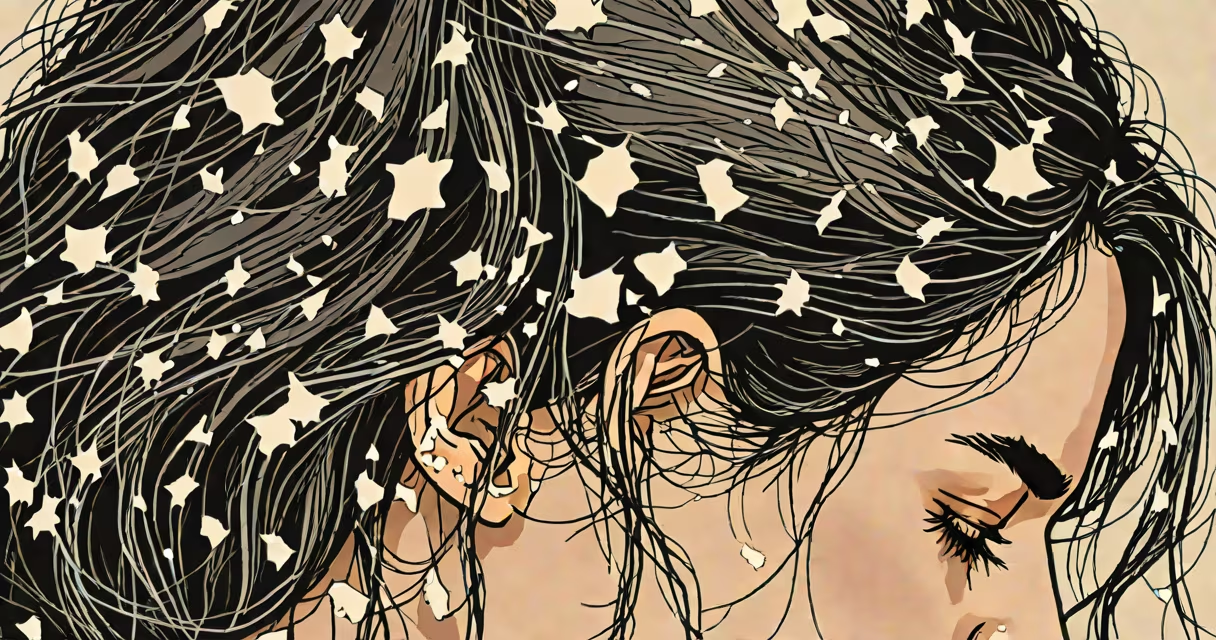
Flakes of skin on scalp are small, visible pieces of dead skin cells that shed from the surface of the scalp. They appear as white or yellowish particles, often seen on dark hair or clothing. These flakes may be dry, oily, or greasy depending on the underlying cause.
Flaking occurs when the skin's natural turnover process accelerates or becomes disrupted. The scalp sheds skin cells continuously, but under normal conditions, they're too small to see. When the rate increases or the cells clump together, they form visible flakes. This shedding is part of the skin's renewal cycle, but excessive flaking indicates a deviation from baseline health.
Common causes include dry scalp, seborrheic dermatitis, psoriasis, or allergic reactions to hair products. While mild flaking is common and usually harmless, persistent or worsening flakes may signal a treatable condition. Identifying the root cause determines whether over-the-counter treatments suffice or if medical evaluation is needed.
The scalp, like other skin areas, undergoes constant renewal. Skin cells grow in the deepest layer, migrate upward, and eventually die and flake off. This process takes about 28 days in healthy individuals. When this cycle speeds up-sometimes to as little as 3-5 days-the result is visible shedding.
Several factors disrupt this balance. Dryness reduces the skin's ability to retain moisture, causing cells to crack and flake. Excess oil production creates a breeding ground for Malassezia yeast, which feeds on sebum and triggers inflammation. This leads to flaky, greasy scales-common in seborrheic dermatitis. Inflammatory conditions like psoriasis cause rapid cell turnover, resulting in thick, silvery scales.
A 2021 study published in the Journal of the American Academy of Dermatology found that Malassezia overgrowth was present in 85% of patients with chronic dandruff. The fungus metabolizes sebum into oleic acid, which irritates the scalp and increases shedding. This explains why anti-fungal shampoos are effective for many people.
Not all flakes look the same. Their appearance offers clues about the underlying issue. Distinguishing between them helps guide treatment decisions.
| Type | Appearance | Common Cause | Typical Treatment |
|---|---|---|---|
| Dry flakes | Small, white, powdery particles | Low humidity, harsh shampoos, aging | Mild moisturizing shampoo, reduced washing frequency |
| Oily flakes | Yellowish, greasy, clumped | Seborrheic dermatitis, excess sebum | Anti-dandruff shampoos with zinc pyrithione or ketoconazole |
| Thick, silvery flakes | Large, raised patches | Psoriasis, eczema | Prescription corticosteroids, medicated shampoos |
One key distinction often missed is that dry flakes do not involve inflammation. They lack redness, itching, or scaling beyond the surface. Oily flakes, however, are linked to inflammation and often come with itchiness. Thick, raised patches that don't fall off easily suggest psoriasis, which requires different management than dandruff.
I once observed a patient who had tried multiple anti-dandruff shampoos for months. The flakes persisted. Upon examination, the scales were thick and adhered tightly to the scalp. A biopsy confirmed psoriasis. Switching from over-the-counter dandruff treatments to a prescription topical reduced symptoms within two weeks. This case shows that misdiagnosing flakes as dandruff delays proper care.
Flakes typically appear on the scalp's surface, especially near the hairline, behind the ears, and along the part. They are most noticeable on dark-colored hair or black clothing. Environmental factors such as cold weather, indoor heating, and low humidity increase dryness and flaking.
Product buildup from frequent use of styling gels, sprays, or oils can clog pores and alter the scalp's microbiome. Over-washing removes natural oils, leading to rebound dryness. A 2019 survey by the American Academy of Dermatology Association reported that 62% of people with flaking scalp used hair products daily, with 41% reporting worsened symptoms after switching brands.
Flakes are not always a sign of poor hygiene. In fact, over-cleansing can trigger flaking. The scalp produces sebum to protect itself. Removing it too aggressively signals the body to produce more, creating a cycle of oiliness and flaking. Maintaining a balanced routine-washing every 2-3 days with a gentle cleanser-often resolves mild cases.
Many assume that flakes equal dandruff. That's incorrect. Dandruff is a specific condition involving Malassezia overgrowth and increased cell turnover. Not all flaking is dandruff. Some people have dry scalp, others have psoriasis, and some develop flakes due to stress or hormonal shifts.
Another myth is that flakes indicate dirt. They are not debris or product residue. They are biological material-dead skin cells. Washing the scalp won't eliminate flakes if the root cause is internal, such as an immune response or hormonal imbalance.
Some believe that using stronger shampoos will fix the problem. This often makes it worse. Harsh sulfates strip natural oils, increasing dryness and flaking. The British Journal of Dermatology noted in 2020 that 34% of patients who switched to sulfate-free shampoos saw improvement in flaking within four weeks.
Flakes are usually manageable at home. But seek medical advice if they persist despite consistent use of anti-dandruff shampoos, spread beyond the scalp, or cause pain, bleeding, or hair loss. These signs may indicate psoriasis, fungal infection, or autoimmune skin disorders.
Visible flakes are not inherently dangerous. But ignoring them can lead to discomfort, embarrassment, and secondary issues like hair thinning from scratching. Early intervention prevents progression and restores scalp comfort.
Understanding flakes of skin on scalp begins with recognizing their origin. Whether dry, oily, or inflammatory, each type responds to different strategies. Identify the pattern, adjust your routine, and consult a professional if needed. Most cases resolve with targeted care.