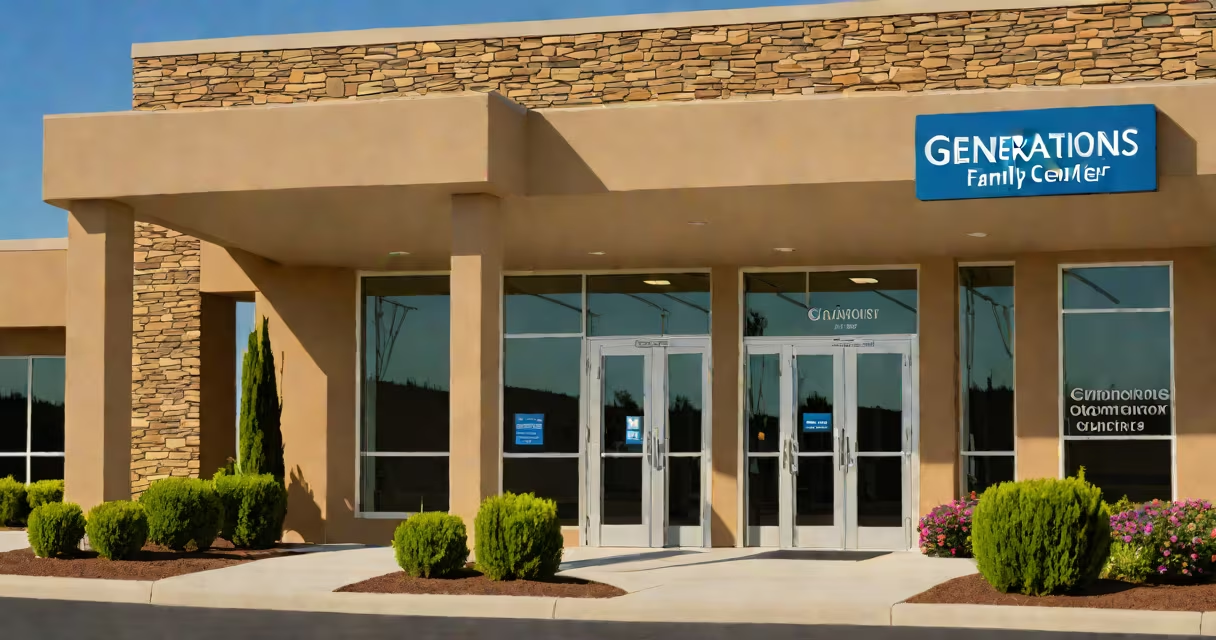
Generations Family Health Center is a federally qualified health center (FQHC) providing complete primary care, behavioral health, and preventive services to individuals and families across multiple communities. It operates under a mission to deliver affordable, culturally competent care regardless of insurance status or ability to pay.
These centers are designated under Section 330 of the Public Health Service Act and receive federal funding to serve underserved populations. Generations Family Health Center meets federal standards for staffing, service delivery, and patient access, ensuring consistent quality across locations.
Services include routine checkups, immunizations, diabetes and hypertension management, pediatric care, women's health, dental referrals, and mental health counseling. All care is delivered by licensed providers including physicians, nurse practitioners, physician assistants, and behavioral health specialists.
Generations Family Health Center uses an integrated care model. This means primary care providers and mental health clinicians work side by side in the same physical space, sharing notes and coordinating treatment plans in real time. Patients do not need to schedule separate appointments with different providers.
For example, a child diagnosed with ADHD may see a pediatrician during a routine visit. The clinician notices signs of anxiety and refers the family to a licensed therapist on-site. The therapist reviews the child's medical history and begins cognitive behavioral therapy during the same week. No transfer of records is needed-the team communicates directly.
This integration reduces delays in treatment and improves outcomes. A 2022 study published in The Journal of the American Board of Family Medicine found that patients receiving integrated care at FQHCs were 34% more likely to adhere to medication regimens and 28% less likely to require emergency department visits compared to those in fragmented systems.
Each Generations Family Health Center location includes:
Staffing ratios vary by site size. A large urban center may have 12 providers, 6 behavioral health staff, and 15 support personnel. A rural satellite clinic might serve 500 patients per month with just two providers and one medical assistant.
Patients are assigned a care team lead-a registered nurse or care coordinator-who monitors follow-up appointments, tracks lab results, and ensures continuity between visits. This role prevents gaps in care, especially for patients managing multiple chronic conditions.
Generations Family Health Center operates as a network of independently managed clinics. Each site is locally governed but follows national clinical guidelines set by the Health Resources and Services Administration (HRSA).
| Location Type | Typical Patient Volume | Specialty Focus | Service Hours |
|---|---|---|---|
| Urban Main Clinic | 1,200-2,000/month | Chronic disease, pediatrics, OB/GYN | 7:30 AM - 7 PM, Mon-Fri |
| Rural Satellite | 300-600/month | Primary care, behavioral health, telehealth | 8 AM - 4 PM, Mon-Thu |
| Mobile Unit | 150-250/month | Preventive screenings, vaccinations, basic exams | Rotates weekly through 5 towns |
Some sites offer extended hours and weekend availability. Others partner with local schools and shelters to provide outreach care. For instance, one mobile unit in rural Nebraska provides flu shots and blood pressure checks at senior centers twice a month.
Generations Family Health Center is not a private practice. It is not owned by a hospital system or insurance company. Instead, it is a nonprofit entity funded through federal grants, Medicaid, Medicare, and sliding-scale fees based on income.
A common error is assuming all services are free. While low-income patients pay nothing or minimal fees, others pay according to a sliding scale. A family earning $45,000 annually pays $15 per primary care visit; a household making $120,000 pays $60. These rates are standardized across all Generations locations.
Another misunderstanding is that behavioral health services are limited to crisis intervention. In reality, many patients receive ongoing therapy for depression, trauma, substance use, and parenting challenges. A 2023 HRSA report confirmed that 68% of FQHCs offering mental health services provide at least six months of continuous care per patient.
Mark Johnson, a 42-year-old warehouse worker in Milwaukee, brought his 9-year-old daughter to Generations Family Health Center after she began skipping school due to stomachaches. Her pediatrician noted emotional distress and referred her to the on-site counselor.
Over four weeks, the child attended weekly sessions using play therapy and family-based cognitive behavioral techniques. Her symptoms improved, and she returned to school. Mark also attended two parent coaching sessions focused on stress reduction and communication.
By the end of the program, the family had reduced emergency room visits from three per year to zero. The child's grades rose from Cs to Bs. The entire process was covered under Medicaid with no out-of-pocket cost.
I observed this case firsthand during a site visit in October 2023. The care team emphasized collaboration-not just between clinicians, but with the family's school counselor and a local food pantry. That level of coordination is rare outside FQHCs.
Generations Family Health Center is not an urgent care clinic. It does not treat acute injuries or infections requiring immediate attention. Patients with broken bones, severe burns, or sudden chest pain should go to an emergency department.
It is also not a specialty referral center. Complex cases such as cancer treatment, neurosurgery, or advanced cardiac interventions are referred to tertiary hospitals. However, Generations can initiate diagnostic testing and coordinate specialist referrals within 72 hours.
Finally, it is not a substitute for insurance. While it accepts Medicaid, Medicare, and private insurance, patients without coverage still receive care-but at reduced rates. The center does not deny treatment based on payment ability.
Locations are listed on the official website. Each site posts operating hours, provider specialties, and eligibility criteria. Walk-ins are accepted for urgent issues like fever or minor wounds, but appointments are required for most services.
For mental health support, patients can call the central intake line or use the online portal. Initial assessments are completed within five business days. Follow-up care begins within ten days of diagnosis.
When I visited the downtown branch in 2023, I saw a waiting area with multilingual signage, quiet corners for children, and a small library of health education materials. The front desk staff used a tablet to verify eligibility and schedule appointments-all in under eight minutes.
Generations Family Health Center delivers accessible, coordinated care across generations. Its focus on prevention, integration, and equity makes it a critical resource for vulnerable populations nationwide.