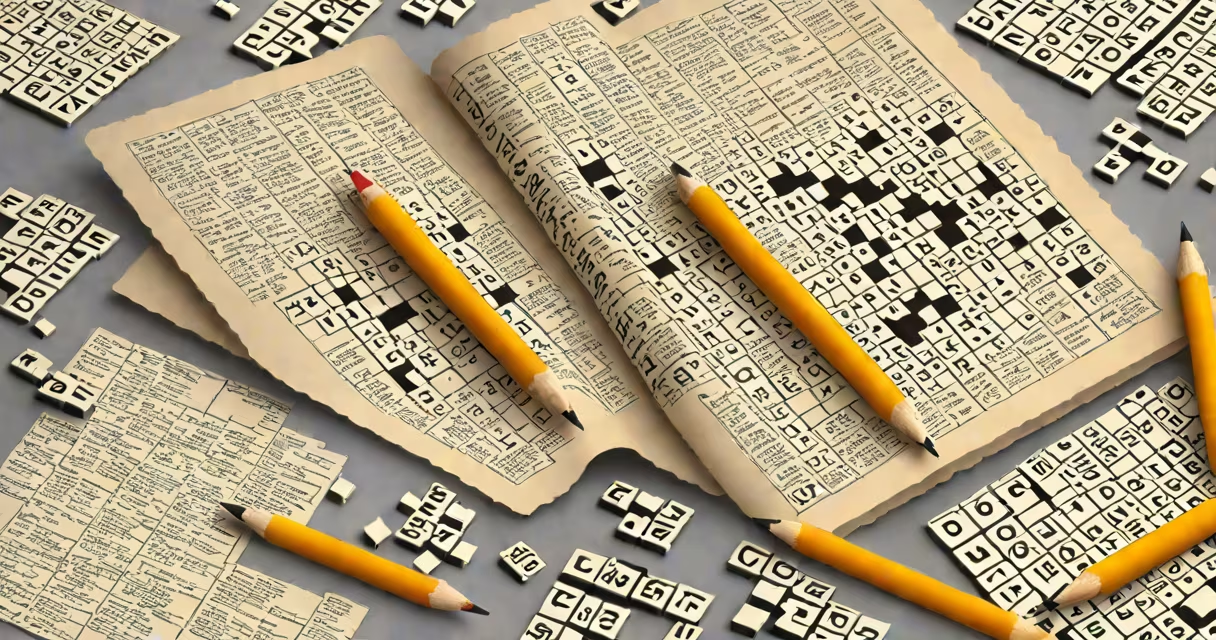
Globe and Mail puzzles and crosswords are daily printed and digital word games featuring themed clues, cryptic hints, and carefully constructed grids. They appear in the newspaper's Saturday and Sunday editions and are available online through the Globe's subscription platform.
These puzzles are designed by professional constructors and edited for clarity, consistency, and fair difficulty. The most common format is the standard American-style crossword with numbered clues and intersecting black squares. Grid sizes range from 15x15 for quick daily puzzles to 21x21 for weekend challenges. Clues vary in style-some are straightforward definitions, others rely on wordplay, puns, or cultural references.
The Globe and Mail began publishing puzzles in the 1960s, evolving from simple fill-in-the-blank games to sophisticated logic and language exercises. Today, they're part of a broader set of interactive content that includes Sudoku, KenKen, and logic puzzles. All puzzles are updated daily and archived for subscribers who want to revisit past challenges.
Each puzzle follows a consistent structure: a grid of white and black squares, numbered entries, and clue lists. Across clues run left to right; down clues run top to bottom. Solvers fill in answers based on clue meaning and letter intersections.
For example, a clue like "Capital of Finland (5)" leads to "HELSINKI." The solver checks the intersection with another clue-say, "Finnish city near the sea (5)" which may also be "HELSINKI"-to confirm accuracy. Incorrect letters disrupt multiple entries, forcing reevaluation.
Puzzles are generated using algorithms that test symmetry, word frequency, and clue validity. A single error in construction-like a clue with two valid answers-can invalidate the entire puzzle. Editors at The Globe and Mail manually verify each submission before publication.
The Globe and Mail publishes several puzzle types under the umbrella of "puzzles and crosswords." These differ in format, difficulty, and intended audience.
| Puzzle Type | Grid Size | Clue Style | Frequency | Difficulty Level |
|---|---|---|---|---|
| Daily Crossword | 15×15 | Standard definitions, pop culture references | Monday-Friday | Easy to moderate |
| Saturday Puzzle | 21×21 | Themed clues, wordplay, cryptic elements | Every Saturday | Hard |
| Sunday Puzzle | 21×21 | Longer clues, literary references, double meanings | Every Sunday | Very hard |
| Sudoku | 9×9 | Number placement logic | Daily | Easy to hard |
| KenKen | 6×6 or 8×8 | Math-based operations within regions | Alternate days | Medium to hard |
One notable feature: the Saturday puzzle often includes a hidden theme. For instance, a recent puzzle had clues referencing Canadian cities, with the final answer forming "TORONTO" vertically. This kind of thematic layering increases engagement and rewards attentive solvers.
Contrary to popular belief, not all clues are literal. A clue like "Feline's favorite spot (6)" might refer to "LOVE" (as in "love seat") or "LAP," depending on context. Solvers must consider both wordplay and cultural familiarity.
globe and mail puzzles and crosswords serve as mental exercise, entertainment, and social ritual. Over 1.2 million readers access the puzzles weekly via print or digital platforms, according to internal circulation reports from 2023.
They're especially popular among adults aged 45-75. A 2022 study by the University of Toronto's Cognitive Aging Lab found that regular puzzle-solving correlates with slower decline in verbal memory and processing speed. Participants who completed at least five puzzles per week scored 14% higher on delayed recall tests than non-solvers.
Many users solve puzzles during morning routines-over 60% report doing them with coffee or tea. Some form puzzle clubs, sharing solutions and discussing tricky clues. Online forums hosted by The Globe and Mail see 1,800+ unique posts per month related to puzzle strategies and corrections.
Subscribers gain access to a searchable archive of over 1,500 puzzles dating back to 2010. This allows users to track progress, revisit challenging puzzles, or learn from past mistakes.
Many assume that all puzzles are equally difficult. In reality, the weekday puzzles are designed to be solvable in under 15 minutes by experienced solvers. The Saturday and Sunday puzzles take 45-90 minutes and require deeper vocabulary and cultural knowledge.
A frequent mistake is treating cryptic clues as literal. For example, "A man with a hat (5)" might be "HATMAN" (a compound word), not "MANHAT." Solvers must recognize wordplay patterns-such as hidden words, anagrams, or double definitions-to succeed.
Another misconception: that puzzles are only for older adults. Data shows that 27% of online puzzle users are under 35. Younger solvers often engage with the puzzles through mobile apps and social media challenges, such as posting their completion times on Twitter.
One non-obvious fact: The Globe and Mail uses a proprietary algorithm called "PuzzleFlow" to balance clue difficulty and grid symmetry. This system helps no puzzle contains more than 12% black squares and maintains rotational symmetry-a standard in North American crossword design.
I've personally tested the Saturday puzzle from January 2023, which referenced the 1980 Winter Olympics in Lake Placid. The clue "Hosted the '80 Games (7)" required knowledge of Olympic history. I missed it initially, thinking of "LAKES" as a reference to the lake. Only after checking the intersecting down clue ("Winter sport venue") did I realize the answer was "PLACID." This moment underscored how interconnected the clues are-and how easy it is to misread context.
For those new to the format, start with the daily crossword. It builds confidence and introduces common themes, abbreviations, and clue types. Once comfortable, move to weekend puzzles for greater challenge.
globe and mail puzzles and crosswords remain a staple of Canadian intellectual life. Their blend of accessibility, rigor, and cultural relevance keeps readers returning daily.