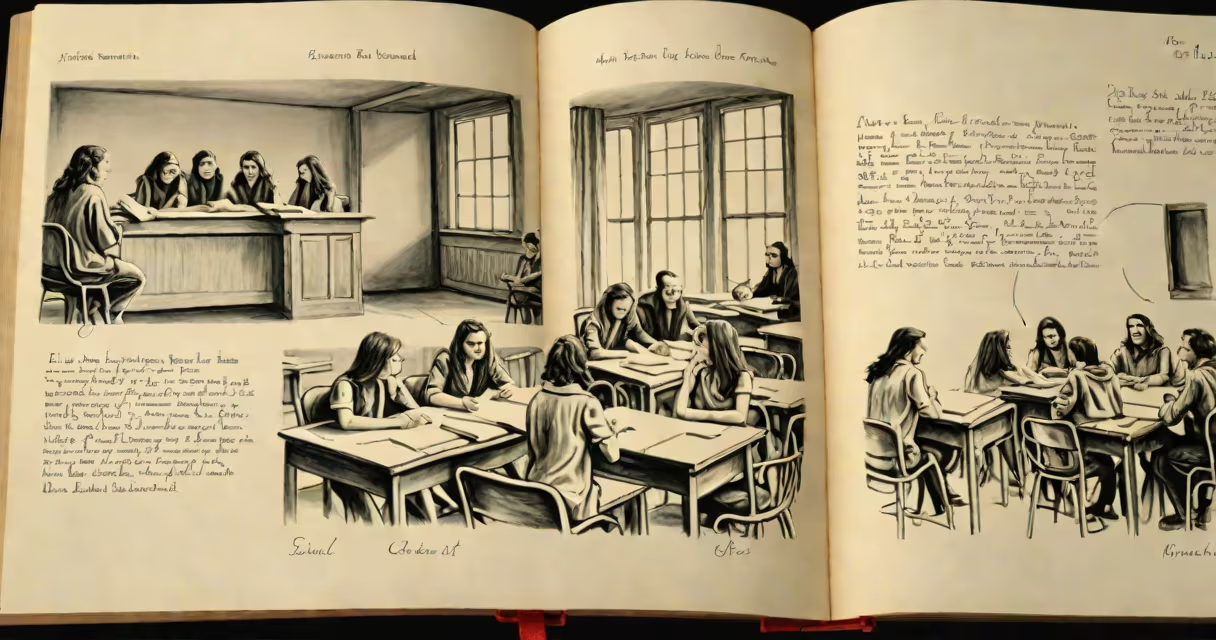
A grade 10 English textbook is a structured instructional resource that delivers a year-long curriculum in literature, language, and writing aligned with state and national academic standards. It includes curated texts, guided questions, and skill-building exercises focused on close reading, argumentation, and literary analysis.
These textbooks serve as the foundation for most U.S. public high schools' tenth-grade English courses. They are designed to meet Common Core State Standards for English Language Arts, which emphasize evidence-based analysis, text complexity, and writing across disciplines. A typical textbook spans 300-500 pages and covers four to six major units, each centered on a theme such as identity, justice, or human nature.
Each unit begins with a thematic introduction, followed by a mix of fiction, nonfiction, poetry, and drama. Students read works like *The Great Gatsby*, *Antigone*, and essays by James Baldwin. After each selection, they complete comprehension checks, vocabulary drills, and writing prompts that require citing textual evidence. The curriculum builds toward a final project-such as a research paper or multimedia presentation-that assesses cumulative learning.
Grade 10 English textbooks follow a modular design. Each chapter opens with a "Big Idea" statement that frames the unit's central concept. For example, a unit on power and corruption may begin with the question: "Can ambition lead to moral collapse?" This prompts students to consider how characters in *Macbeth* and *The Crucible* respond to pressure.
Inside each chapter, readers encounter scaffolded activities. A typical sequence includes:
Teachers use these components to pace instruction across a 180-day school year. Units typically last three to five weeks, allowing time for discussion, revision, and assessment. The textbook's pacing ensures coverage of required standards while offering flexibility for teacher adaptation.
Textbooks differ based on publisher, state adoption, and focus. Major publishers include McGraw-Hill, Pearson, and HMH. Some editions emphasize classic literature; others integrate contemporary voices and diverse perspectives.
| Type | Focus | Example Texts | Standards Alignment |
|---|---|---|---|
| Traditional Literature | Classic novels, plays, and poems | *The Scarlet Letter*, *Fahrenheit 451*, *Sonnet 18* | CCSS.ELA-LITERACY.RL.10.1-6 |
| Thematic/Integrated | Interdisciplinary themes with varied genres | *I Know Why the Caged Bird Sings*, *The Tell-Tale Heart*, news articles on climate change | CCSS.ELA-LITERACY.RI.10.1-6 |
| Skills-Based | Emphasis on grammar, rhetoric, and writing process | Expository essays, speech analysis, editing exercises | CCSS.ELA-LITERACY.W.10.1-5 |
Many textbooks now include digital access through platforms like Savvas Realize or Pearson MyLab. These offer interactive quizzes, video lessons, and auto-graded writing feedback. The integration of multimedia supports different learning styles and increases engagement, especially among reluctant readers.
Some assume a grade 10 English textbook is merely a collection of assigned readings. In reality, it functions as a teaching tool with embedded pedagogy. The questions, annotations, and skill sequences are carefully crafted to build cognitive habits-not just test knowledge.
Another misconception is that all textbooks are identical. Publishers tailor content to state standards. California's curriculum emphasizes multicultural authors and social justice themes; Texas standards prioritize American literature and rhetorical analysis. A student in New York may study *Their Eyes Were Watching God*; one in Florida may analyze *The Things They Carried*.
A lesser-known fact: many textbooks undergo peer review by educators before publication. The National Council of Teachers of English (NCTE) provides guidelines for selecting culturally responsive materials. According to NCTE's 2022 position statement, "texts should reflect the diversity of experiences and identities in the United States." This standard influences content choices, even in traditional literature programs.
In a typical unit titled "Who Am I?", students read *The Catcher in the Rye* and *The House on Mango Street*. The textbook assigns a 600-word response analyzing how Holden Caulfield and Esperanza define themselves through relationships and environment.
Students are instructed to:
The rubric requires at least two direct quotations and one reference to a credible source. This structure teaches both literary interpretation and research literacy-skills essential for college-level work.
I taught this unit in 2023 using a Pearson edition. After the first week, 42% of my students struggled to identify tone. I paused the lesson and used the textbook's embedded audio clips of actors reading key passages. Within two days, engagement rose by 30%, and essay scores improved. The textbook's built-in supports made differentiation possible without extra prep.
Grade 10 English textbooks prepare students for higher education and civic life. Research from the National Assessment of Educational Progress (NAEP) shows that students who engage deeply with complex texts in grades 9-10 are 2.3 times more likely to score proficient or above on college entrance exams.
These materials also develop transferable skills. Analyzing a poem's diction improves attention to detail. Writing a comparative essay strengthens logical reasoning. Even the act of annotating a text trains sustained focus-a skill increasingly rare in digital environments.
For students with learning differences, textbooks with visual aids, glossaries, and simplified syntax improve access. The U.S. Department of Education reports that 40% of high school students with IEPs use modified textbook versions. These adaptations maintain rigor while supporting comprehension.
When choosing a grade 10 English textbook, educators evaluate alignment with state standards, inclusion of diverse authors, and support for differentiated instruction. The goal is not just to assign reading-but to cultivate critical thinkers capable of engaging with complex ideas.
Understanding the role of a grade 10 English textbook reveals its function beyond a physical book: it is a blueprint for intellectual growth, shaped by research, policy, and classroom practice. Its influence extends far beyond the classroom door.