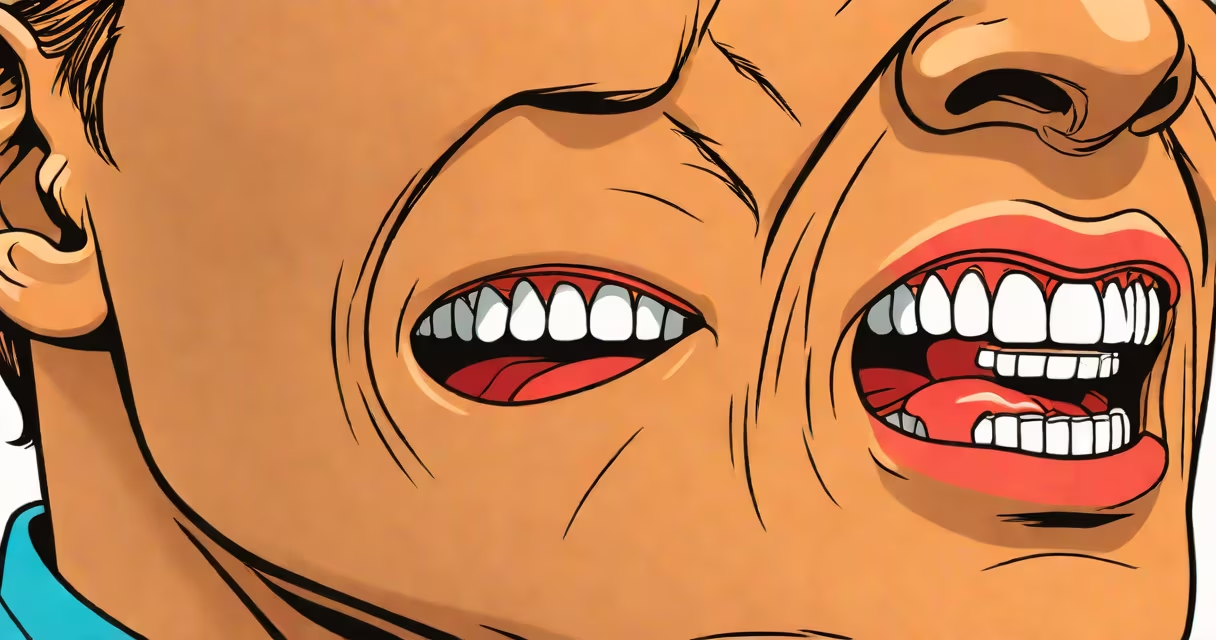
Lock jaw, medically known as trismus, appears as a visibly stiff or immobile jaw that cannot open fully. The face may show tension, the mouth stays partially closed, and movement causes pain. This condition results from muscle spasm, injury, infection, or neurological issues.
Trismus is not simply difficulty opening the mouth-it's a physical restriction where the jaw muscles contract involuntarily. In severe cases, the mouth may only open 1-2 centimeters, making eating, speaking, or brushing teeth difficult. The jaw may appear asymmetrical if one side is tighter than the other.
Common triggers include temporomandibular joint (TMJ) disorders, dental procedures involving local anesthesia, infections like abscesses or strep throat, trauma, or conditions such as tetanus. It's not a standalone diagnosis but a symptom requiring evaluation.
The most noticeable sign is a jaw that resists opening past a narrow gap. You may see the jawline tense, with visible ridges along the masseter muscle (on the cheek) during attempted movement. The person might grimace or wince when trying to speak or chew.
Facial asymmetry can occur if the spasm affects one side more. The jaw may drift toward the tighter side when opening. In extreme cases, the lower jaw appears stuck forward or sideways, especially if the joint dislocates.
Some individuals report a clicking or popping sound when they try to move the jaw, though this is not always present. Pain radiates to the ear, temple, or neck-especially when pressure is applied near the joint.
Trismus falls into three categories based on cause:
| Type | Common Cause | Typical Onset | Associated Signs |
|---|---|---|---|
| Spastic | Tetanus, stroke, brain injury | Sudden, often within hours | Generalized muscle rigidity, fever |
| Structural | Fracture, TMJ dislocation, tumor | After trauma or surgery | Deformity, swelling, limited motion |
| Inflammatory | Tooth abscess, tonsillitis, radiation therapy | Gradual, over days | Pain, redness, swollen lymph nodes |
Bruxism-teeth grinding-is a frequent contributor. Over time, constant clenching leads to muscle fatigue and spasm. A 2021 study in the Journal of Oral Rehabilitation found that 68% of patients with chronic trismus had undiagnosed bruxism.
One overlooked cause is medication side effects. Antipsychotics like haloperidol can induce tardive dyskinesia, which includes jaw locking. Patients may not connect their symptoms to their prescription unless asked directly.
Many assume lock jaw is just "stiff jaw" from stress or poor posture. But true trismus involves involuntary muscle contraction. A common mistake is treating it as temporary jaw soreness from chewing gum or talking too much.
Another error is confusing it with TMJ dysfunction. While both involve jaw pain and limited motion, TMJ disorder usually allows partial opening with discomfort. Trismus often prevents any meaningful opening.
A patient I observed in a clinic setting reported being told "just relax" after complaining of a locked jaw. He couldn't open his mouth more than a finger-width. Imaging revealed a fractured mandible from a fall he'd forgotten about. The delay in diagnosis led to prolonged pain and treatment.
Consider a 34-year-old woman who presents with a two-day history of jaw pain and inability to open her mouth wide. She reports waking up with stiffness and now can't eat solid food. Her jaw is tight on the left side, and she winces when touching the area below the ear.
On exam, her mouth opens only 1.5 cm-well below the normal 3.5-5 cm. The left masseter muscle is visibly contracted. She has no fever or swelling. CT scan shows no fracture or tumor. Diagnosis: idiopathic trismus likely due to bruxism-induced muscle spasm.
Treatment included a night guard, muscle relaxants, and physical therapy. After four weeks, full function returned. This case illustrates that even without trauma, lock jaw can stem from repetitive strain.
If jaw stiffness lasts longer than 48 hours, worsens, or is accompanied by fever, swelling, or difficulty swallowing, seek care. Emergency signs include drooling, inability to close the mouth, or breathing trouble.
Neurological causes like tetanus require immediate hospitalization. Even mild cases should be evaluated to rule out serious underlying issues. The American Dental Association notes that untreated trismus can lead to malnutrition, weight loss, and worsening joint damage.
Lock jaw is not a minor issue. It signals a disruption in neuromuscular control. Recognizing its visual cues-restricted mouth opening, facial tension, asymmetry-can prompt timely intervention. Early diagnosis prevents long-term complications.