Iron 3 chloride formula is FeCl₃. It is an inorganic compound composed of one iron atom in the +3 oxidation state bonded to three chlorine atoms. This formula reflects the charge balance between Fe³⁺ and Cl⁻ ions.
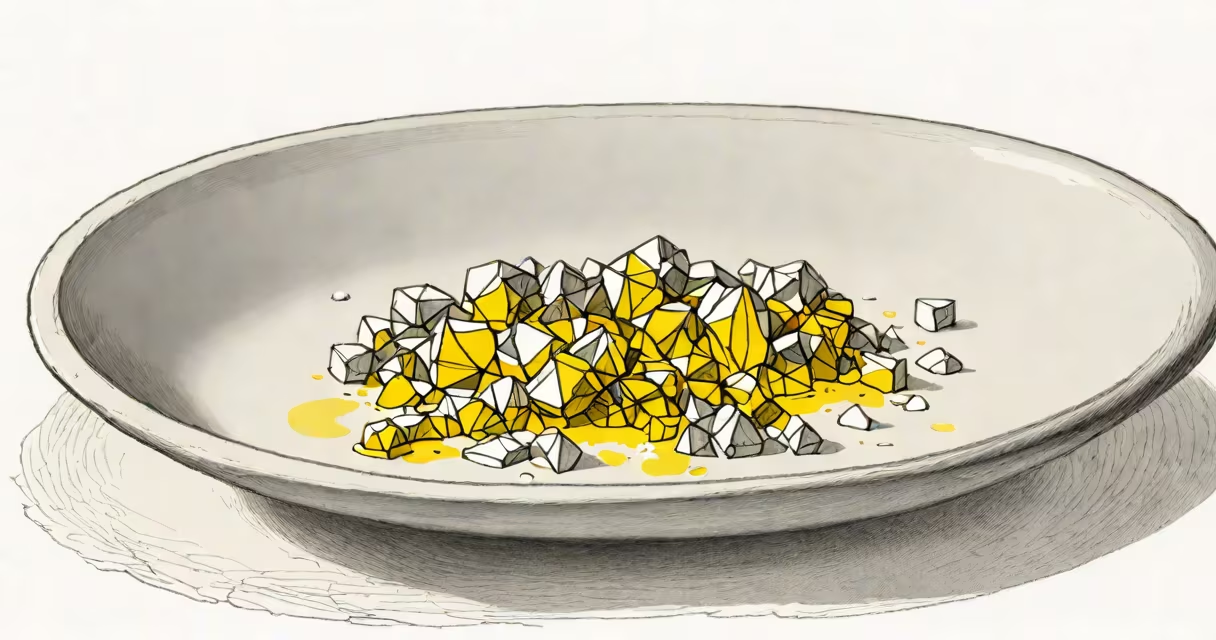
FeCl₃ appears as a yellow to brown crystalline solid. It is hygroscopic, meaning it absorbs moisture from the air. The compound dissolves readily in water, forming a yellow-orange solution. Its high solubility makes it useful in industrial and laboratory settings.
The formula FeCl₃ describes both the empirical and molecular form. In solid state, it exists as a dimer, Fe₂Cl₆, due to bridging chlorine atoms. This dimeric structure reduces electron density on the iron center and stabilizes the compound in the absence of solvent.
Iron(III) chloride forms when elemental iron reacts with chlorine gas at elevated temperatures. The balanced equation is:
2Fe + 3Cl₂ → 2FeCl₃This reaction occurs rapidly above 300°C. In aqueous environments, FeCl₃ forms when iron metal or iron(II) compounds oxidize in the presence of chlorine or other oxidizing agents.
For example, adding chlorine gas to a solution of iron(II) chloride produces iron(III) chloride:
2FeCl₂ + Cl₂ → 2FeCl₃This oxidation step is common in wastewater treatment, where Fe²⁺ is converted to Fe³⁺ to improve coagulation.
Iron(III) chloride has a trigonal octahedral geometry around the central Fe³⁺ ion. In the solid state, two FeCl₃ units link via chloride bridges, forming Fe₂Cl₆ dimers. These bridging chlorides reduce the effective charge on iron and stabilize the lattice.
In solution, the dimer dissociates into monomeric FeCl₃ species. The Fe³⁺ ion acts as a Lewis acid, accepting electron pairs from water molecules. This leads to hydrolysis, producing acidic solutions:
Fe³⁺ + 3H₂O ⇌ Fe(OH)₃ + 3H⁺The resulting pH drop explains why FeCl₃ solutions are corrosive to metals and sensitive materials.
A key distinction often missed: FeCl₃ is not the same as FeCl₂ (iron(II) chloride). The Roman numeral III indicates the oxidation state, which determines reactivity. FeCl₃ is more oxidizing and less stable than FeCl₂, especially in moist conditions.
Iron(III) chloride is used in water purification as a coagulant. It neutralizes negatively charged particles in turbid water, enabling them to clump and settle. Municipal treatment plants use 10-50 mg/L of FeCl₃ to clarify raw water.
In electronics, FeCl₃ serves as an etchant for copper in printed circuit boards. A 10% solution removes unwanted copper layers during PCB fabrication. The reaction is:
2FeCl₃ + Cu → 2FeCl₂ + CuCl₂This process is faster and more selective than alternatives like ammonium persulfate.
It also functions as a catalyst in Friedel-Crafts alkylation reactions. In organic synthesis, FeCl₃ activates aromatic rings toward electrophilic substitution. For example, it enables the formation of acetophenone from benzene and acetyl chloride.
| Type | Formula | Appearance | Primary Use |
|---|---|---|---|
| Anhydrous | FeCl₃ | Dark green crystals | Catalyst, semiconductor doping |
| Hexahydrate | FeCl₃·6H₂O | Yellow-orange crystals | Water treatment, lab reagent |
| Solution (aqueous) | FeCl₃(aq) | Clear yellow-orange liquid | Etching, precipitation |
The hexahydrate form is most commonly encountered in school labs. It dissolves easily in water and is safer to handle than the anhydrous version, which fumes in humid air.
One non-obvious fact: FeCl₃ solutions degrade over time due to hydrolysis and oxidation. A 1 M solution stored at room temperature loses effectiveness after 3 months. Reagents should be prepared fresh or stored in sealed containers with desiccants.
People often mistake FeCl₃ for rust. Rust is hydrated iron(III) oxide (Fe₂O₃·nH₂O), not chloride. While both contain Fe³⁺, their chemical behavior differs drastically. FeCl₃ is soluble and reactive; rust is insoluble and passive.
Another error: assuming FeCl₃ is safe for skin contact. It causes severe burns and stains. The U.S. National Library of Medicine reports that exposure to concentrated FeCl₃ solutions results in immediate tissue necrosis. Always wear gloves and eye protection when handling.
I once used FeCl₃ to etch a prototype PCB. The solution turned dark brown within minutes as copper dissolved. After rinsing, the board showed clean traces. But I spilled a small amount on my bench - the surface corroded in under 10 minutes. That taught me: even diluted FeCl₃ damages surfaces.
According to the PubChem database, iron(III) chloride has a molar mass of 162.20 g/mol. It melts at 306°C and sublimes at 315°C under vacuum.
The Agency for Toxic Substances and Disease Registry classifies FeCl₃ as hazardous. It is corrosive, toxic if ingested, and harmful to aquatic life. Proper disposal requires neutralization with sodium bicarbonate before landfilling.
Iron 3 chloride formula is FeCl₃. It is not interchangeable with iron(II) chloride (FeCl₂) or iron(III) sulfate (Fe₂(SO₄)₃). Each compound has distinct reactivity and applications. Understanding the formula ensures correct selection in experiments and industrial processes.