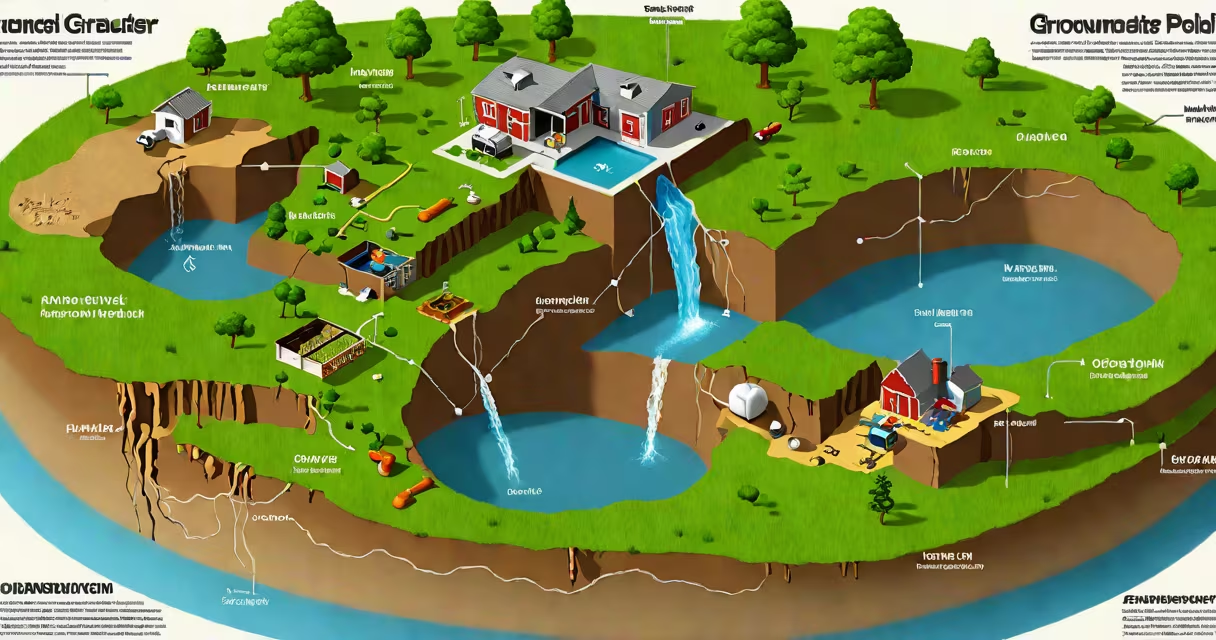
Groundwater pollution sources are human activities and natural processes that introduce harmful substances into underground water supplies, contaminating aquifers used for drinking, irrigation, and industry. These pollutants enter through soil, rock fractures, or engineered structures, often undetected until health or environmental impacts emerge.
Contaminants move slowly through porous rock and sediment, making cleanup difficult. Once pollutants reach groundwater, they persist for decades due to low flow rates and limited oxygen. The U.S. Environmental Protection Agency (EPA) identifies agriculture, industry, and waste disposal as the top three contributors to groundwater contamination.
Pollutants infiltrate groundwater when liquids or solids pass through the unsaturated zone-the layer between the surface and the saturated aquifer. Rainwater, irrigation, or wastewater seep downward, carrying dissolved chemicals or suspended particles. This process is accelerated by high permeability soils like sand or fractured bedrock.
For example, nitrate from fertilizers applied to farmland can leach into shallow aquifers within months. A 2021 EPA study found nitrate levels exceeding safe limits in 15% of sampled private wells in agricultural regions. These nitrates originate from synthetic fertilizers and animal waste, both common in intensive farming zones.
Leaking underground storage tanks (USTs) are another major pathway. When steel tanks corrode, petroleum products like gasoline or diesel migrate into soil and eventually reach groundwater. The EPA's Underground Storage Tank program reports over 12,000 confirmed releases since 1984, many still unremediated.
Groundwater pollution sources fall into three categories: point sources, non-point sources, and diffuse sources. Point sources are identifiable locations such as industrial discharge pipes or malfunctioning septic systems. Non-point sources spread over large areas, like pesticide runoff from fields. Diffuse sources involve gradual infiltration from multiple small inputs.
| Source Type | Examples | Common Pollutants | Regulatory Focus |
|---|---|---|---|
| Point Source | Leaking USTs, landfills, industrial outfalls | Hydrocarbons, heavy metals, solvents | EPA National Contingency Plan |
| Non-Point Source | Agricultural fields, urban storm drains | Nitrates, phosphates, pesticides | State nutrient management plans |
| Diffuse Source | Atmospheric deposition, septic system leakage | Ammonia, pathogens, organic compounds | Local health department monitoring |
One overlooked factor is the role of abandoned mines. In the western U.S., acid mine drainage from old gold and coal operations continues to pollute groundwater decades after closure. The U.S. Geological Survey (USGS) documented elevated arsenic and iron levels in 60% of monitored streams near inactive mines.
Many assume groundwater is naturally filtered and therefore safe. This is false. While soil and rock do remove some contaminants, they cannot eliminate all pollutants. For instance, perchlorate-a chemical used in rocket fuel-passes through most soil types unchanged and persists in aquifers for centuries.
Another myth is that rural areas are immune to groundwater pollution. In reality, 40% of U.S. private wells draw from shallow aquifers vulnerable to surface contamination. A 2020 study by the National Academy of Sciences found that 1 in 5 rural wells contained detectable levels of PFAS-"forever chemicals" used in firefighting foam and non-stick coatings.
Some confuse groundwater pollution with surface water contamination. While both affect ecosystems, groundwater moves slowly and is harder to monitor. Surface water can be cleaned via natural processes like sunlight and bacterial breakdown. Groundwater lacks these mechanisms, leading to long-term exposure risks.
In California's Central Valley, intensive agriculture has led to widespread groundwater contamination. Over 60% of monitored wells exceed state standards for nitrate, primarily from nitrogen-based fertilizers. The region relies heavily on groundwater for irrigation and drinking water, affecting over 1 million residents.
Between 2010 and 2020, the State Water Resources Control Board detected 1,200 instances of pesticide contamination in groundwater samples. Glyphosate, the active ingredient in Roundup, was found in 32% of wells near crop fields. These findings prompted new regulations requiring farmers to report fertilizer application data.
I visited a well-testing site in Merced County in 2022. A local farmer showed me a sample bottle labeled "Nitrate: 12 mg/L." The EPA standard is 10 mg/L. He said he'd never seen his well tested before. "I thought it was clean because it tasted fine," he said. That's the danger-contamination often goes unnoticed until symptoms appear.
Understanding these connections helps prevent cross-media pollution. For example, airborne mercury from coal-fired plants settles on farmland, where rain washes it into groundwater. The World Health Organization (WHO) estimates that 12% of global groundwater contamination stems from atmospheric deposition.
Groundwater pollution sources are not always visible. They operate beneath the surface, often undetected until health effects emerge. Identifying them requires regular testing, proper infrastructure maintenance, and adherence to environmental regulations. Preventing contamination is more effective-and cheaper-than cleaning polluted aquifers.