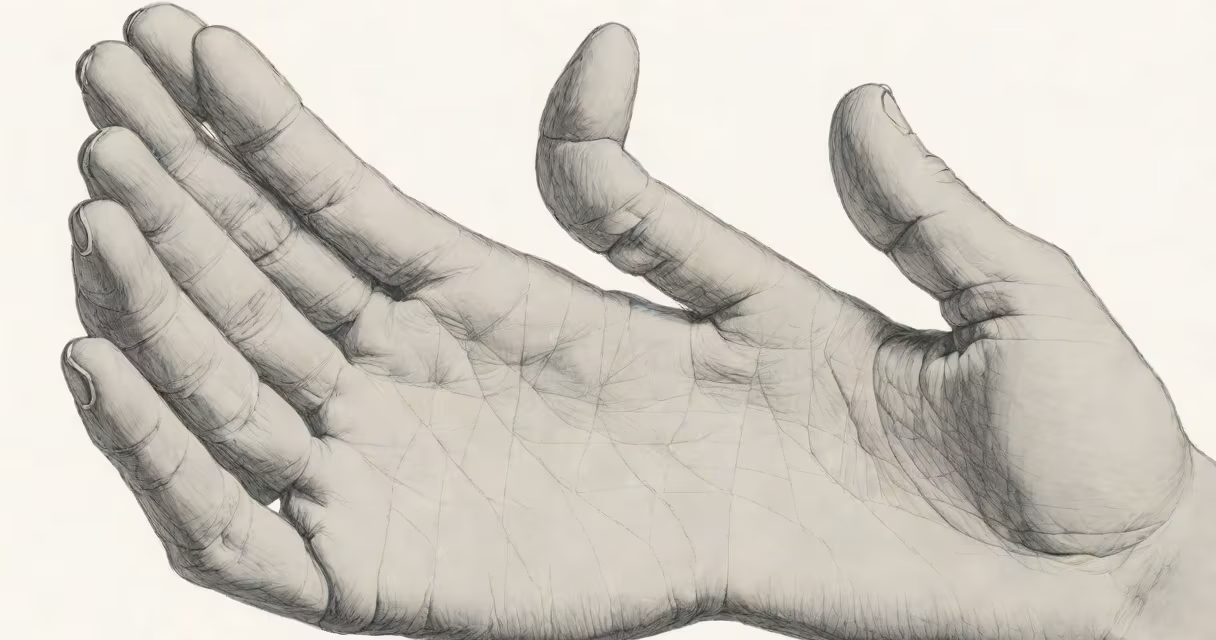
Being deaf means having profound hearing loss in both ears, typically defined as a threshold of 90 decibels or higher across frequencies. This condition affects how individuals perceive sound, interact with spoken language, and engage with auditory environments. The experience varies widely based on onset, severity, and cultural identity.
Deafness is not simply the absence of hearing. It is a sensory difference shaped by biology, environment, and personal identity. Some people are born deaf, while others lose hearing later due to illness, injury, or aging. The term "deaf" often includes those who rely on visual communication, such as sign language, and may identify with Deaf culture-a community with shared values, history, and linguistic traditions.
According to the World Health Organization, over 430 million people globally have disabling hearing loss, with 34 million being children. Of these, many live in low-resource settings where access to early diagnosis and intervention remains limited. The National Institute on Deafness and Other Communication Disorders (NIDCD) notes that early identification of hearing impairment in infants improves language outcomes.
For someone who is deaf, the world operates through visual and tactile cues. Sound is not absent-it's filtered out or never processed. A loud car horn may not register audibly, but the vibration underfoot or the movement of the vehicle in peripheral vision signals danger. This shift in sensory input changes how space is navigated and how attention is directed.
Communication relies heavily on visual modalities. Sign languages-such as American Sign Language (ASL)-are natural, complex languages with their own grammar and syntax. ASL is not a signed version of English; it has distinct word order, facial expressions, and spatial references. For example, the ASL sign for "I am tired" involves a downward motion of the hand near the eye, combined with a lowered head and closed eyes-nonverbal cues embedded in the gesture itself.
Technology plays a role, but not always as expected. Hearing aids amplify sound, but they do not restore normal hearing. Cochlear implants bypass damaged parts of the inner ear and send electrical signals directly to the auditory nerve. While useful for some, they do not guarantee understanding of speech. Many Deaf people view cochlear implants as medical interventions rather than cures, and some reject them due to concerns about cultural erasure.
Deafness can result from genetic factors, infections during pregnancy, complications at birth, or exposure to loud noise. Genetic causes account for about half of congenital deafness cases. Mutations in genes like GJB2 (connexin 26) disrupt the development of hair cells in the cochlea, which convert sound waves into neural signals.
| Type | Onset | Common Cause | Impact on Communication |
|---|---|---|---|
| Prelingual | Before language acquisition | Genetic, maternal infection | Relies on visual language from early life |
| Postlingual | After language learning | Age-related, trauma, disease | May retain spoken language skills |
| Progressive | Develops over time | Autoimmune disorders, otosclerosis | Requires adaptation as hearing declines |
A key distinction is between "deaf" and "hard of hearing." Hard of hearing individuals may have partial hearing and benefit from amplification. Deaf people often consider themselves part of a linguistic minority, not a medical condition. The Deaf community uses the capital D to emphasize cultural identity, distinguishing it from the lowercase d used for medical or audiological contexts.
One widespread myth is that all deaf people are mute. This is false. Deaf individuals can speak, though their pronunciation may differ due to lack of auditory feedback. Some learn to speak through visual modeling and tactile techniques, such as feeling vibrations on the throat or lips. Others choose not to speak at all, relying solely on sign language.
Another misconception is that deaf people cannot enjoy music. While they don't hear it in the traditional sense, many experience music through vibration, light patterns, or visual art. At Deaf festivals, performers use strobe lights synchronized with bass rhythms, allowing audiences to feel the beat through floor panels. The 2016 Deaf West Theatre production of *Spring Awakening* used ASL and amplified stage effects to convey emotional intensity-proving that artistic expression transcends audition.
A lesser-known fact: Deaf people often have heightened visual processing abilities. Research published in *NeuroImage* shows that Deaf individuals recruit brain regions associated with visual attention and motion detection more efficiently than hearing counterparts. This adaptation allows faster detection of subtle movements, such as lip reading or hand gestures in a crowded room.
I once attended a workshop led by a Deaf educator who demonstrated how a single sign-"family"-could carry multiple meanings depending on context. She signed "family" with a circular motion around her chest, then changed the direction and speed to indicate closeness, conflict, or distance. The audience, mostly hearing, struggled to interpret the nuance until she explained that in ASL, emotion is conveyed through facial expression and movement, not just the sign itself.
This moment highlighted a core truth: deafness is not a deficit. It is a different way of being in the world. When a Deaf person says "I see," they mean more than visual perception-they mean understanding through presence, attention, and connection.
Some confuse deafness with other conditions. For example, "being deaf" is not the same as "being mute" or "having autism." While some autistic individuals may be sensitive to sound, they are not necessarily deaf. Similarly, mutism refers to inability to speak, regardless of hearing ability. The distinction matters for accurate support and inclusion.
Being deaf means going through a world designed for hearing people. It means adapting, advocating, and creating. It is not silence. It is a different kind of listening-one that sees, feels, and understands in ways that go beyond sound.